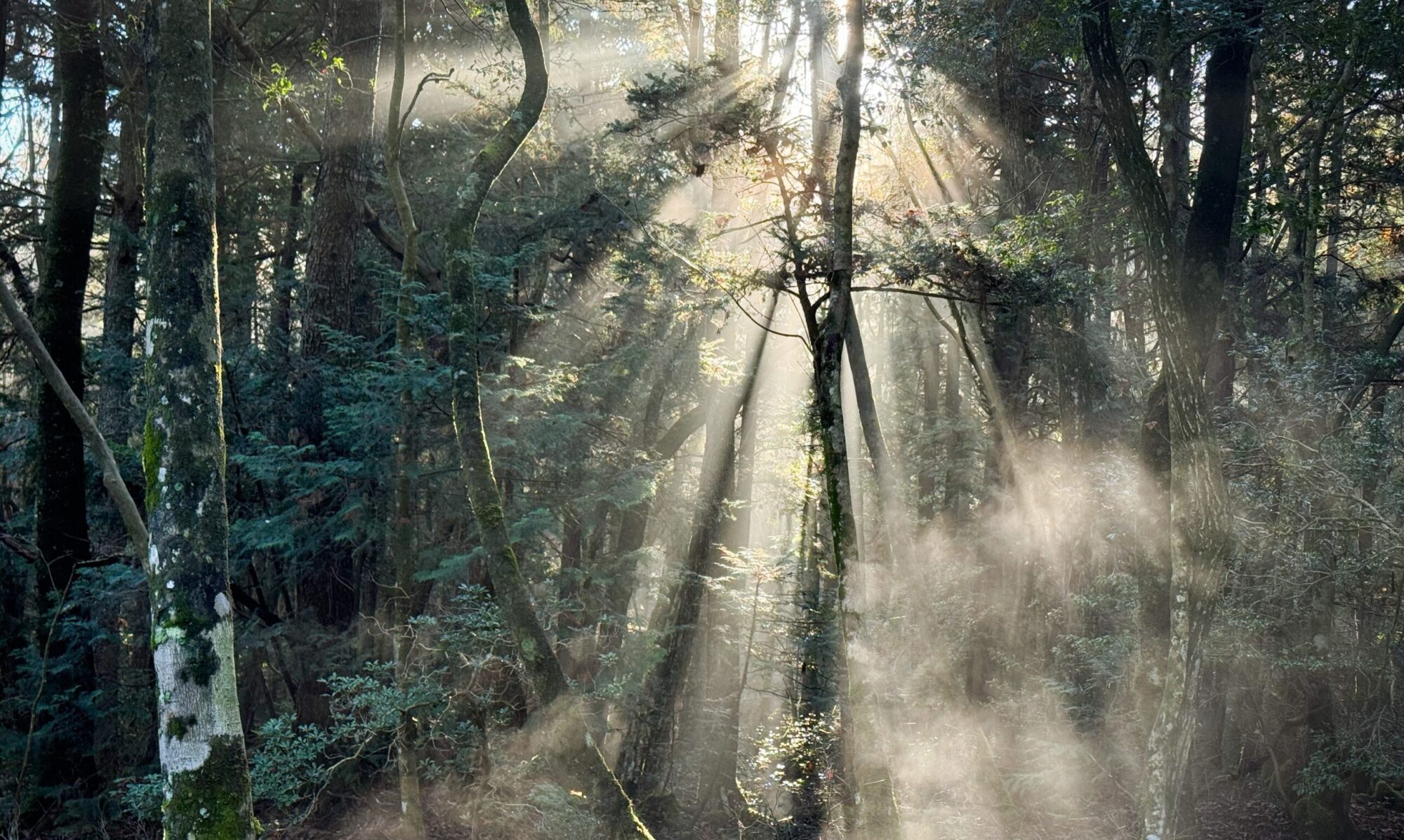
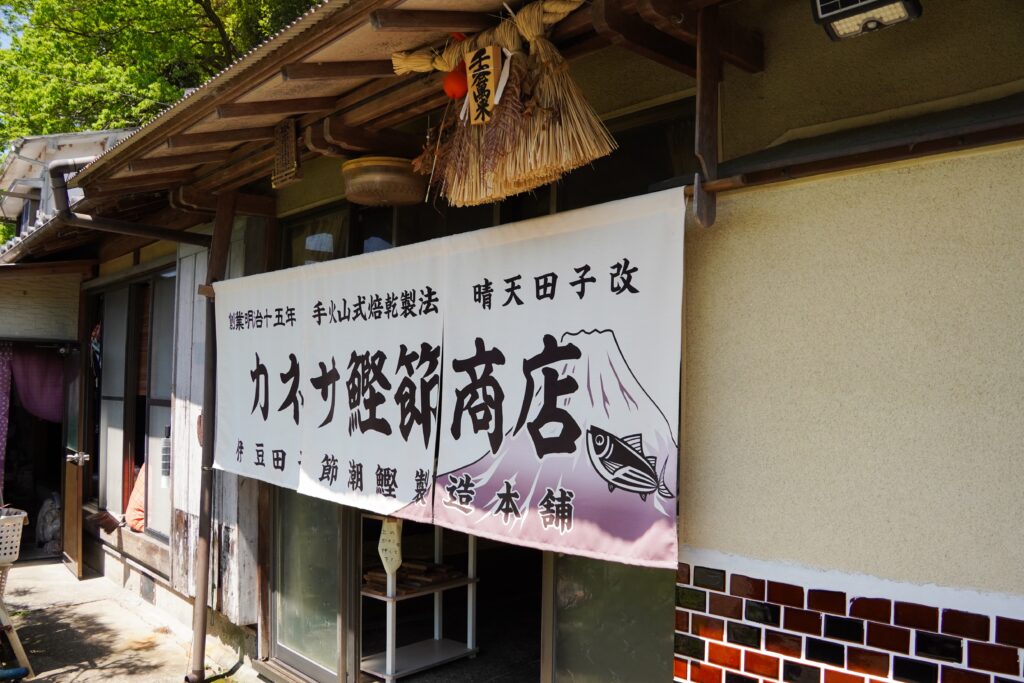
Long ago, there was an ancient pilgrimage route called the Izu Mineheji on the Izu Peninsula. I recently walked the West Izu section of this path. The coastline was rugged, with dramatic rocks shaped by old volcanic activity. Facing Suruga Bay, the deepest bay in Japan, this area has long been blessed with excellent natural harbours. In one of them, Tago Harbour, I visited Kanesa Katsuobushi Shoten, a place I had wanted to see for a long time.
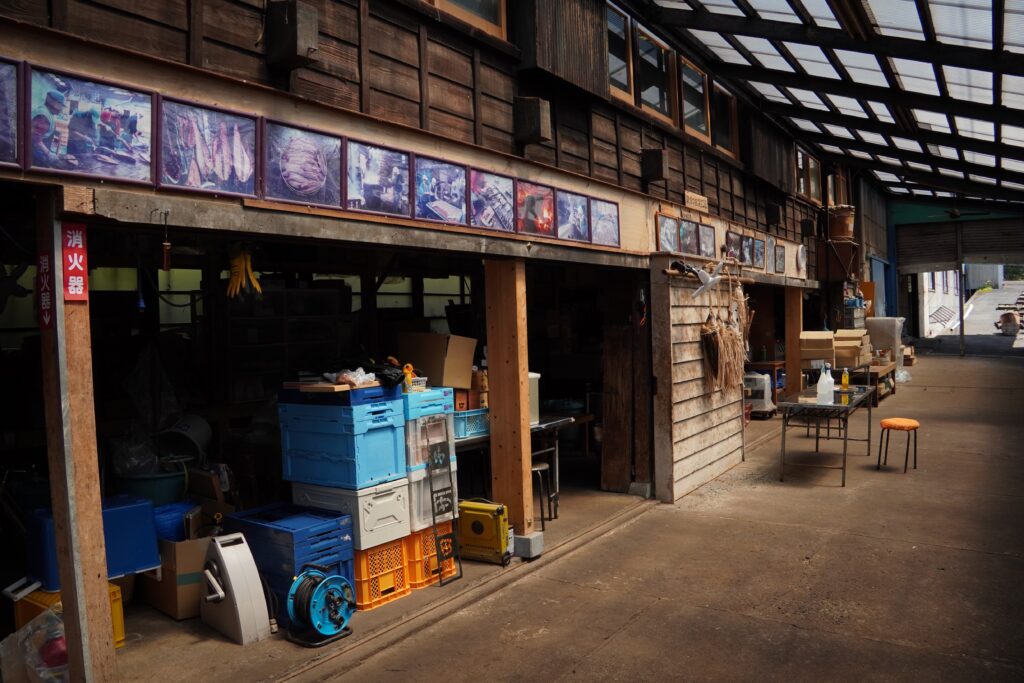
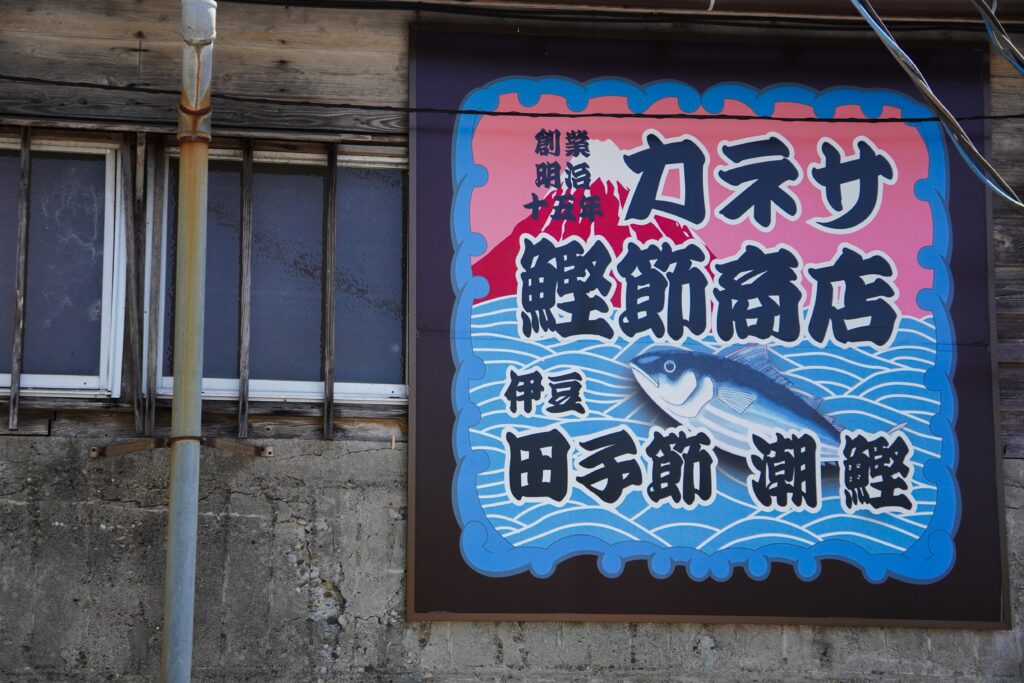
Before going any further, it is worth explaining what “katsuobushi” actually is. To put it simply, it is dried and smoked skipjack tuna. It looks like a hard block of wood or stone. We shave it into paper-thin flakes to make dashi, the savoury broth that forms the very foundation of Japanese cuisine. It is a concentrated block of pure ocean flavour.
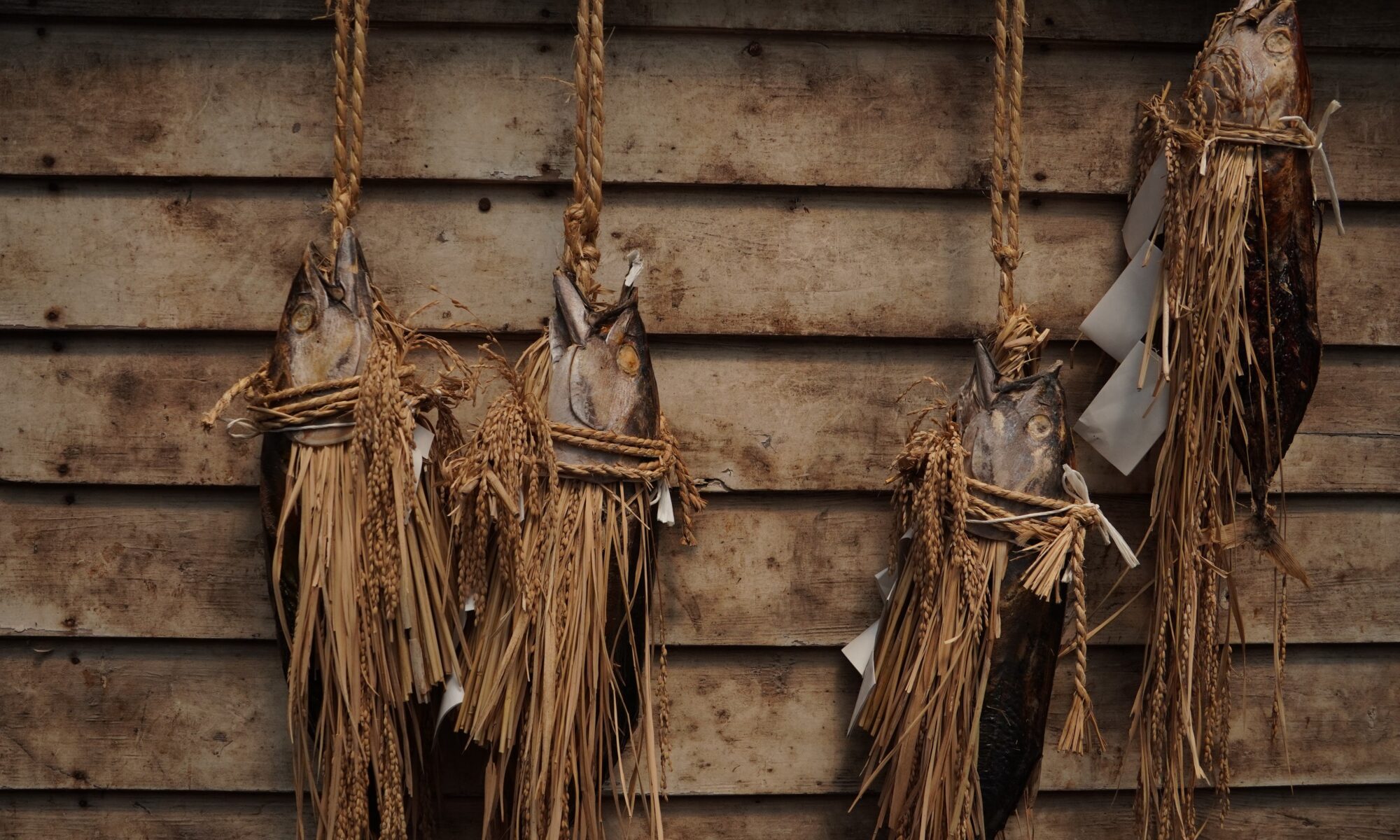
Tago was once a bustling port where skipjack tuna was landed in abundance. In recent years, however, the fish have decreased in nearby waters, and fishing has shifted from catching them one by one with a rod and line to using fixed coastal nets. With net fishing, the fish thrash around, damaging their bodies and sometimes breaking their tails. The shiokatsuo (salted skipjack) made in this area is a traditional symbol of good fortune, so any fish with blemishes or broken tails cannot be used.
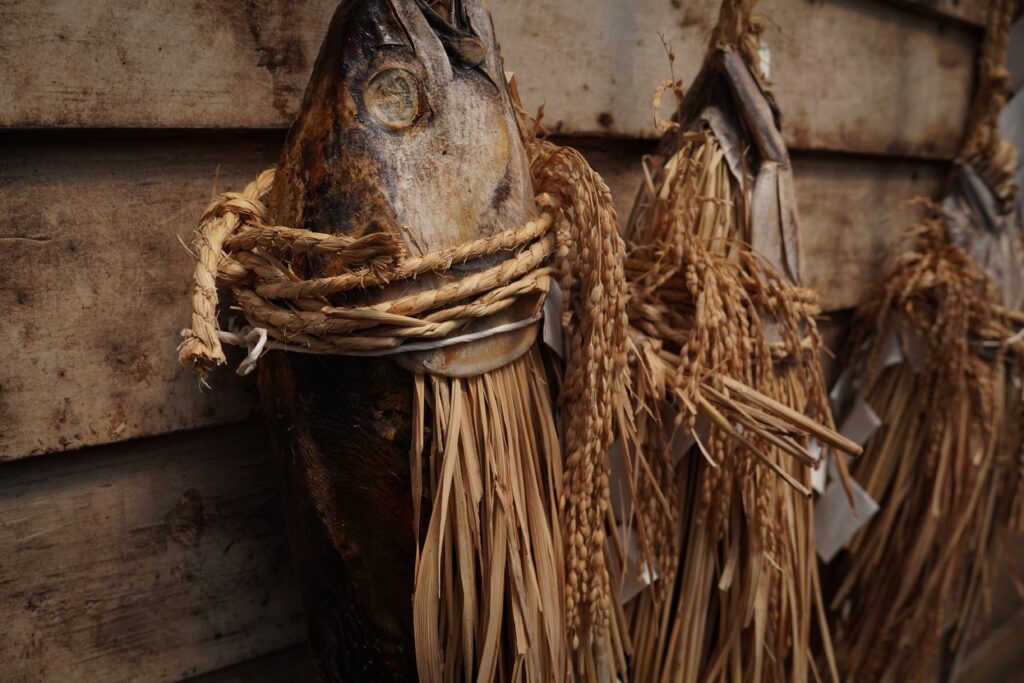
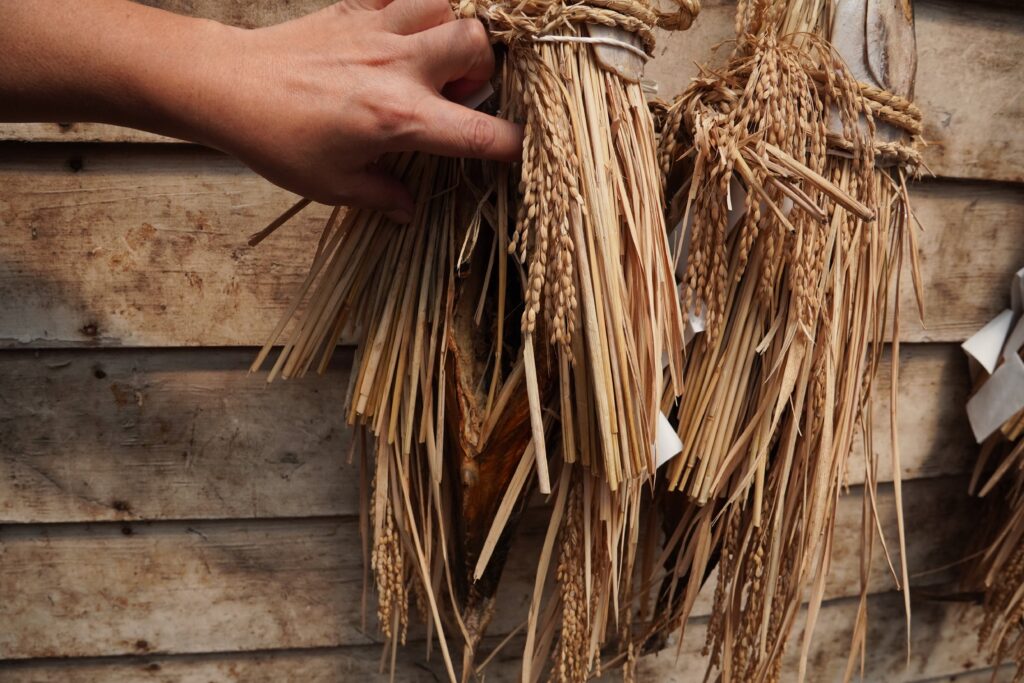
Shiokatsuo is a traditional preserved food made by salting a whole fish and drying it. Today, this taste can only be found here in the Tago district. People hang it at their entrances or household altars to pray for a good catch, safe voyages, and family safety in the coming year. This is why it is also called shogatsu-uo (New Year fish).
Since local net fishing damages the fish, the skipjack for shiokatsuo now comes from right under the equator. They are caught with rods and lines in the southern seas and flash-frozen on the ship. Because Tago Harbour lacks large freezing facilities, the fish are first landed at Numazu Port and then brought here.
I will return to shiokatsuo later, but first, let us look at katsuobushi.
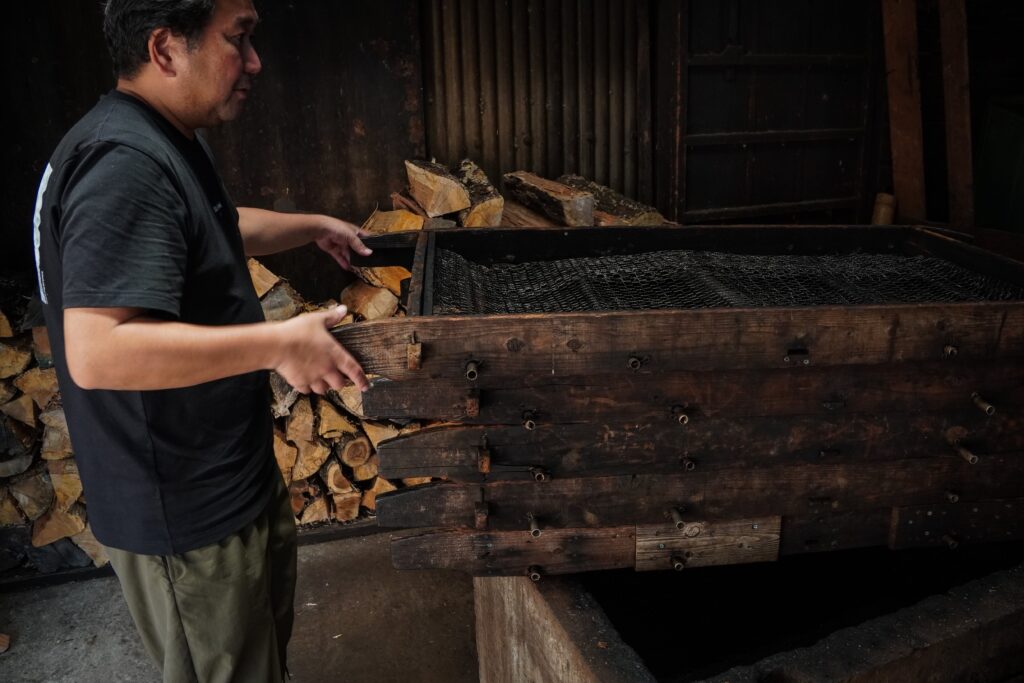
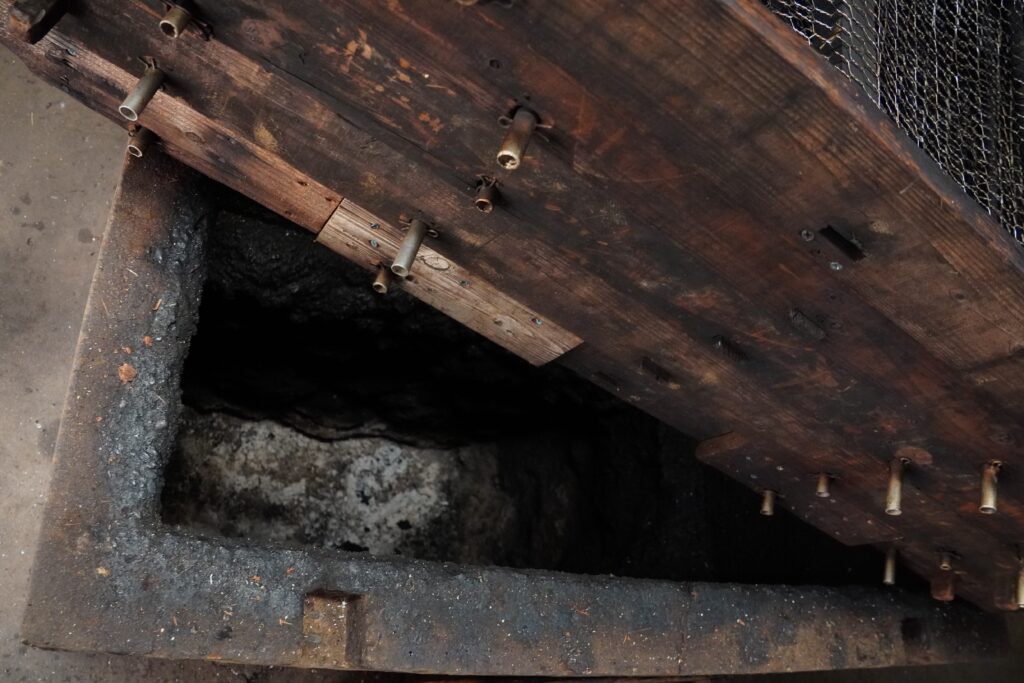
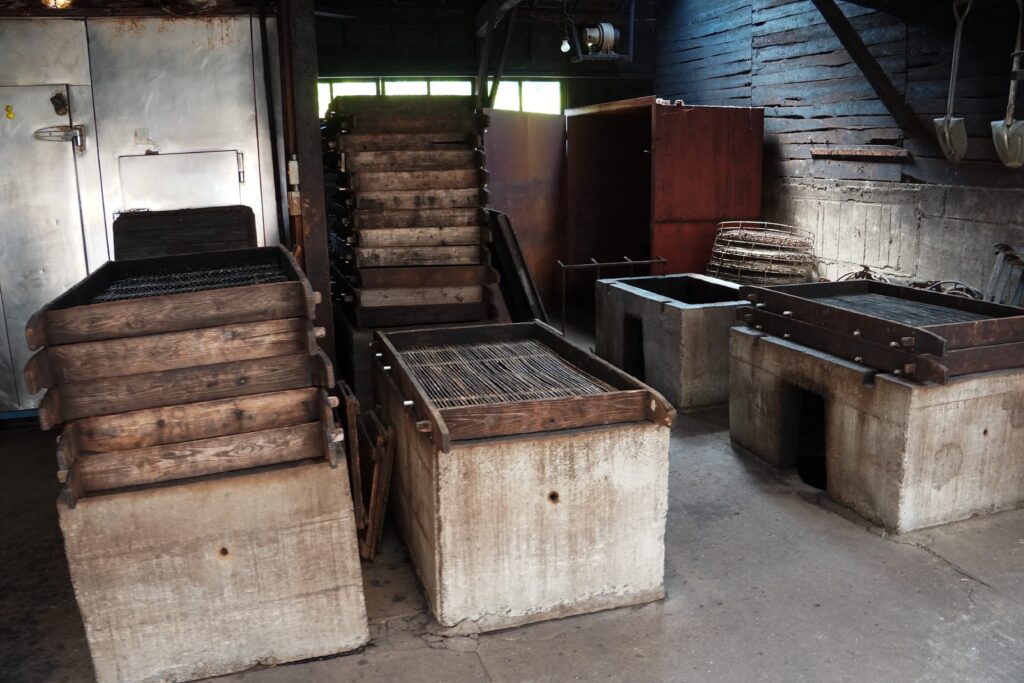
A local councillor, who works to preserve this tradition, guided me. Here at Kanesa Katsuobushi Shoten, they still use a smoking technique called tebiyamashiki, which is rarely seen today. A fire is lit inside a deep pit. Standing directly above the heat, a craftsman repeatedly turns the wooden trays of fish by hand. Through sheer experience, he knows exactly when the moisture and fat have left the fish. This manual work is what produces that powerful aroma.
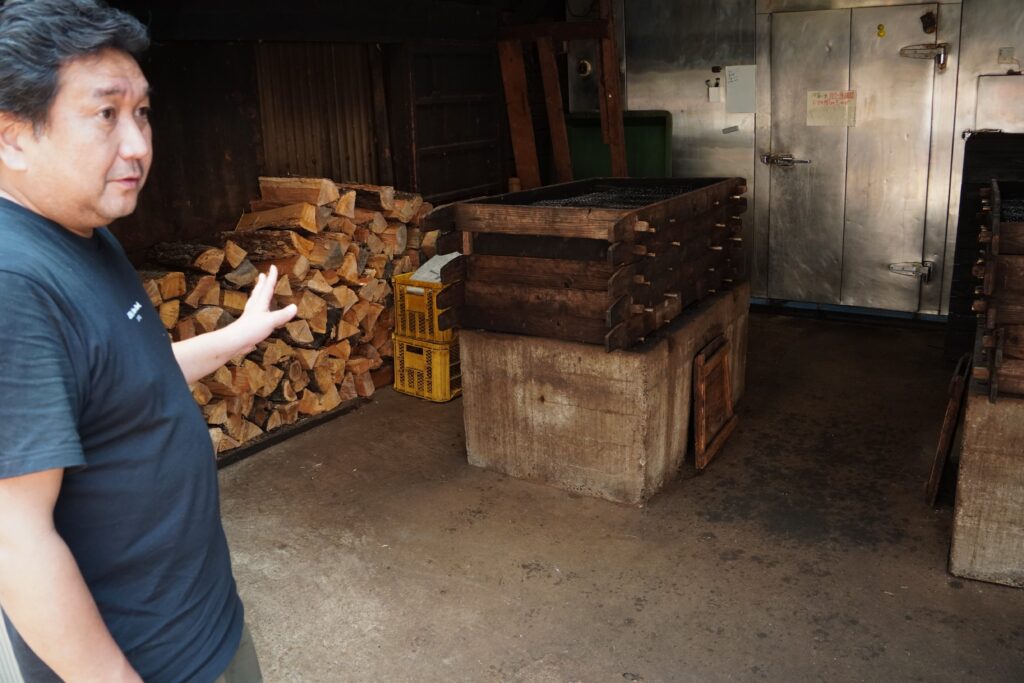
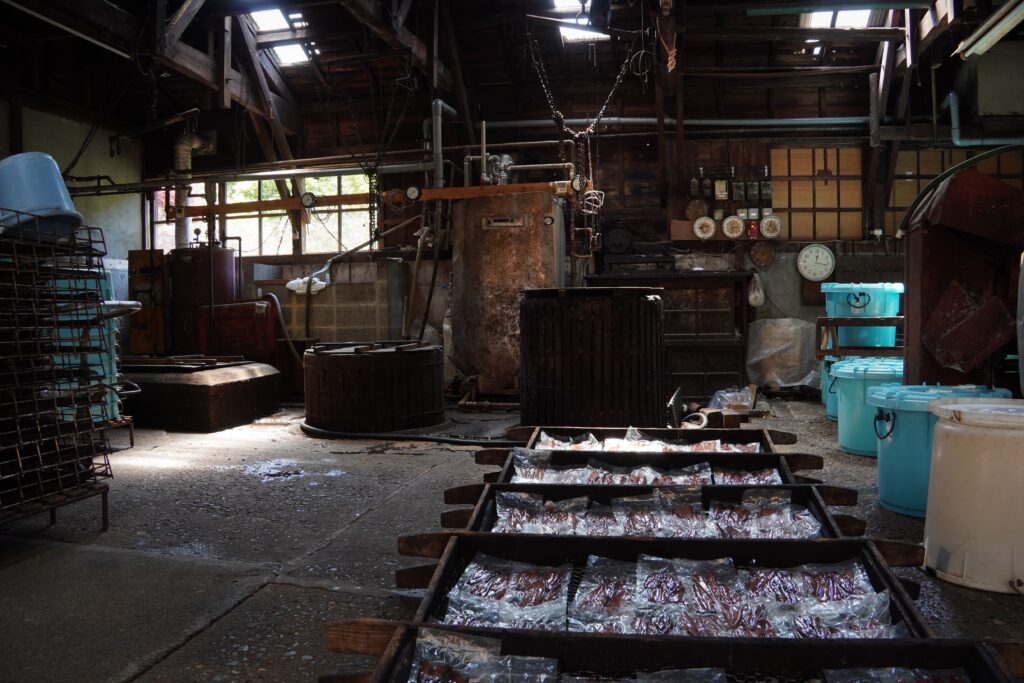
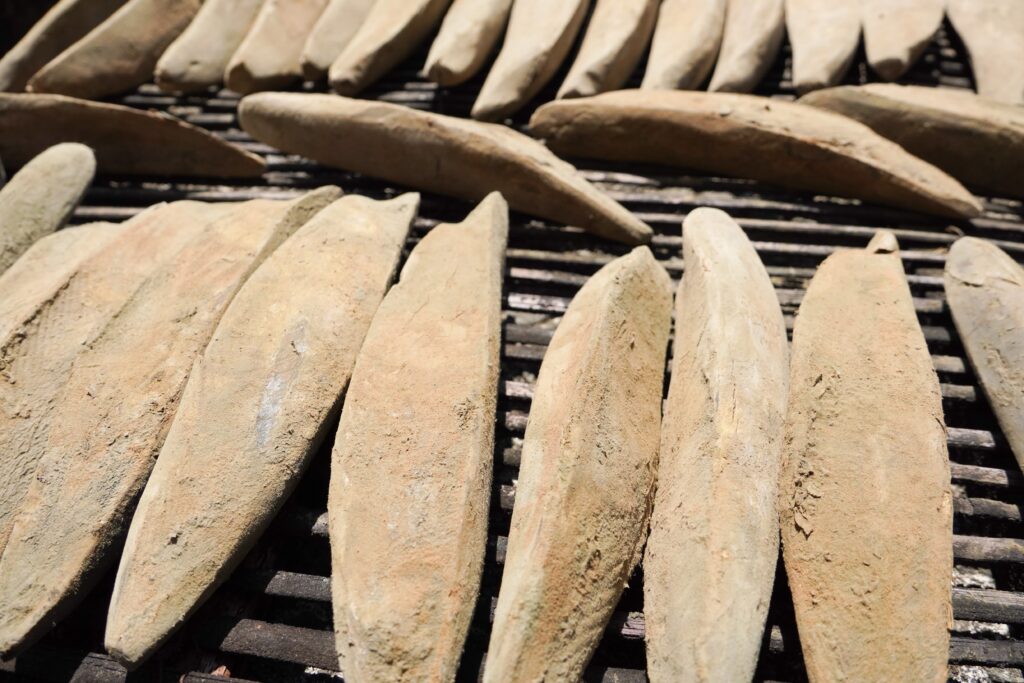
After smoking, the katsuobushi relies on the power of mould. They allow koji mould to grow on the surface. I used to think katsuobushi was simply a dried food, but it is also a fermented food. It is smoked, and then it is fermented.
Preserved foods generally fall into four categories, salting, drying, fermenting, and freezing. Here, two methods are combined. The moisture is removed by smoking, then further reduced by sun-drying. Finally, the koji mould draws out every last drop of water from deep inside, completely preventing any rotting bacteria from taking hold. To get rid of water, they let mould eat it. I had never thought about it that way. It was a true revelation. One wonders how people in the old days arrived at this through endless trial and error, simply trying to make the fish last longer and taste better. It is a brilliant piece of wisdom, making clever use of nature.
Of course, there is a version without mould, called arabushi, but the final, fully crafted form is honkarebushi. I had been buying and using katsuobushi all my life without knowing this. Apparently, most of what is sold in supermarkets is just arabushi.
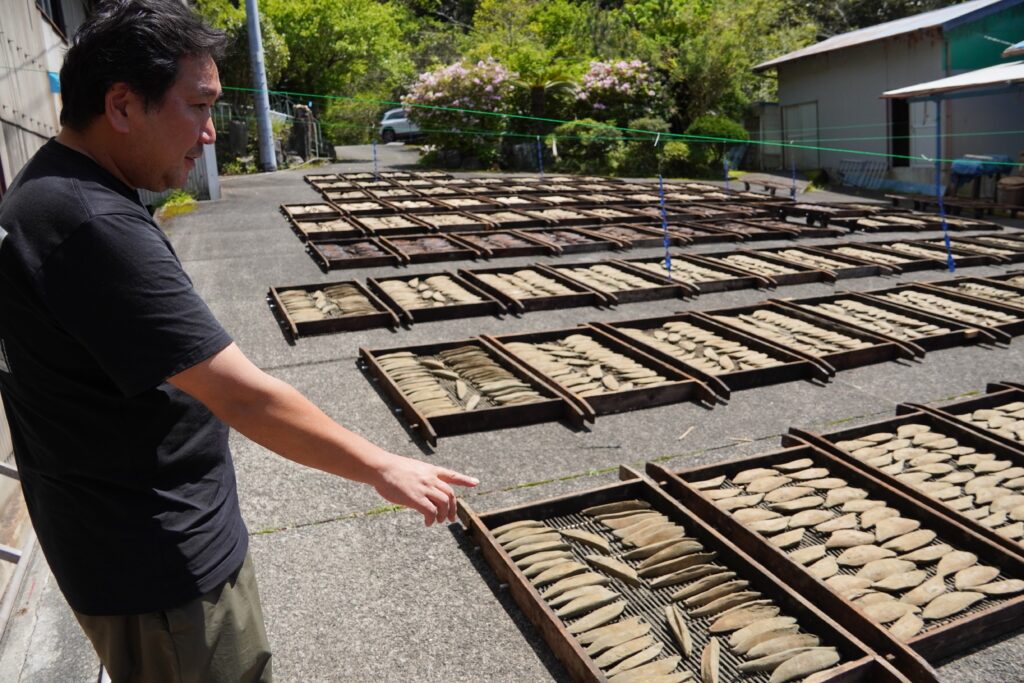
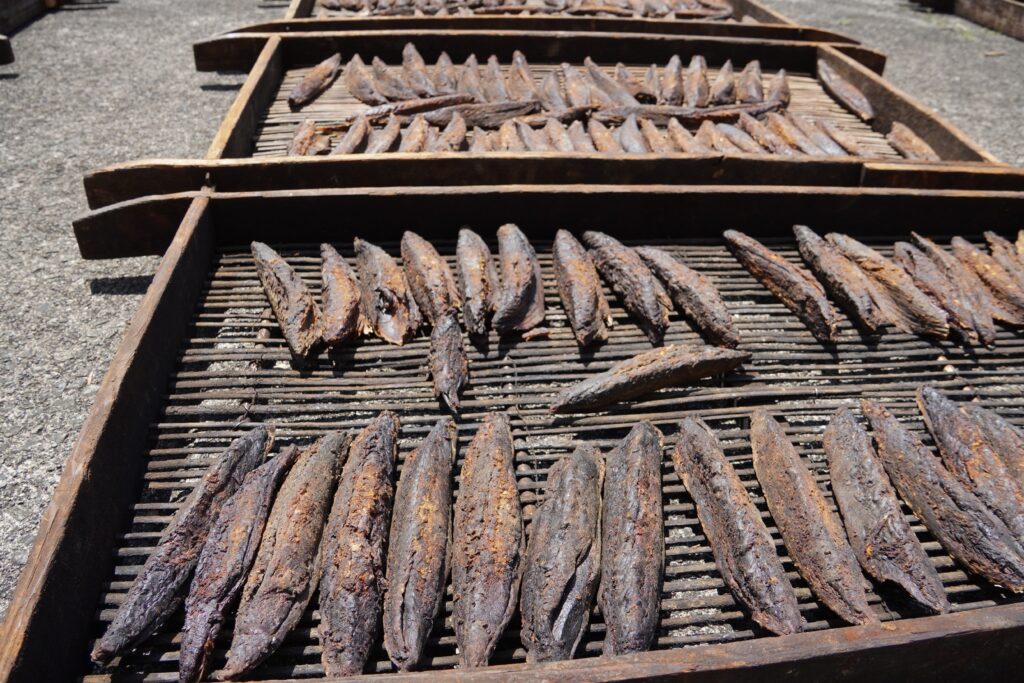
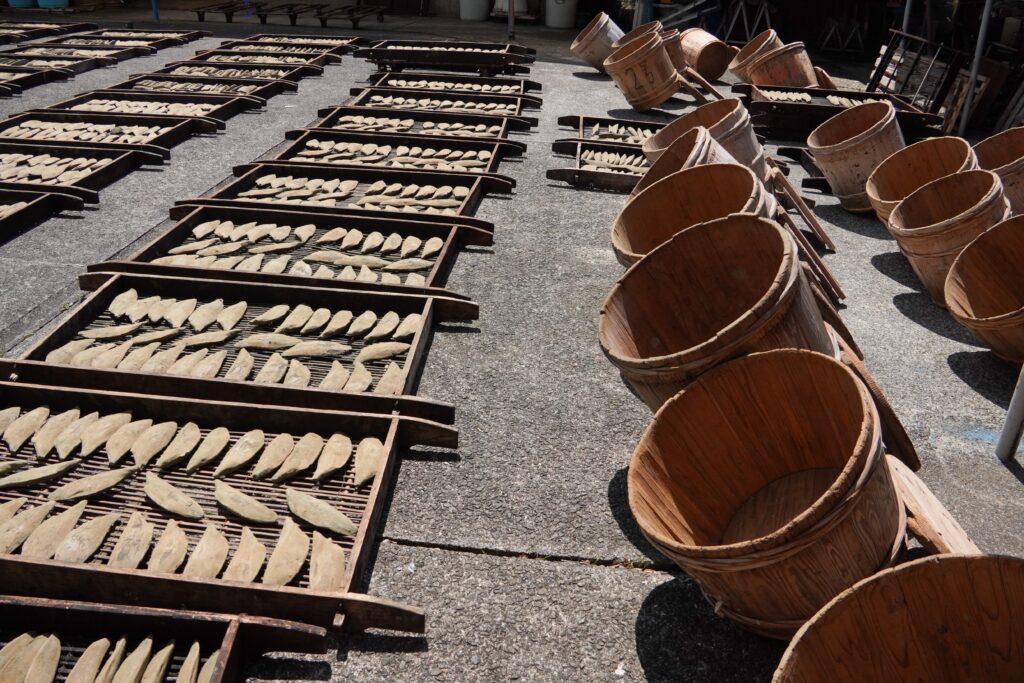
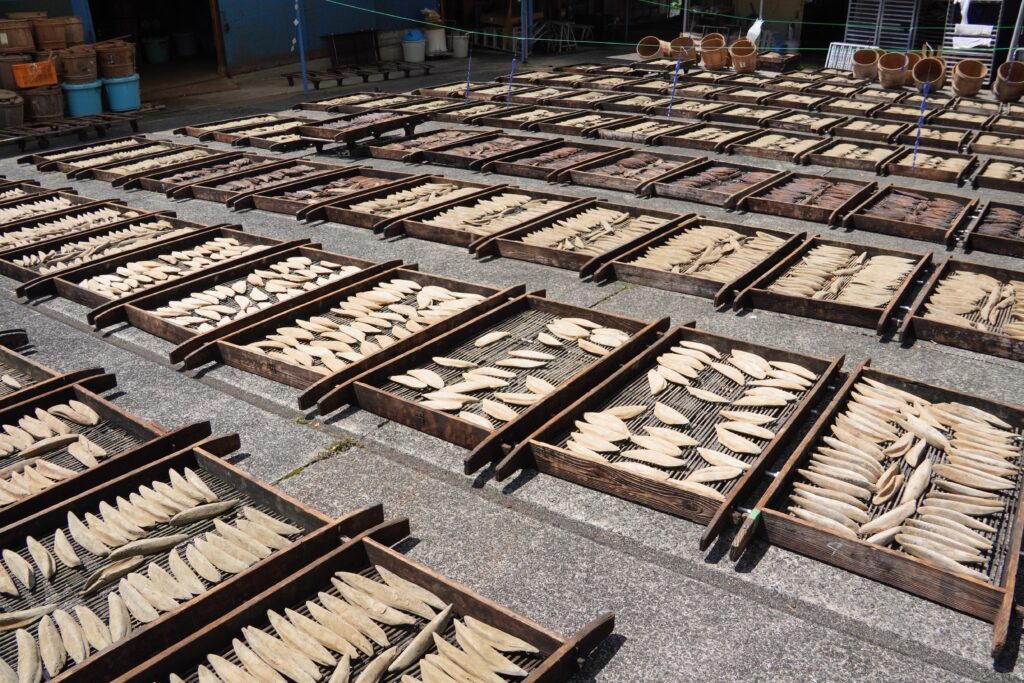
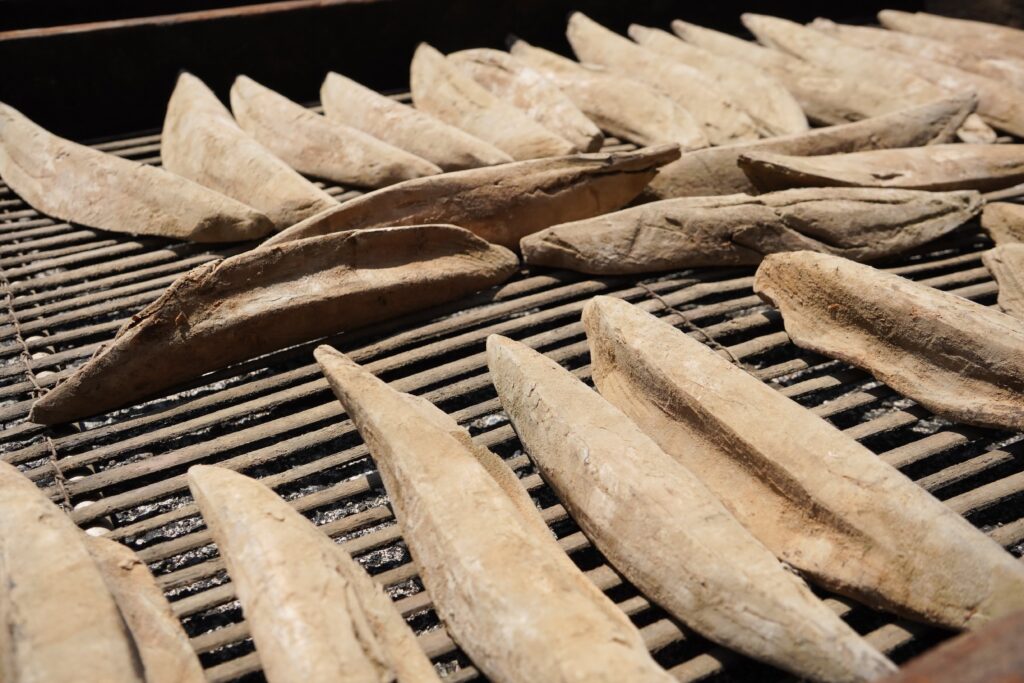
Outside the workshop, black katsuobushi and white katsuobushi are lined up together. Here, my assumptions were completely overturned. Looking at the rugged appearance, I naturally thought the black one was the older one that had taken more time. In fact, it was the opposite. The white one was the final form, which the craftsmen had poured endless care into by repeatedly applying mould and exposing it to the sun. This process takes about three months for standard honkarebushi. However, Kanesa Katsuobushi Shoten spends more than half a year slowly maturing it. Only then is the hardest food in the world finally complete. There are even stories of people using katsuobushi instead of a hammer to drive nails. It is practically a blunt weapon, it could probably be used for a perfect crime.
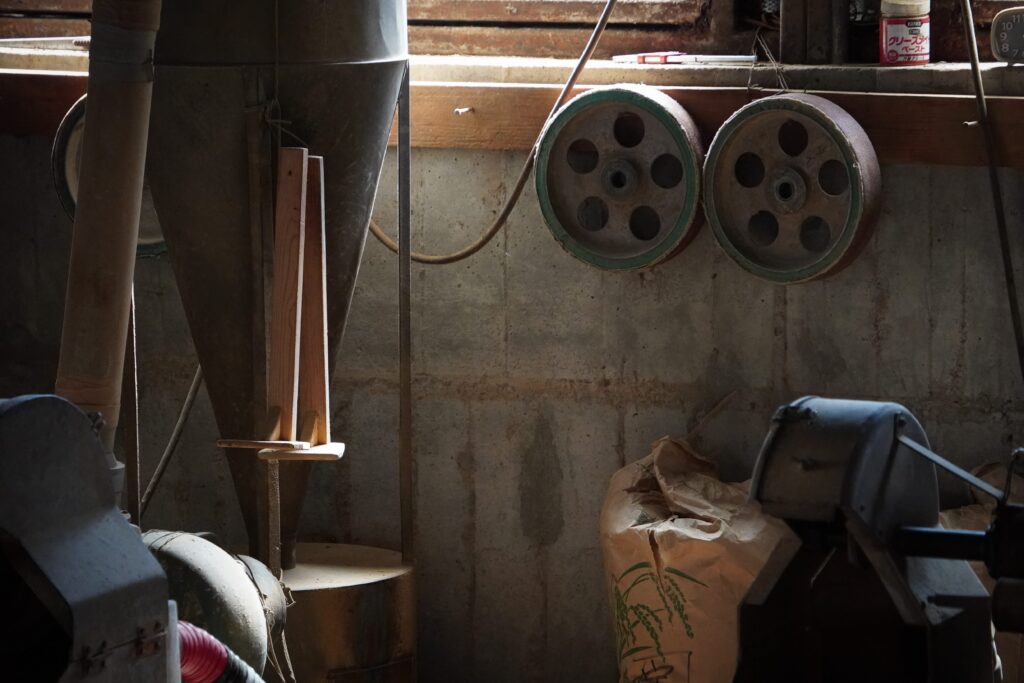
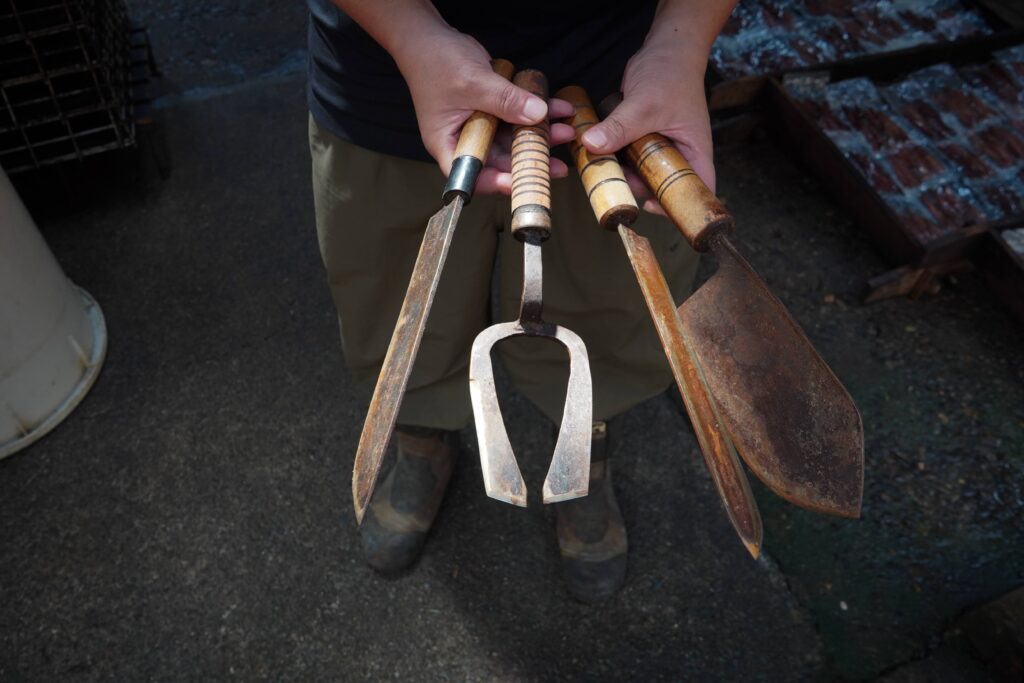
He also showed me the various tools used for filleting the fish. They are remarkably diverse, knives for removing the head, others for slicing along the bone, and uniquely shaped U-shaped blades. Such highly specialised tools exist just to receive the life of a single fish without any waste. The sheer number of tools, and the many specific words associated with them, must be proportional to the length of time and the density with which humans have faced their subject. It is a testament to how deeply they have interacted with the skipjack.
Now, to return to the shiokatsuo. As I mentioned, it is a traditional food made by salting and drying a whole skipjack. If you look closely at its belly, it is not completely cut open; a single layer of skin is left connected. Seeing this reminded me of the shiobiki-sake (salted salmon) of Murakami in Niigata Prefecture. There, too, they leave a small part of the belly uncut when drying. For the samurai of the Edo period, cutting the belly completely open reminded them of seppuku (ritual suicide), which was considered highly inauspicious. Whether the fishermen of West Izu were conscious of samurai culture or simply mindful of it being an offering to the gods, they chose to avoid the “ritual suicide” of the fish.
In fact, records from the Nara and Heian periods show that skipjack was preserved in three distinct ways:
- Katsuo: Fish dried until stone-hard (the origin of the word katsuobushi).
- Niekatsuo: Fish boiled once before being dried (the basis of modern arabushi).
- Arakatsuo: Fish dried raw or with salt.
Among these, arakatsuo is exactly the same method used to make shiokatsuo today. From this ancient root, the process evolved over time to include smoking and fermenting with mould, eventually leading to the modern honkarebushi.
Recently, international visitors have been coming on tours to see this beautiful tradition, where they can taste shiokatsuo and katsuobushi. He also taught me a wonderful way to eat shiokatsuo. You simply place a single slice on top of rice and water inside a clay pot, and cook it. No other seasoning is needed. By the time the rice is cooked, the deep umami and saltiness of the fish have infused the whole pot. It becomes a feast all on its own. Just imagining it makes my stomach rumble. It would work beautifully in pasta, acting like an anchovy, and it would also make an excellent accompaniment to sake.
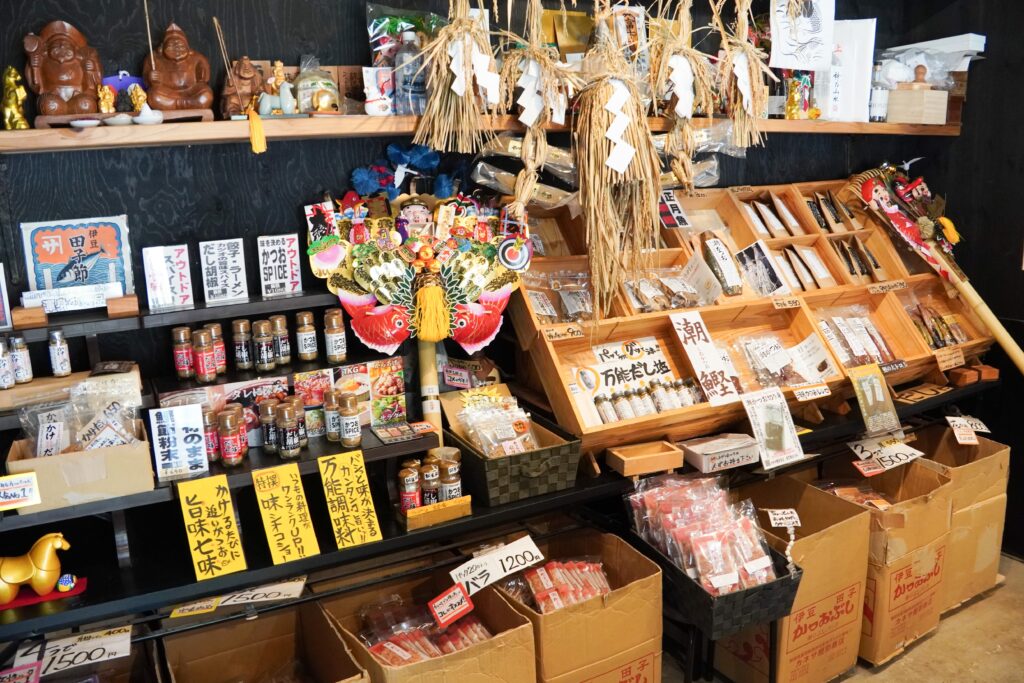
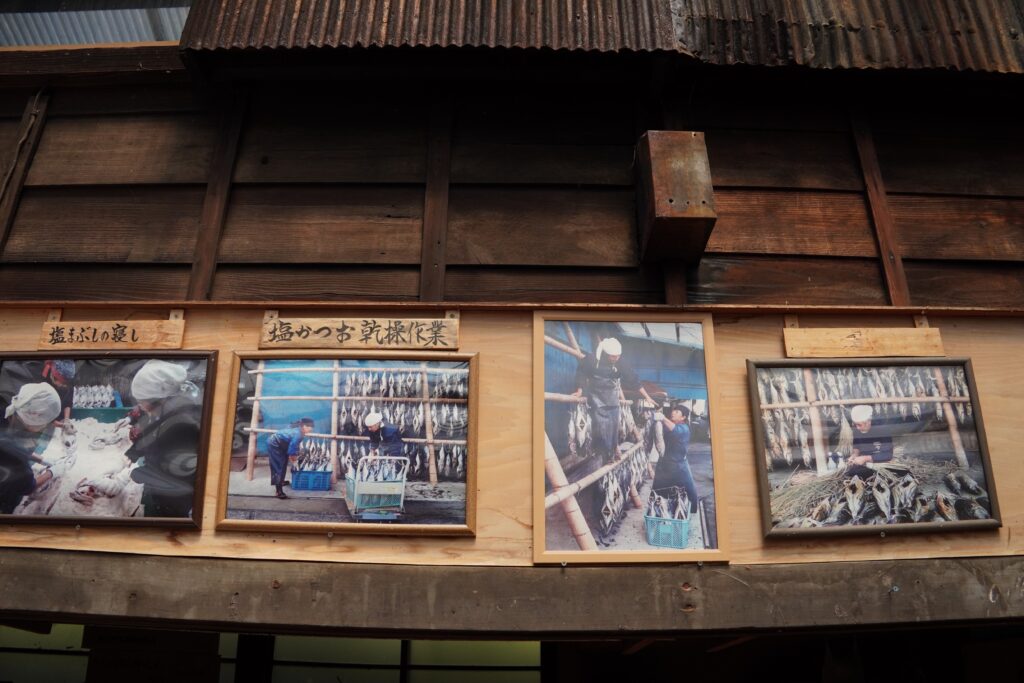
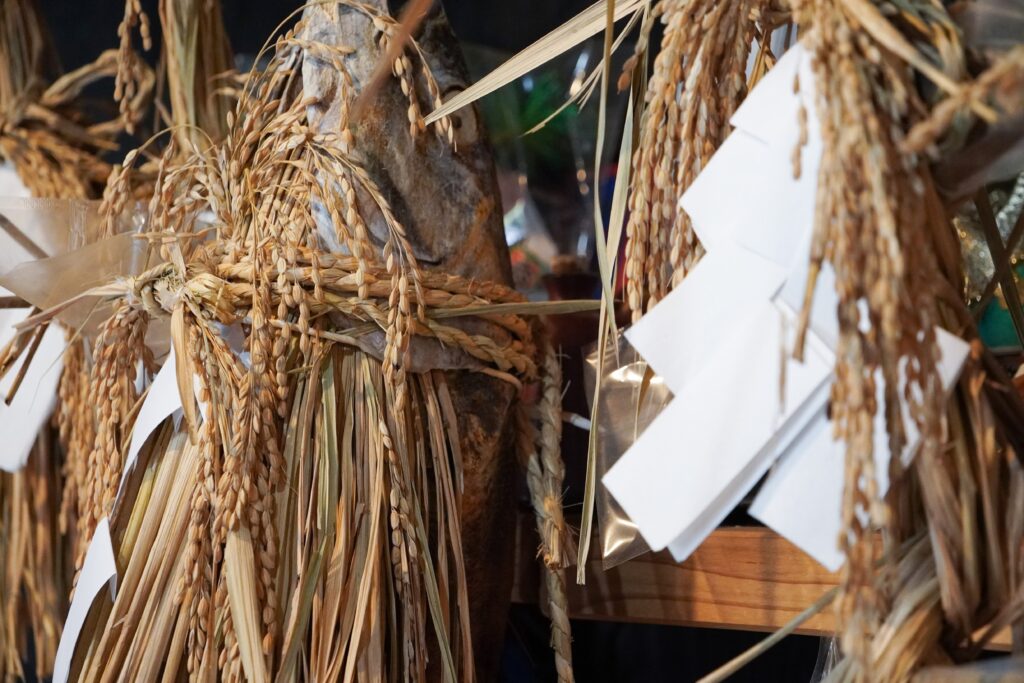
Seeing people working to keep such traditions alive makes me truly happy. If this skill were to disappear, it would not simply be a matter of losing a single traditional ingredient. The history, the culture, and the very spirit of the people bound to that food might disappear too, like a row of falling dominoes.
Think about rice farming, for example. Today, we can easily get food from anywhere, but protecting the paddy fields is not just about harvesting grain. If rice farming disappears, the straw is gone, and with it, the culture of making New Year shimenawa ropes and traditional tools will fade away. If the fields no longer need water, the care of the forests that hold that water will be neglected. The entire ecosystem formed by the paddies will vanish. Everything is connected by an invisible thread.
In a modern world flooded with cheap, convenient seasonings, these craftsmen deliberately stand in front of a hot fire, cultivate mould, and spend months maturing it. At first glance, it is a world far apart from modern values. Yet, within that scene, there is a true taste, an aroma, and a cultural beauty found nowhere else.
What they are doing here is not simply “selling food,” but “passing on a culture.” Perhaps it is precisely because we live in a time of extreme uniformity that more people are beginning to find true value in this unique character and the long process behind it. And things made with such time and care are, without a doubt, genuinely delicious.
On the way back, I stopped by the visitor centre and noticed shiokatsuo hanging there, too.
Across the waters of Suruga Bay, where skipjack was once caught in such vast numbers, Mt. Fuji can be seen in the distance.
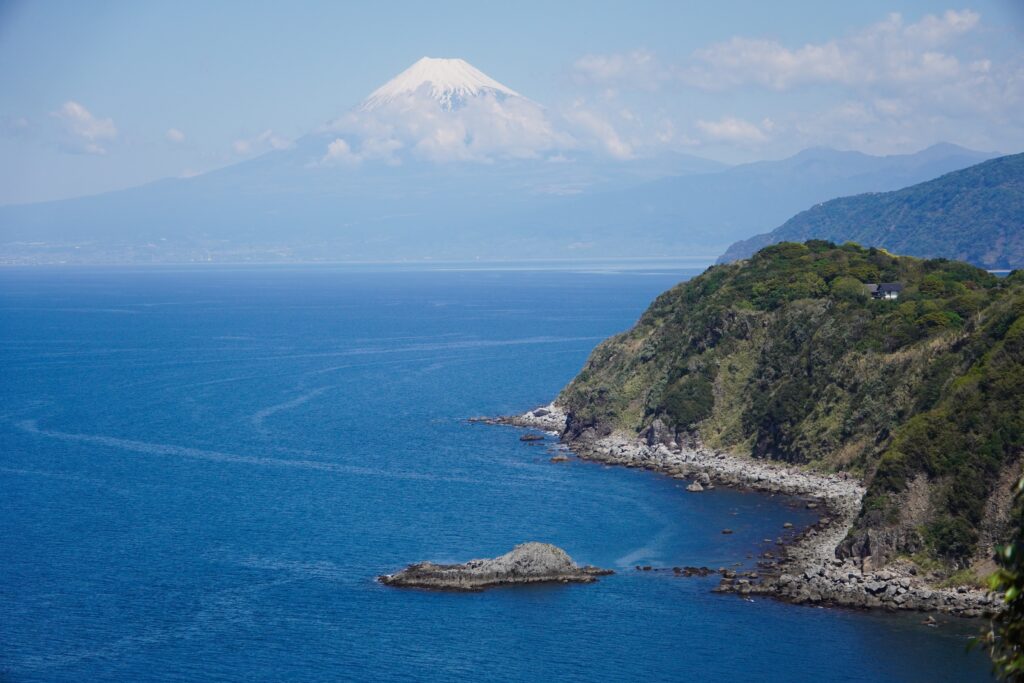
Having bought both shiokatsuo and katsuobushi, I think I will try making that clay pot rice tonight. I will also try putting some freshly shaved katsuobushi on hot rice with a few drops of soy sauce. And next time, I want to see with actual moment of tebiyamashiki, when the craftsmen stand directly before the hearth.