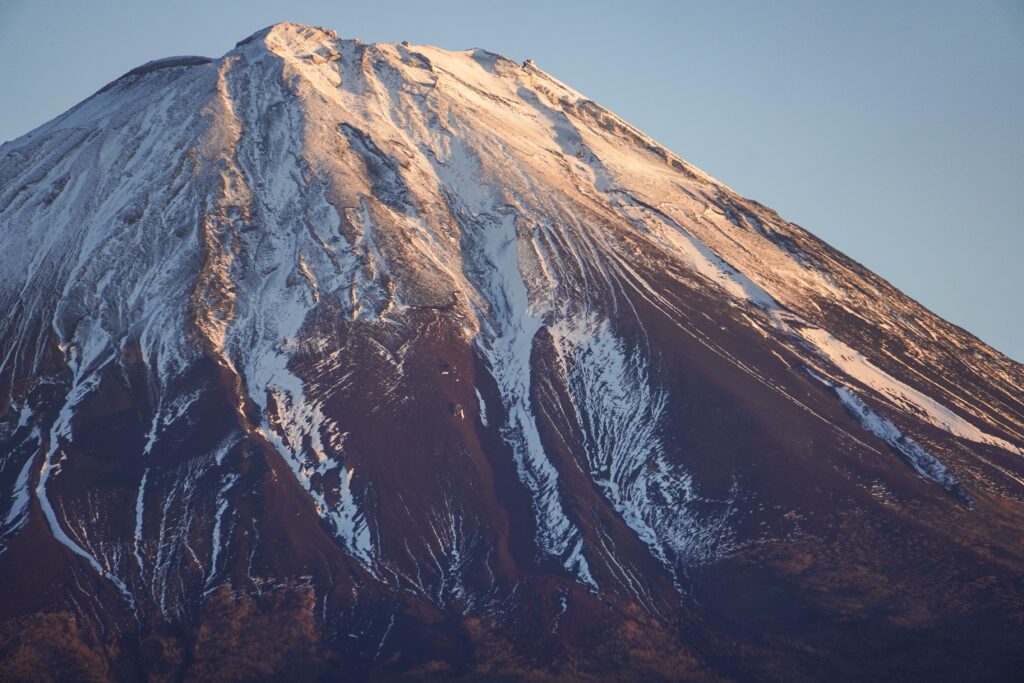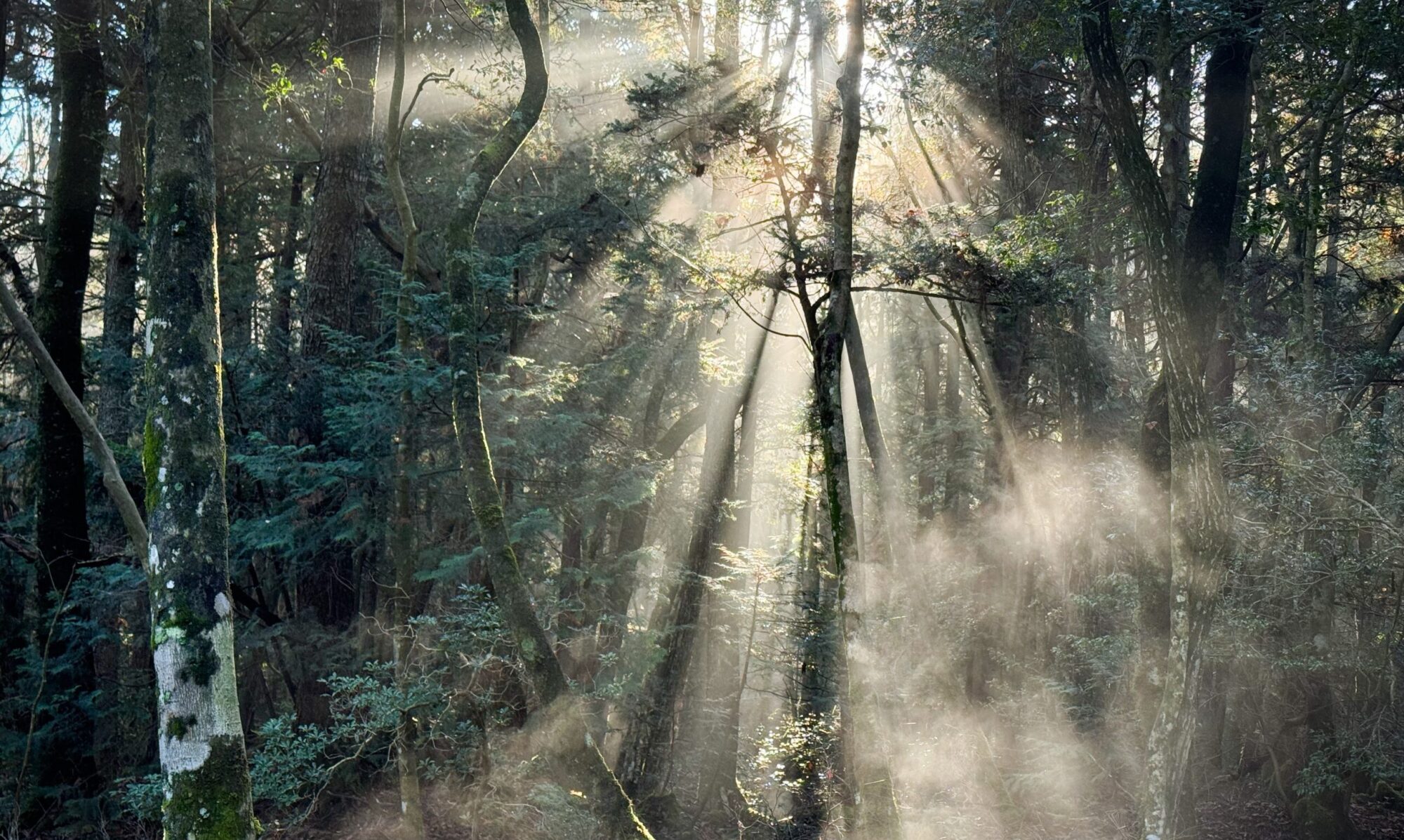
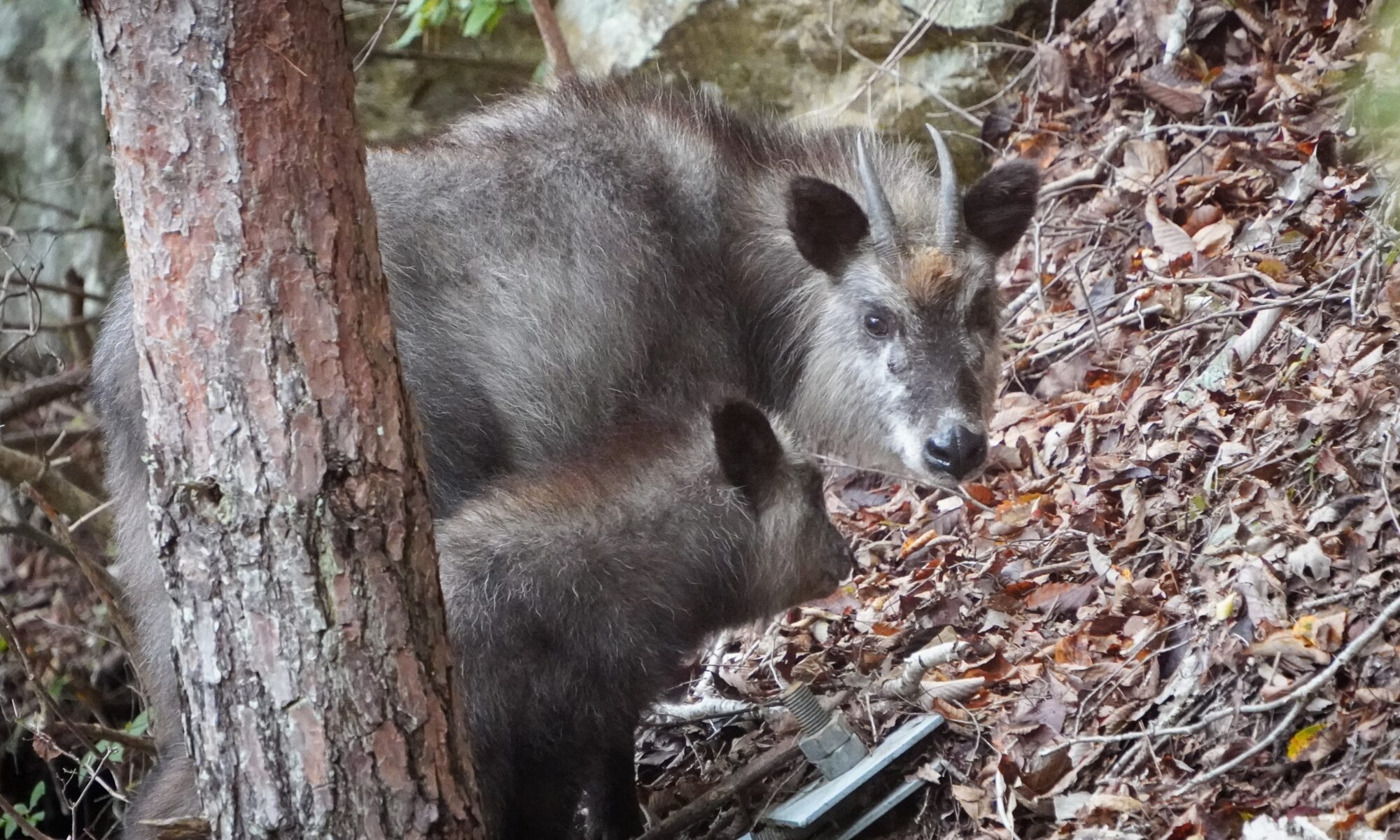
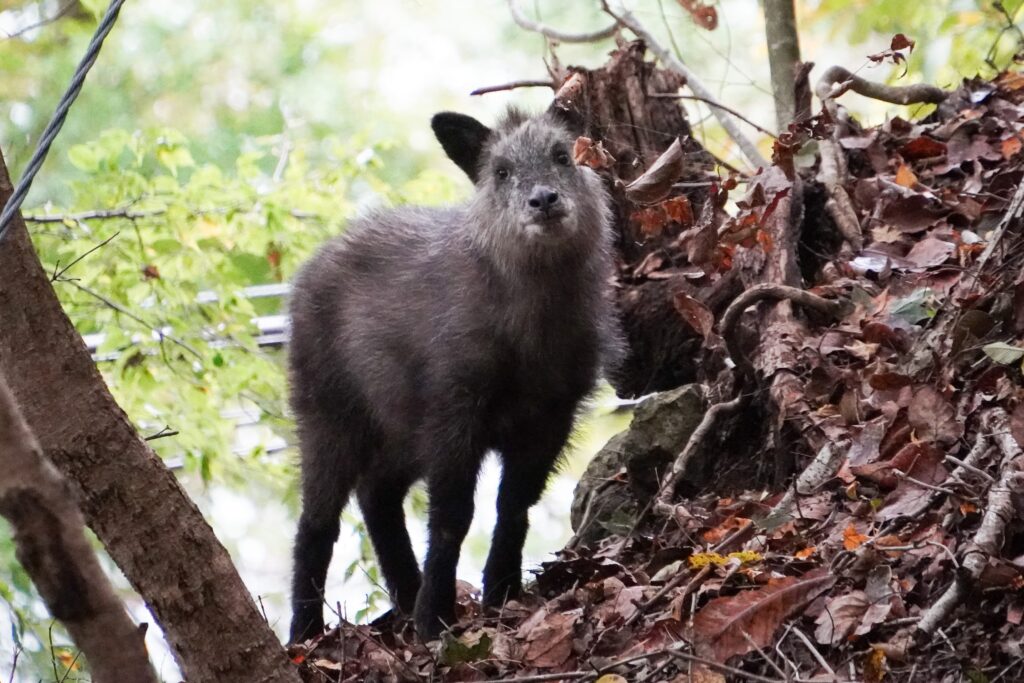
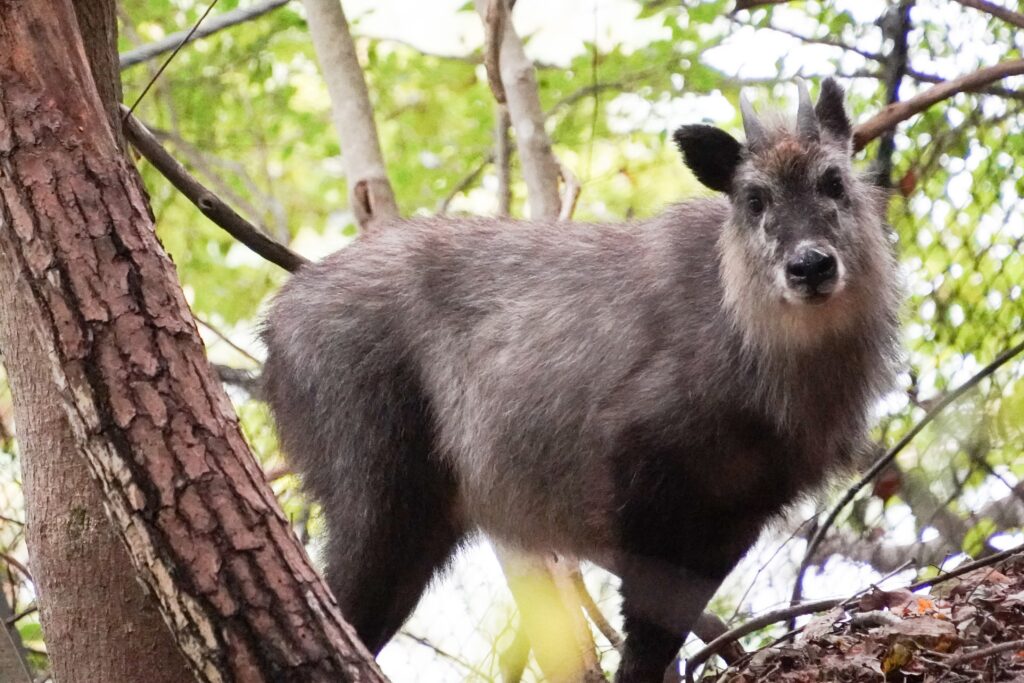
I encountered a Japanese serow mother and her calf in the forest.
As usual, they were perched on a steep, cliff-like slope.
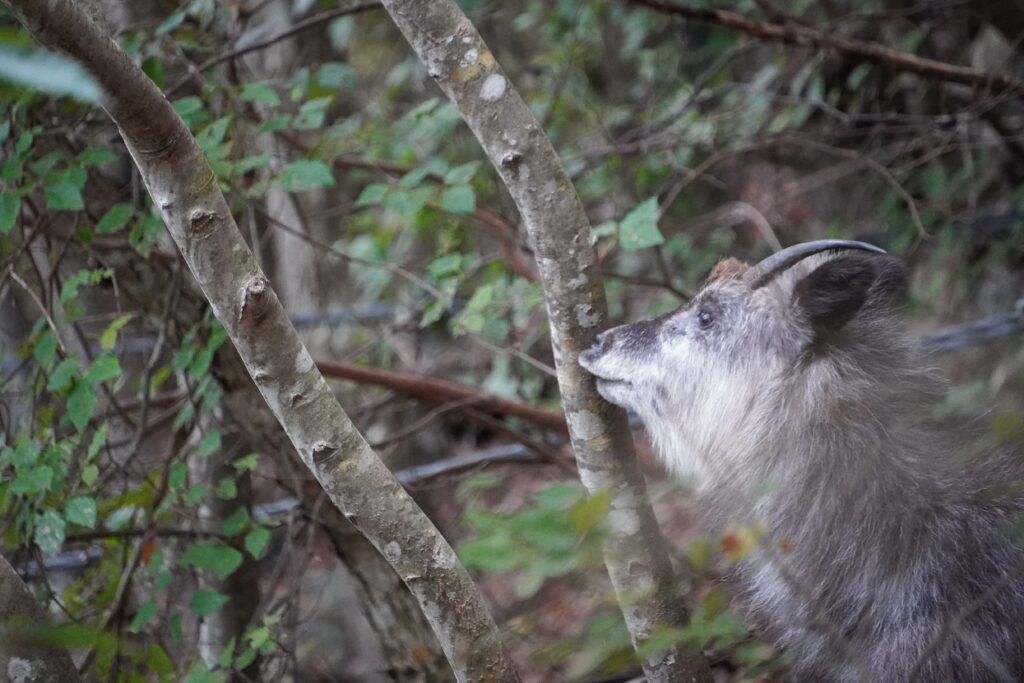
Unlike deer, they didn’t run away even as I drew close. Instead, they stood watching me calmly. Before long, they went back to grazing and rubbing their horns against the trees.
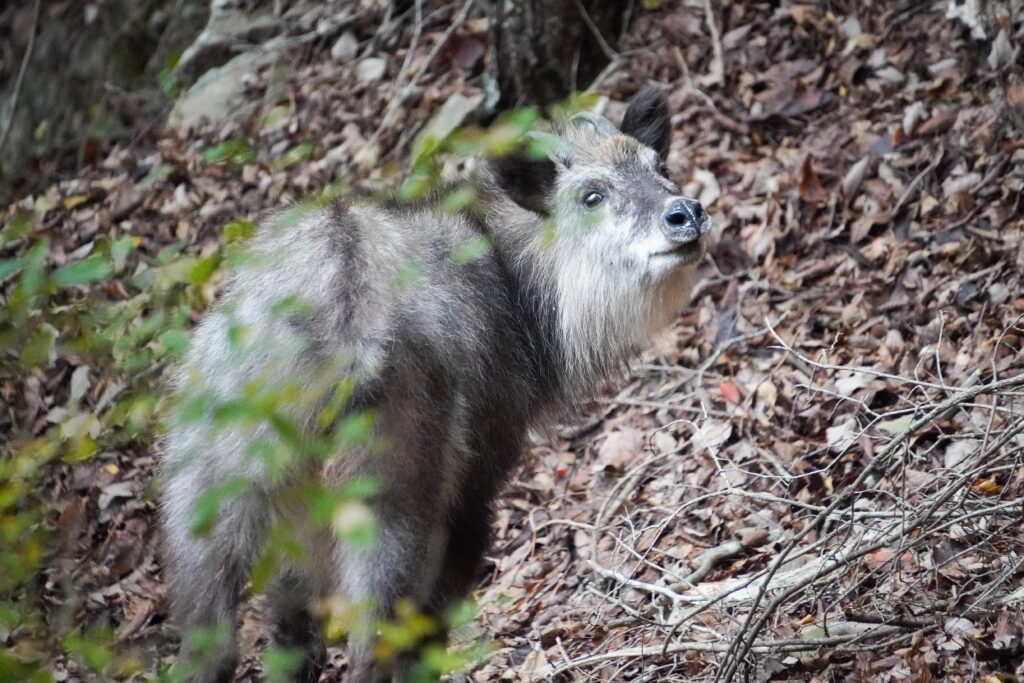
Serows are mostly solitary, or seen only in mother-and-calf pairs.
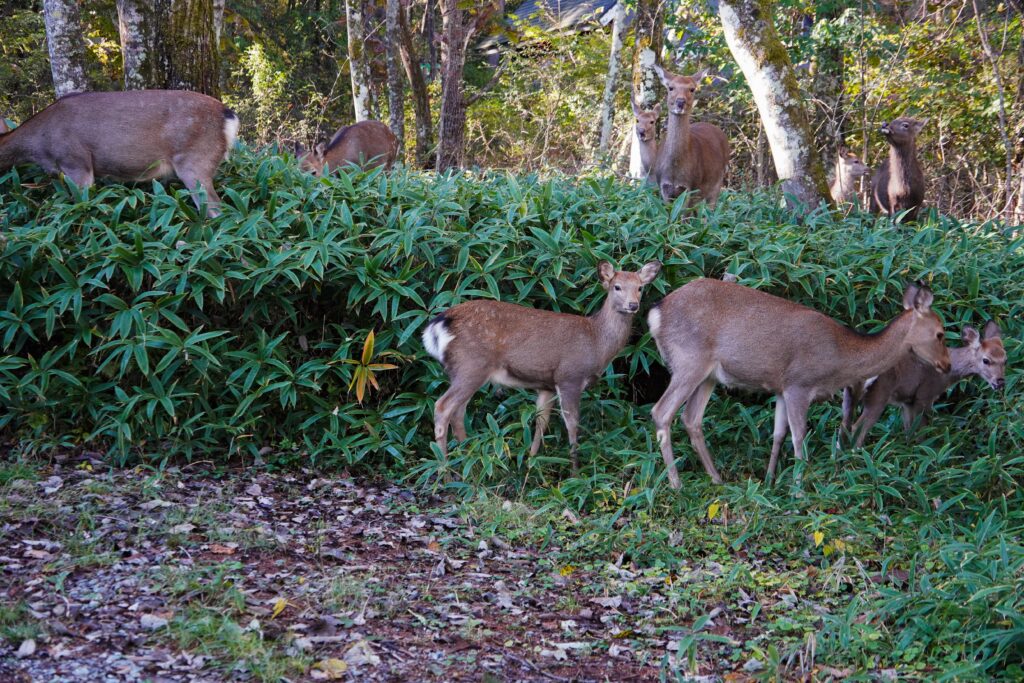
Deer, on the other hand, live in herds.
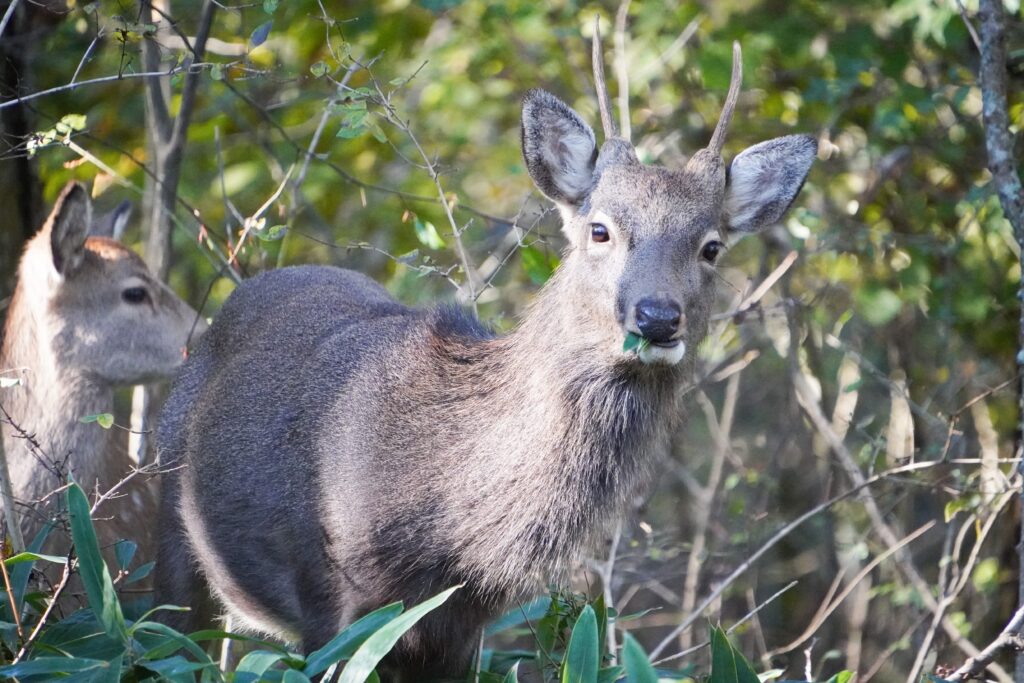
Although both share “shika” (deer) in their Japanese names, the Japanese serow is actually a bovid, closely related to wild goats and sheep. Both males and females grow horns, and unlike deer antlers, they are kept for life.
Why do deer live in herds while serows choose solitude?
It all comes down to the habitat their ancestors chose.
The ancestors of deer chose open grasslands and forests where food was abundant. However, this also made them easily visible to predators. As a result, living in herds became their established survival strategy, more eyes mean better chances of spotting danger. This way of life is only possible because food is plentiful.
In contrast, serows chose rocky crags and steep slopes. Perhaps they were driven there by competition. Predators rarely reach these heights, but food is scarce and cannot support many individuals. Therefore, serows must maintain large individual territories, living alone or in pairs.
Over hundreds of thousands of years, they rewrote their physical structures to match their environments, carving out their respective places in the world.
What is fascinating is that their way of life was not decided by an innate “personality.” Rather, their habits and temperaments were shaped after the fact, dictated by the environments they inhabited.
What about us humans?
We are also creatures that chose to live in herds.
Normally, there is a limit to how many lives a piece of land can sustain. Yet in human cities, a strange phenomenon occurs, the more people gather, the more lives the environment can support.
This happens because our measure of “support” shifted from land-grown food to the economy. In reality, food is brought in from afar through complex logistics networks. The land itself is not truly sustaining us.
We didn’t adapt physically to these spaces to increase our numbers, we altered our outer mechanisms to boost our capacity. This is where we differ fundamentally from other living beings.
While deer and serows spent vast spans of time adapting their bodies and genes to their surroundings, humans transformed external systems (tools, logistics, and economic structures) at a terrifying speed. Our physical evolution could never keep pace.
As a result, our bodies still carry the ancient hardware designed for life in wild nature.
The unexplained anxieties, frustrations, or the deep urge to return to nature that many feel today may simply be the voice of our unadapted bodies crying out from within our genes.
Deer living together to support one another in herds. Serows quietly guarding their own territories on rugged cliffs.
Life in the wild is undoubtedly tough, yet for them, it must be a deeply fulfilling existence.
For these creatures, accomplishing something great simply means surviving and passing life on to the next generation.