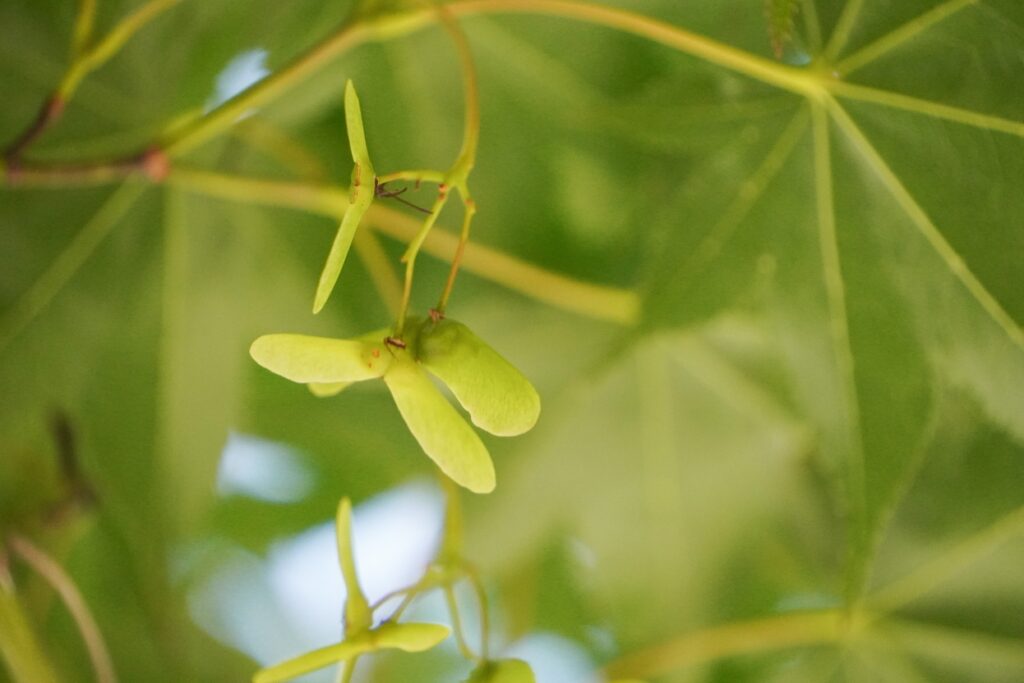
In front of my workspace stands a single Japanese maple tree.
On its trunk, I noticed a black insect clinging motionless to the bark.
Looking closer, it appeared to be a type of wasp already dead, still attached to the wood. Extending from the tip of its abdomen was a needle-like structure stuck deep into the trunk. I noticed several others like it across the tree.
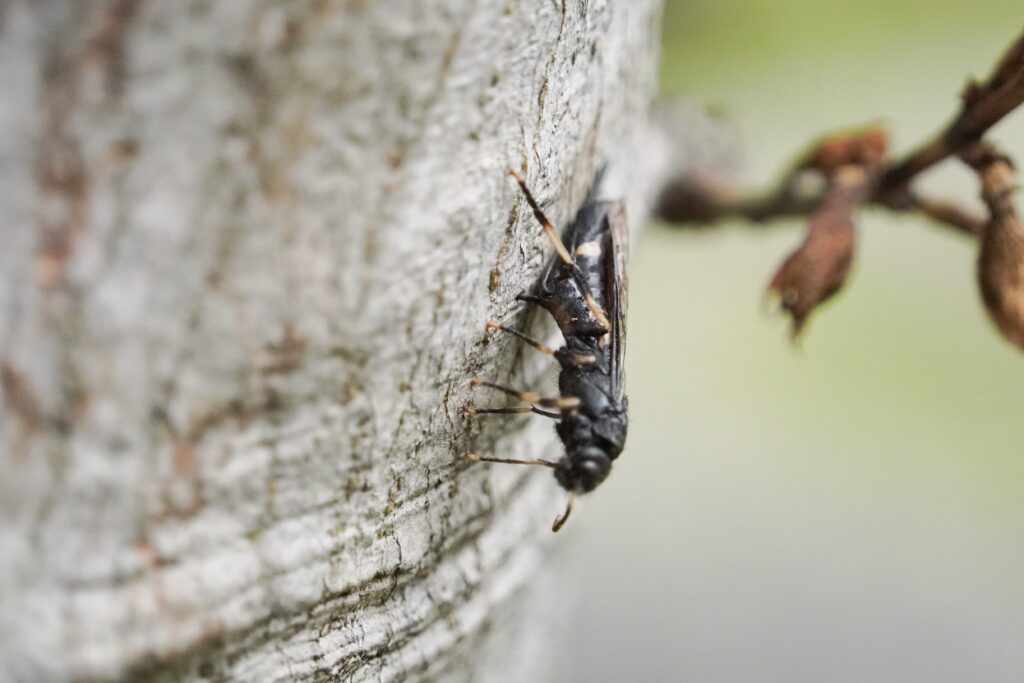
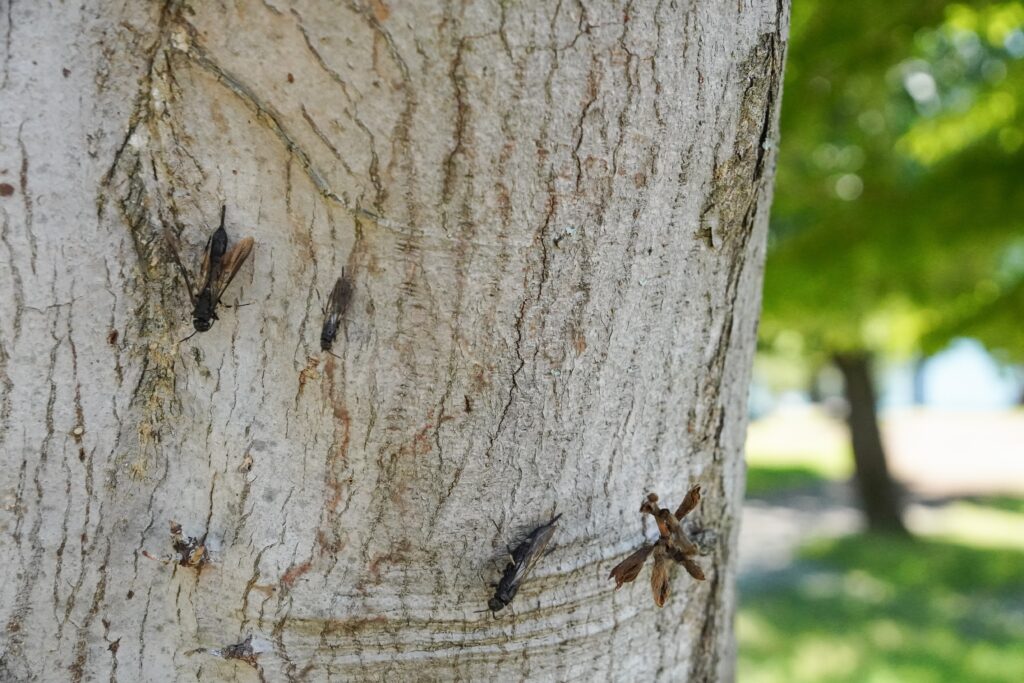
It turned out to be a horntail wasp (kibachi). The needle is an ovipositor, used for laying eggs. Although the maple is hard wood, part of the trunk is dying and cracked, which seems to be where the wasps targeted. After laying their eggs, some exhaust their strength or become trapped when their ovipositors get stuck, dying right on the bark.
What surprised me even more is that they do not deposit just eggs. They also inject a fungus carried inside their bodies into the wood. Once hatched, the larvae feed on the wood softened by this fungus. The fungus likely survives within the next generation of wasps, continuing to spread from tree to tree.
Intrigued, I went back to inspect the maple once again.
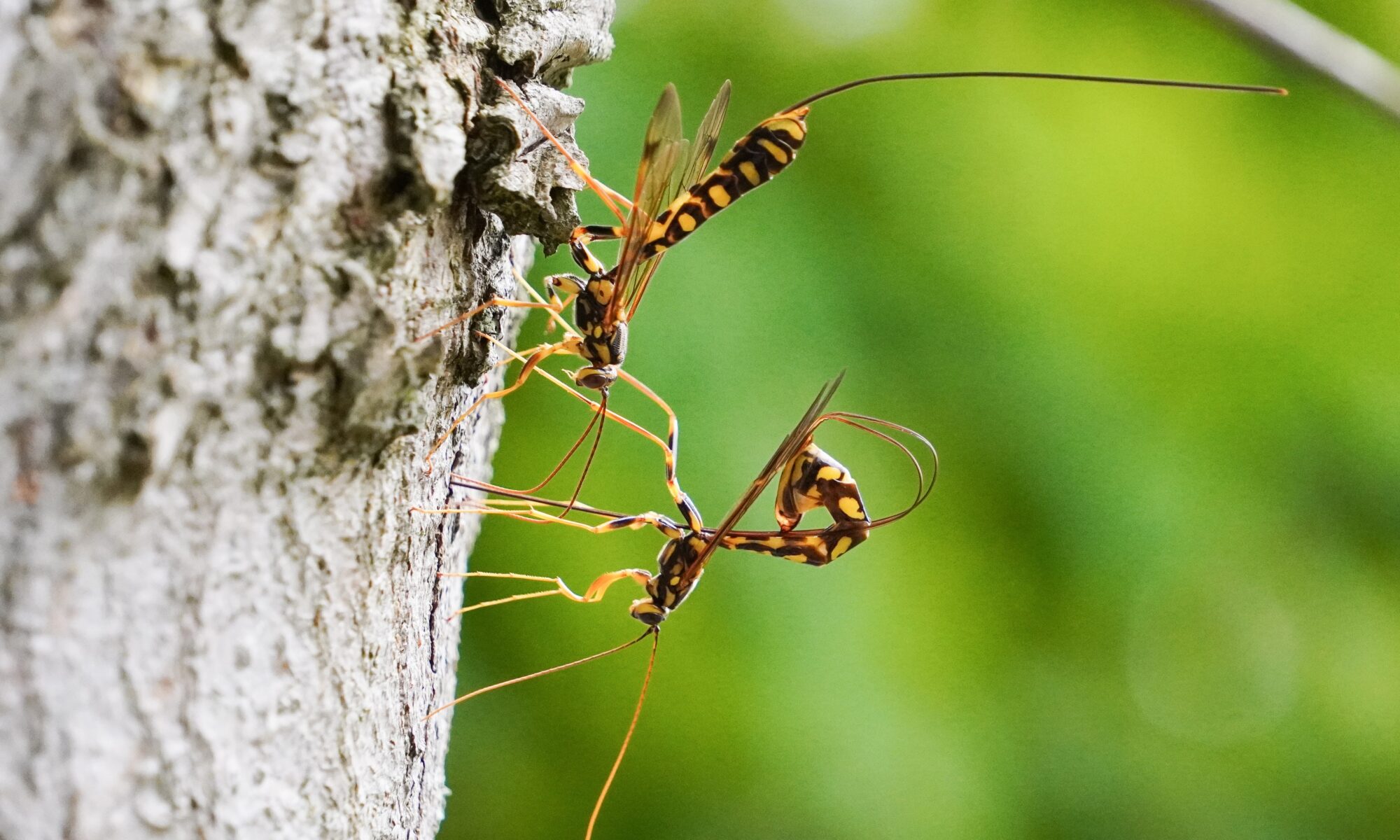
This time, a yellow wasp with an astonishingly long tail had arrived.
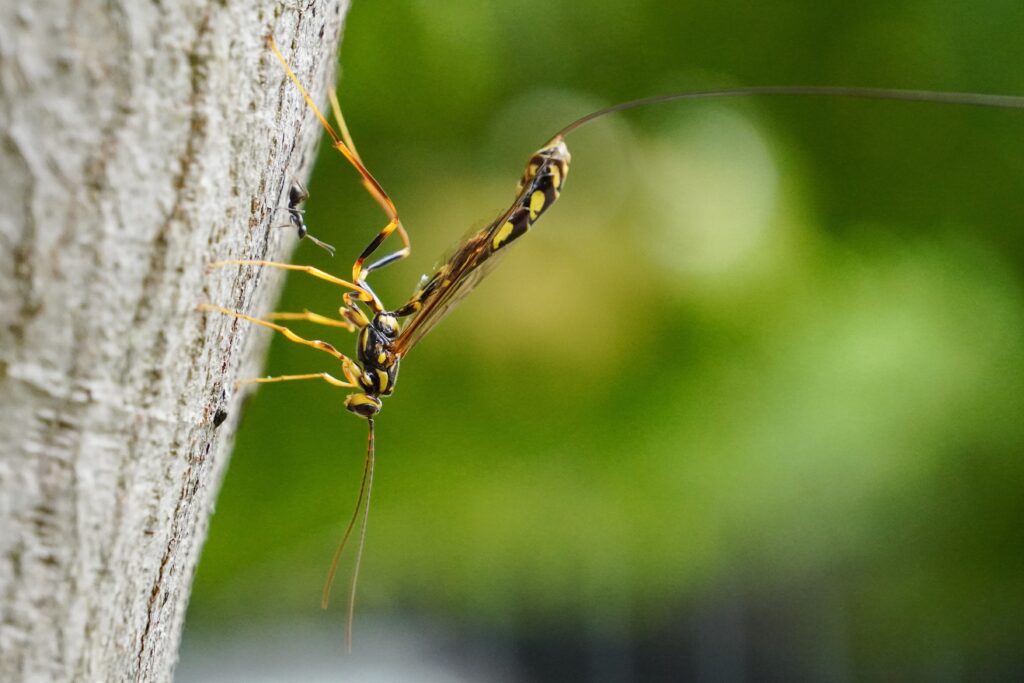
It walked across the bark, probing the surface with its antennae. Then, curving its long tail, it inserted an even longer sting deep into the wood and remained still. Vulnerable to any threat, it seemed like a truly high-risk moment of egg-laying. After a while, it quietly pulled out its needle and flew away.
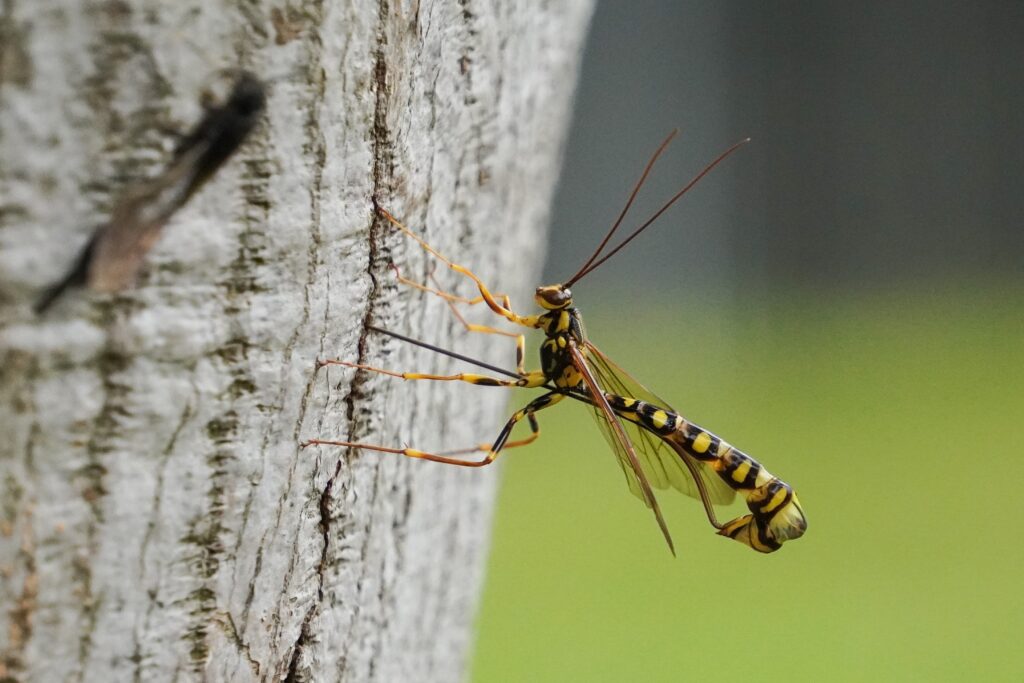
The horntail died stuck to the bark, while this yellow wasp managed to fly off. What made the difference?
Learning more about it revealed another surprising connection.
The yellow wasp was a giant ichneumon wasp (onagabachi), a parasitic species. She was not targeting the wood itself, but the horntail larvae growing inside from previous years. She lays her eggs directly onto the larvae hidden within the trunk.
This made me wonder if the bodies of the dead horntails ended up acting as markers, signaling to the parasitic wasp exactly where to strike.
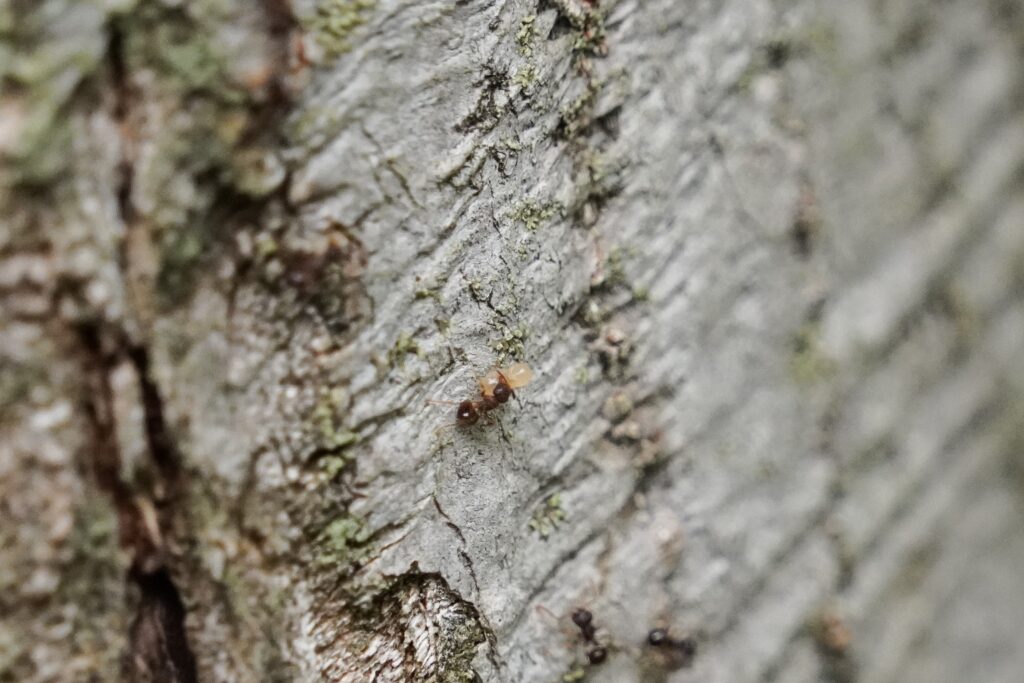
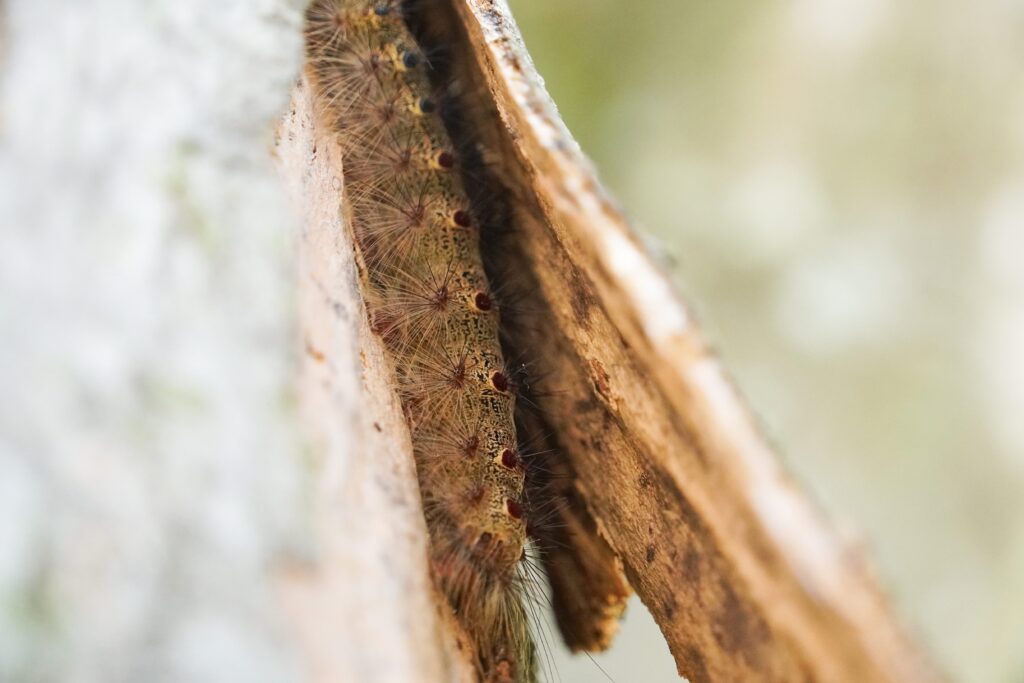
Looking around, I noticed ants carrying eggs out from inside the tree, alongside caterpillars and beetles gathering on the trunk. What I witnessed was likely just a tiny fraction of the life unfolding on this single maple.
Though one side of the trunk has begun to die, the tree still spreads lush green leaves, quietly preparing its winged seeds for the wind.