On August 27, the day after the Yoshida Fire Festival, the Susuki Festival takes place.
Within the grounds of Kitaguchi Hongu Fuji Sengen Shrine sit two shrines, Sengen Shrine and Suwa Shrine. Sengen Shrine became a major center for Mount Fuji worship during the Edo period and attracts many visitors. Looking at it on any ordinary day, Suwa Shrine might seem like a quiet secondary shrine standing in its shadow.
However, attending the festival’s climax completely changes that impression.
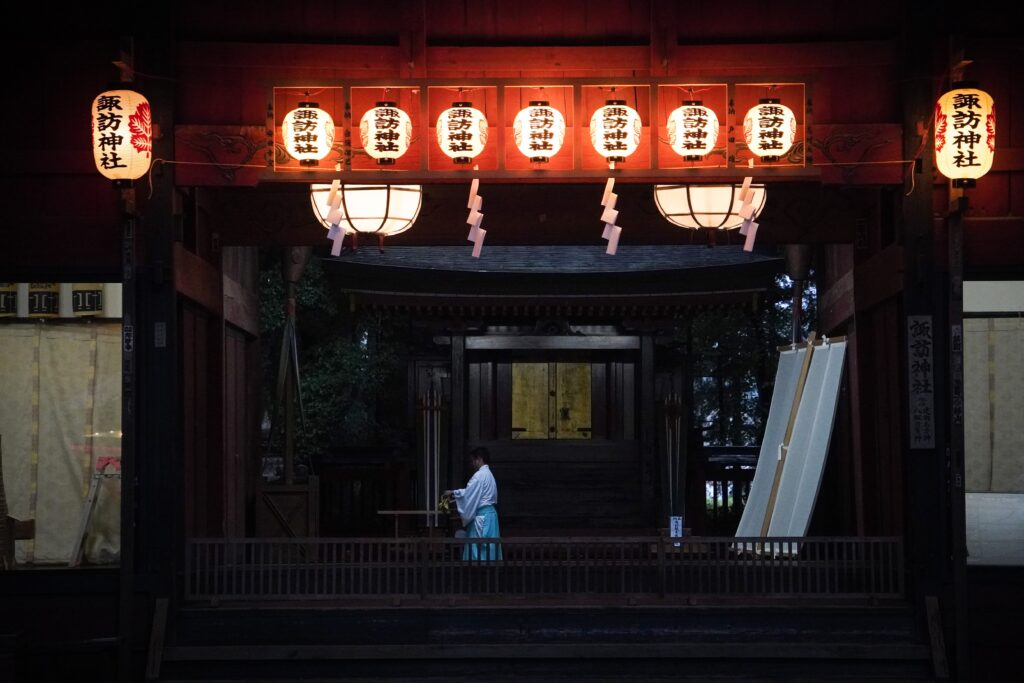
Walking down the approach and turning west leads to Suwa Shrine.
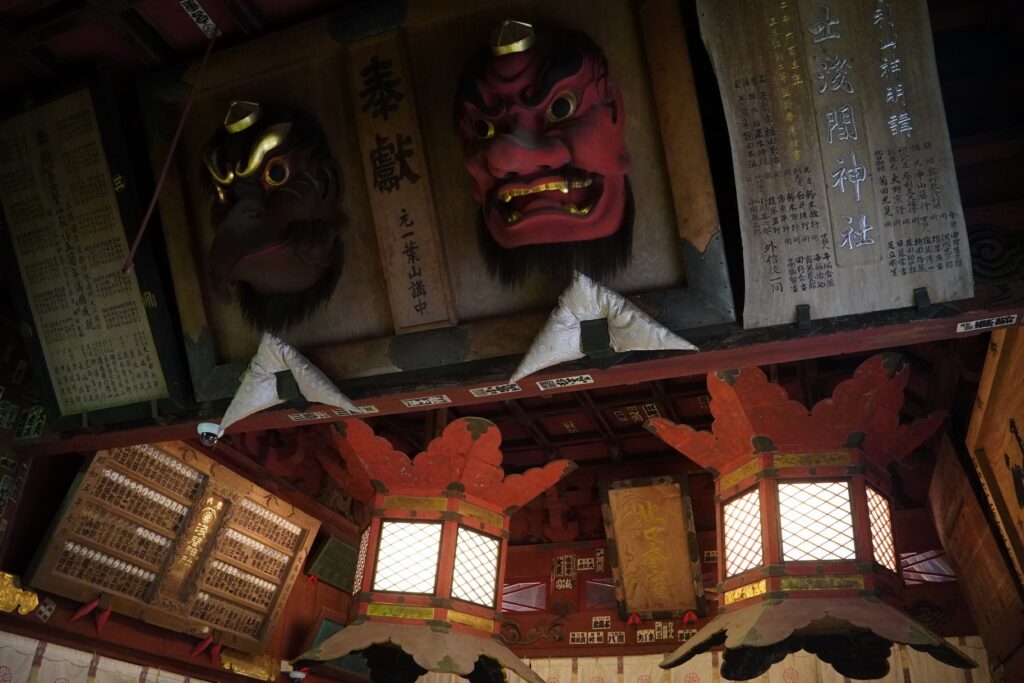
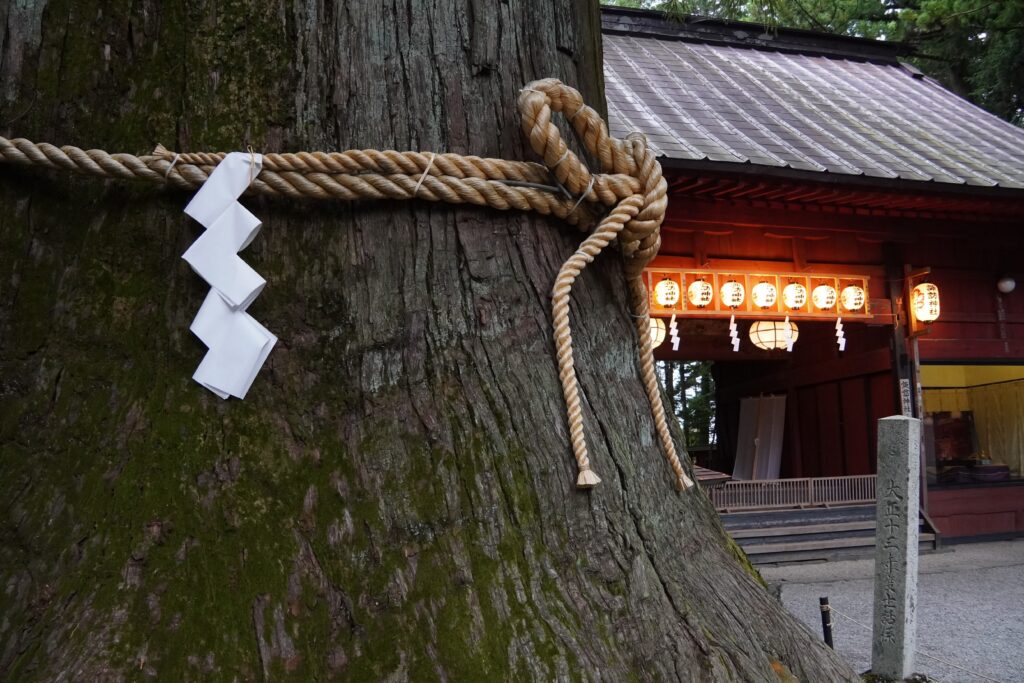
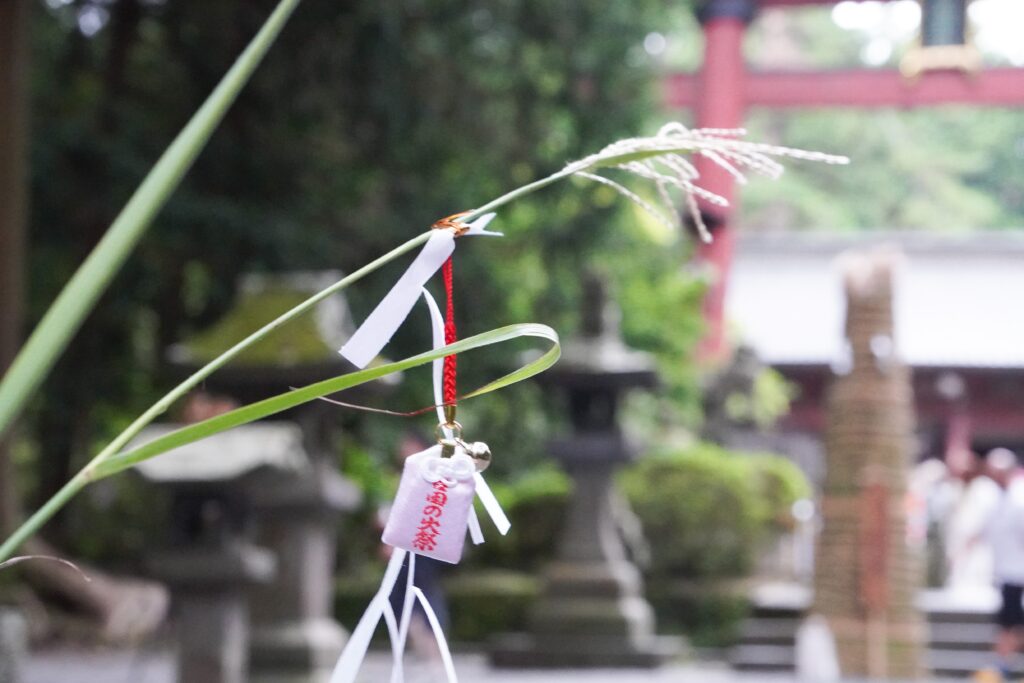
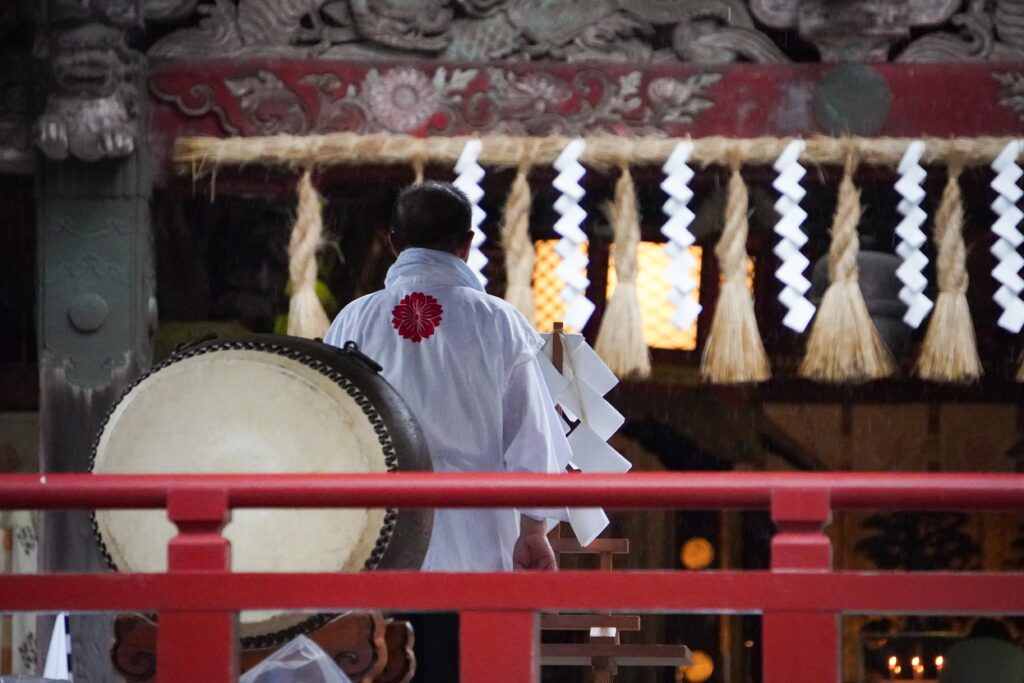
After receiving a Susuki grass branch, a sudden thunderstorm broke out. Everyone crowded under the Zuishinmon gate to take shelter as rain soaked the grounds.
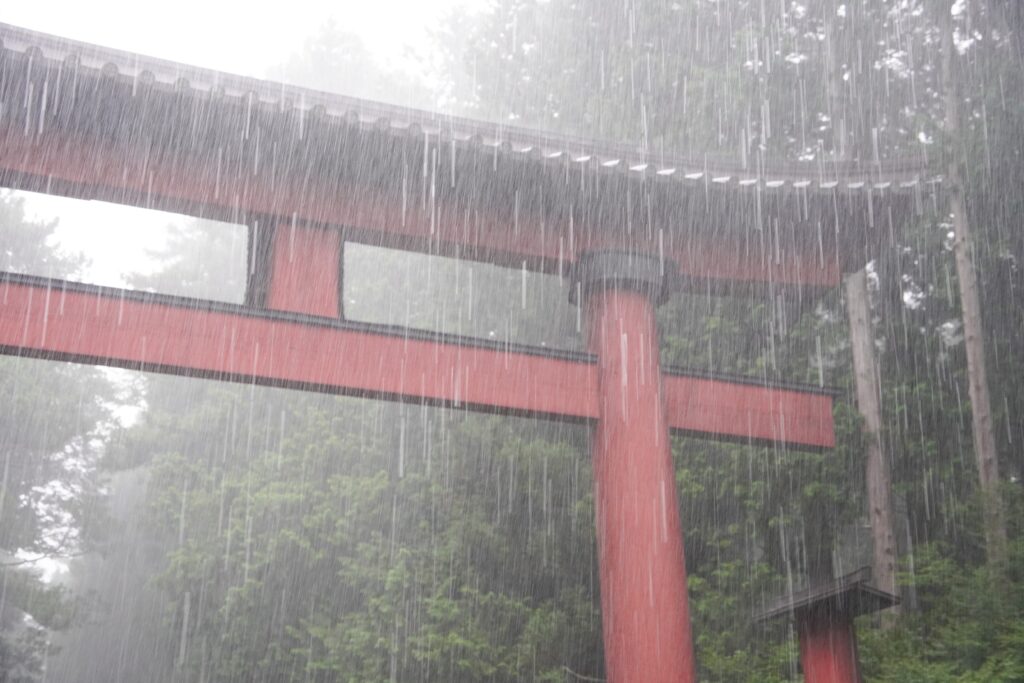
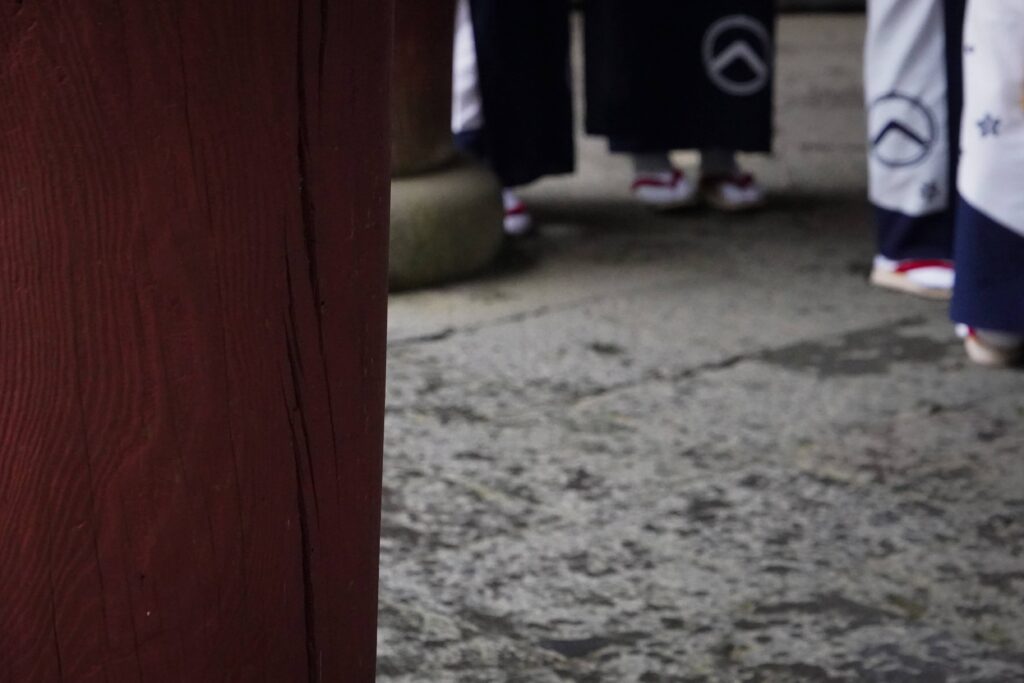
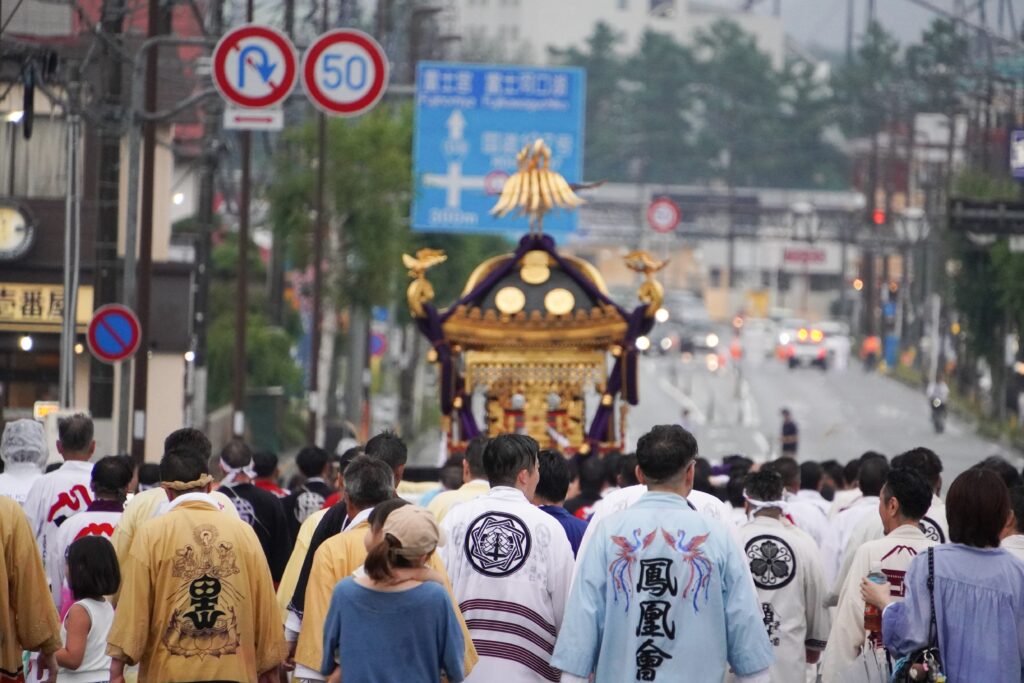
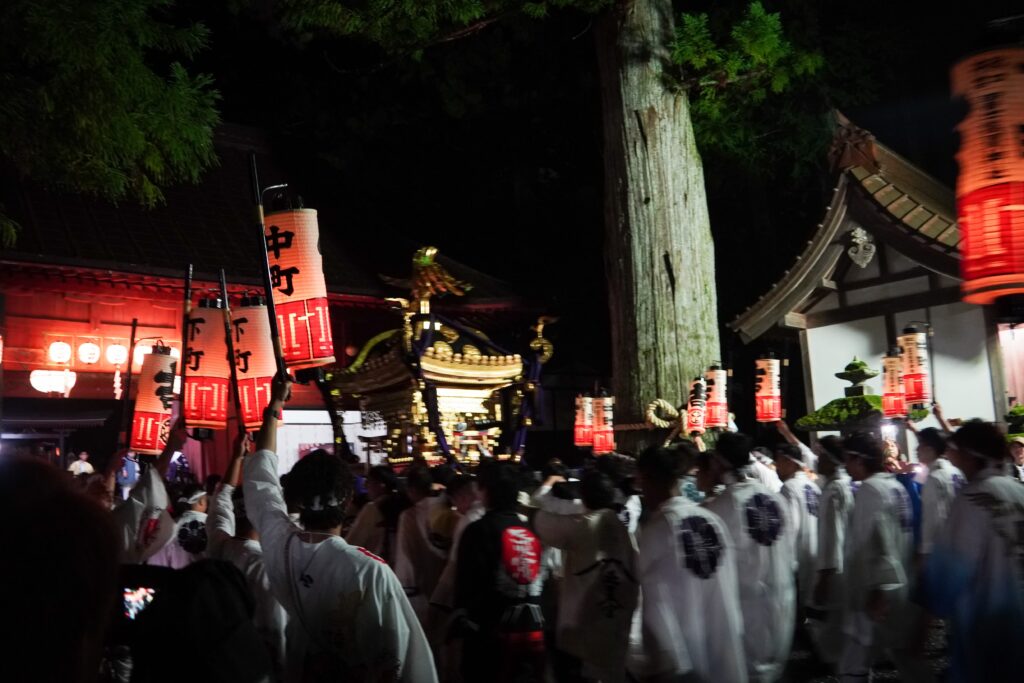
At the same time in town, two portable shrines (mikoshi) that had spent the night at the temporary shrine (otabisho) were paraded through the streets despite the rain.
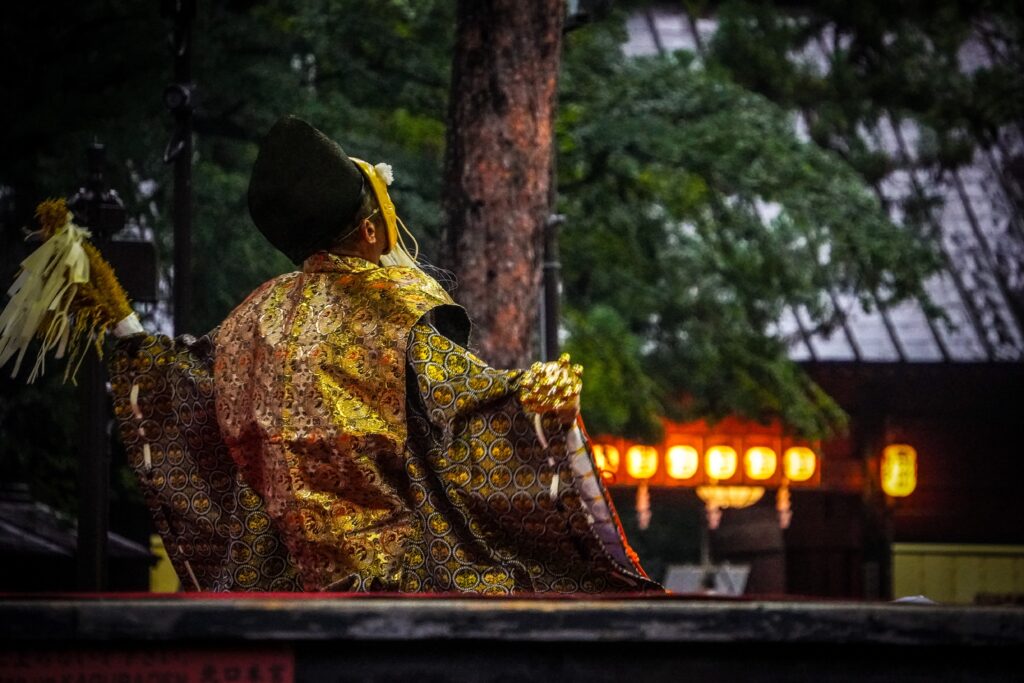
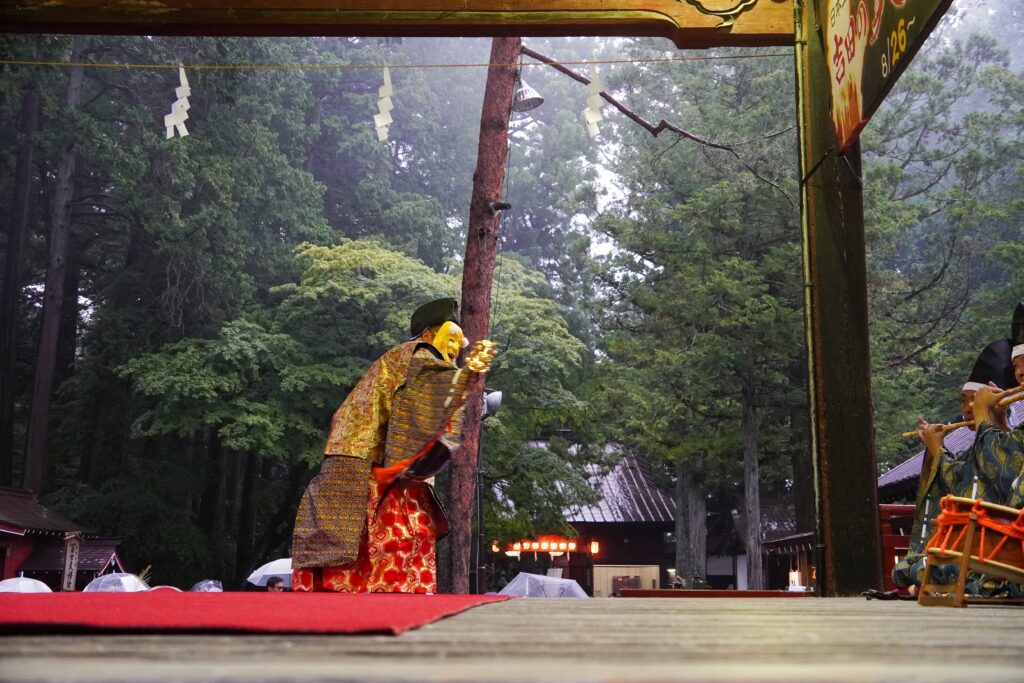
As the mikoshi took their final break and prepared to return to the shrine, sacred court music and dance (kagura) were performed on the stage within the grounds.
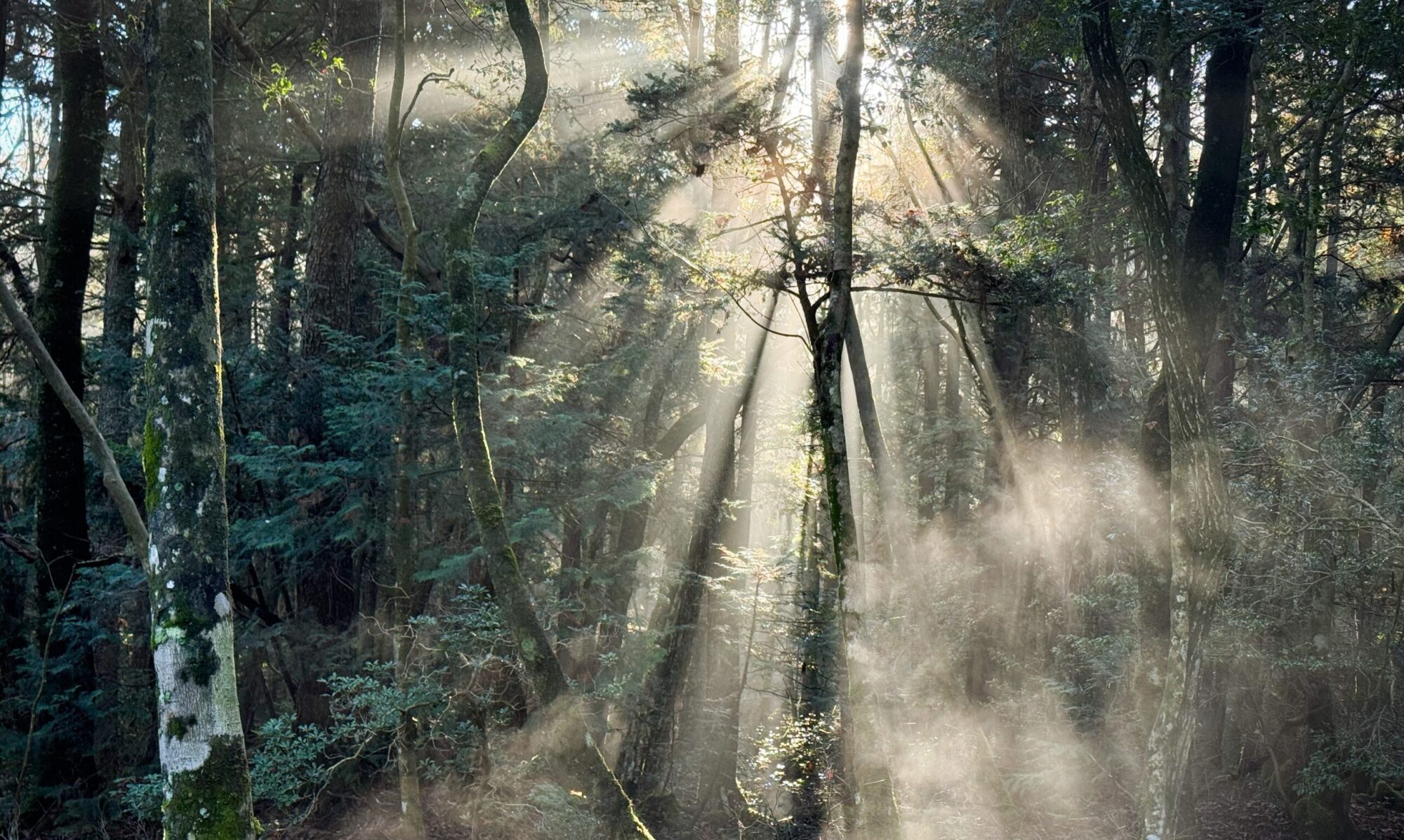
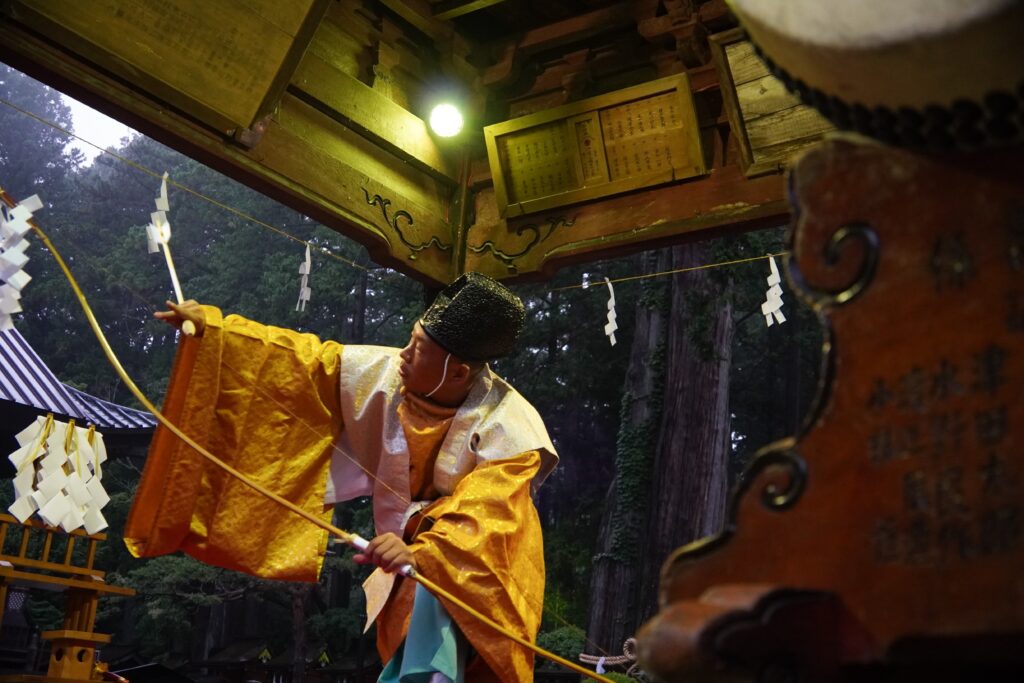
With the rain easing, the sounds of drums and flutes echoed through the quiet shrine grounds. An old man danced holding a bell and ears of rice to pray for a bountiful harvest. Next came the bow dance, where arrows were shot into the four corners and the ground to drive away evil spirits. By the time the dance ended, night had fallen, wrapping the deep forest in darkness and blurring time and space.
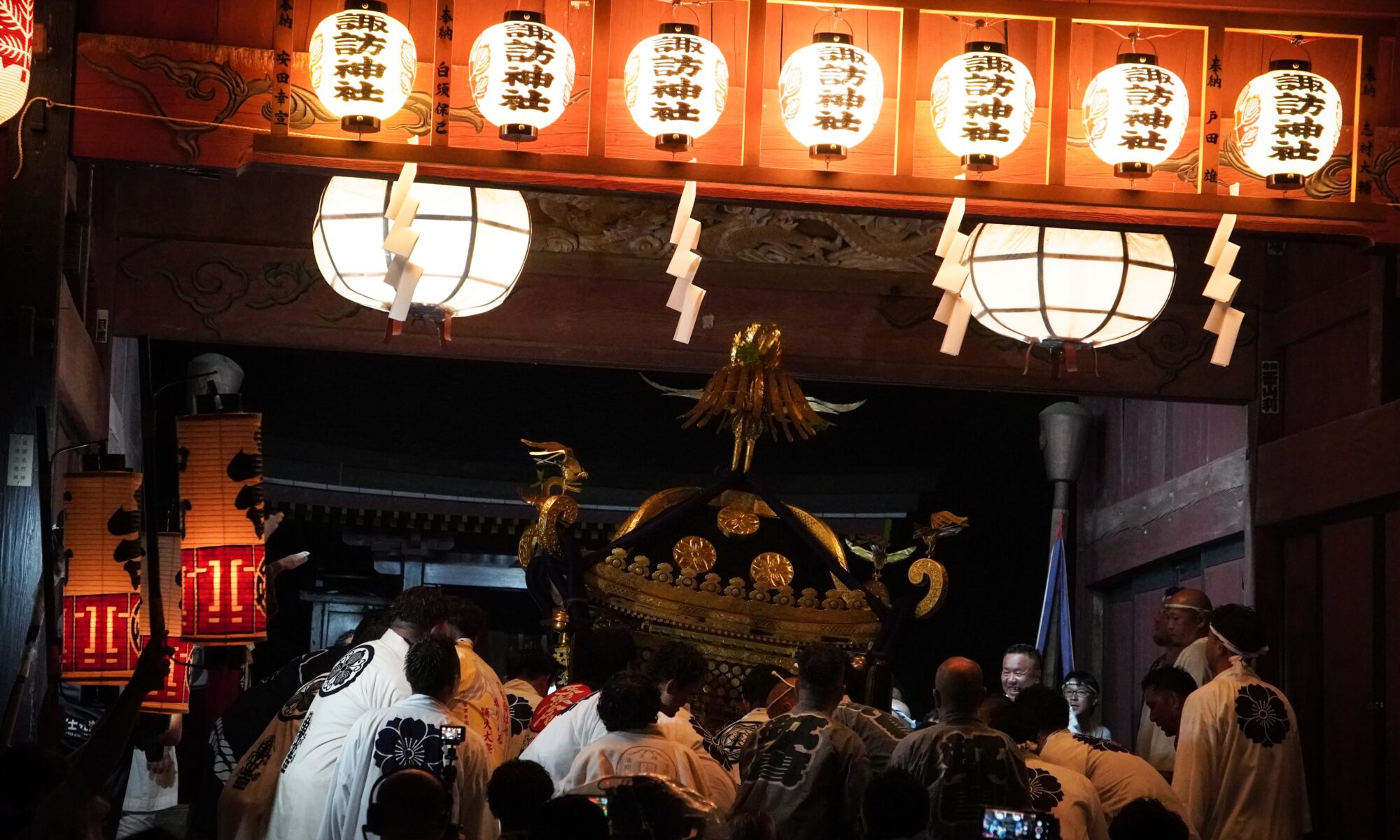
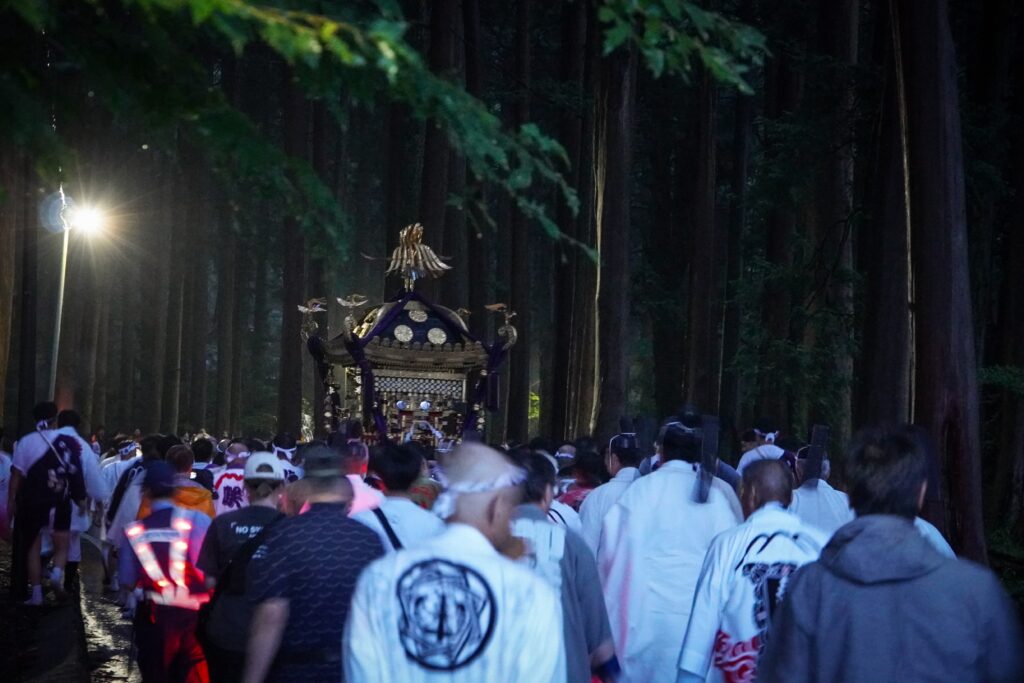
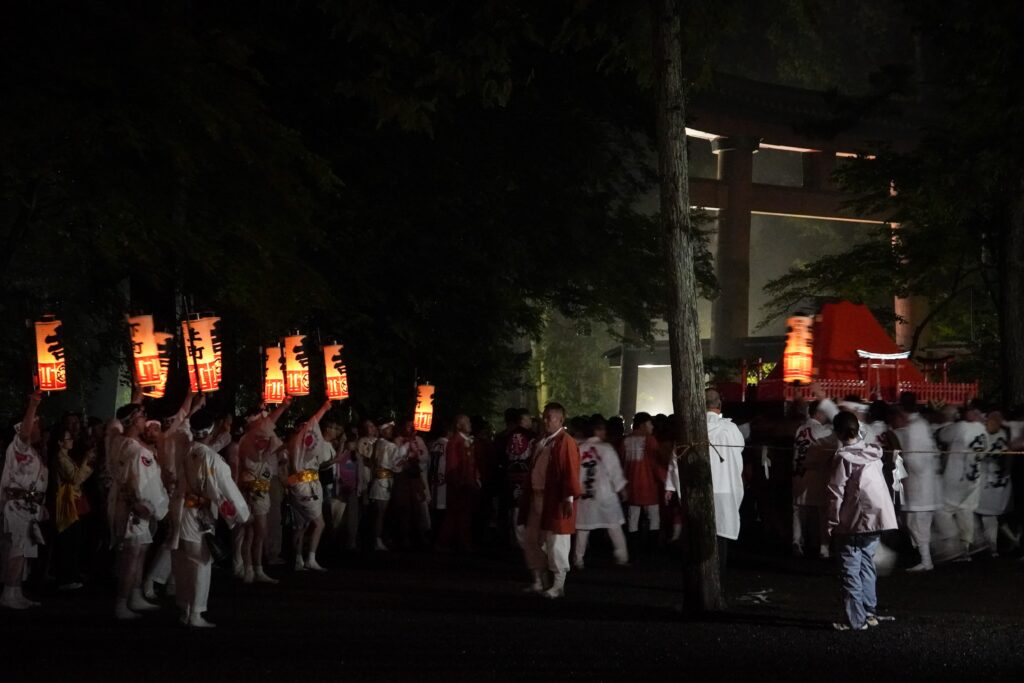
Through the dark forest, the procession moved forward. Leading the way was the Myojin Mikoshi (representing Suwa Shrine), followed by the Oyama Mikoshi (representing Sengen Shrine).
They headed toward the Omikura-ishi, a sacred stone that serves as Suwa Shrine’s holy site and likely dates back to ancient times.
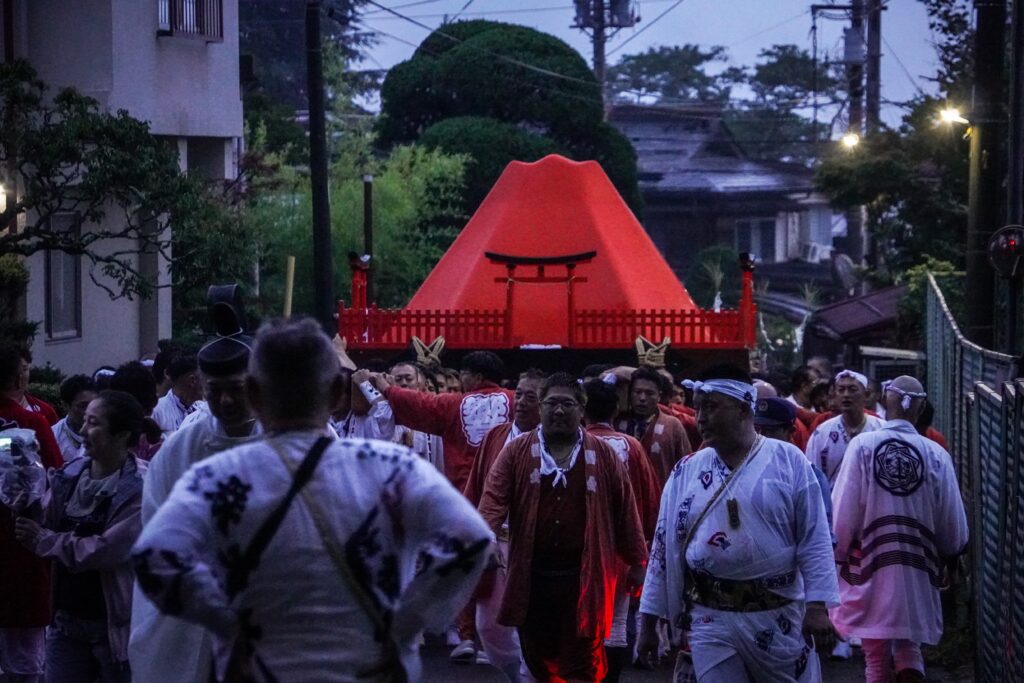
A solemn ritual took place in the dark.
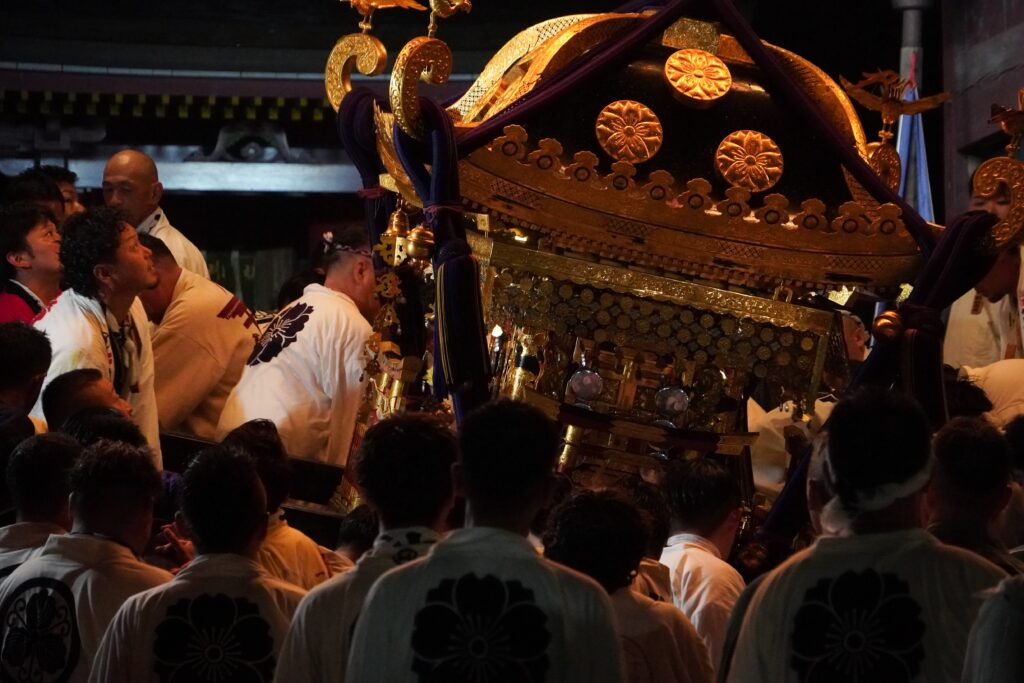
Only the Myojin Mikoshi is allowed to rest upon the stone. Meanwhile, the heavy, Mount Fuji-shaped Oyama Mikoshi was slammed onto the ground three times. While often explained as a ritual to appease the volcano, it leaves room for various interpretations. Offerings made to the deities are always presented to the Myojin Mikoshi first.
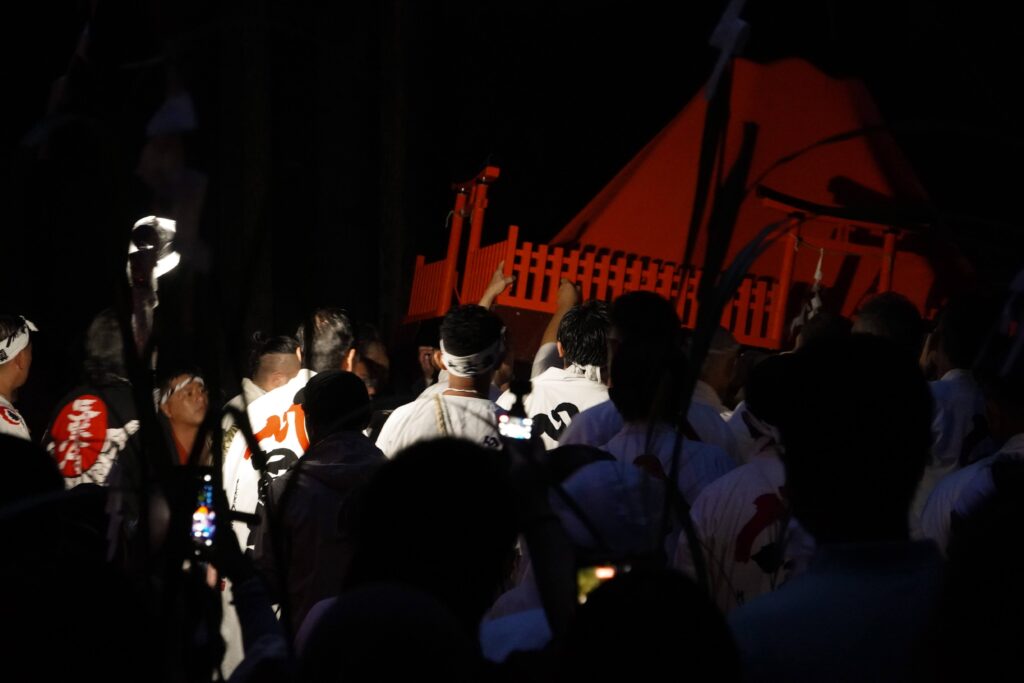
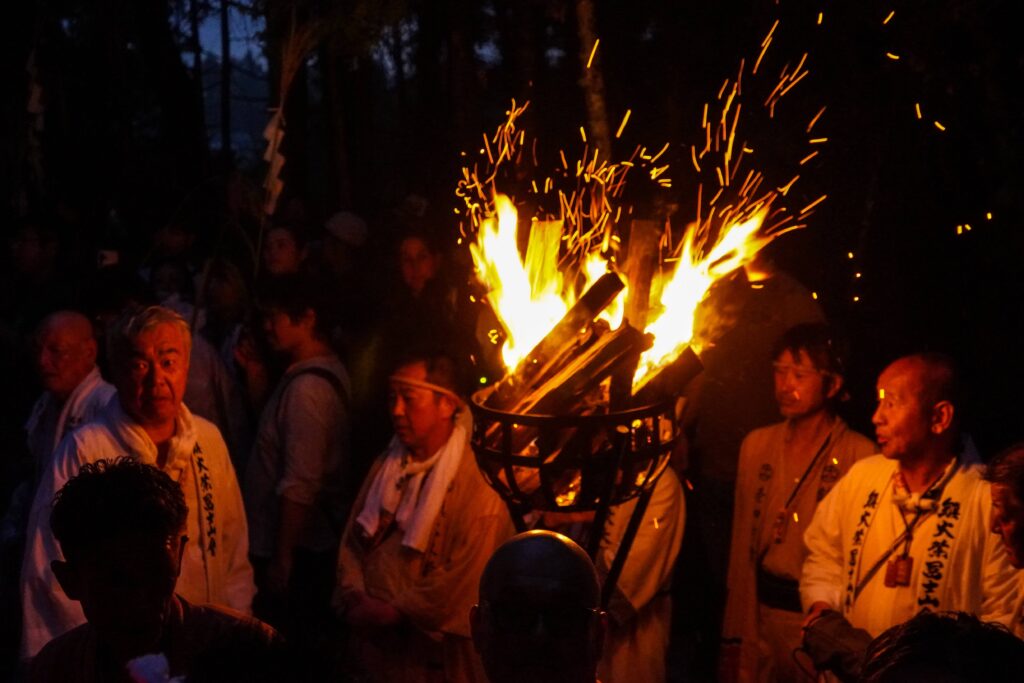
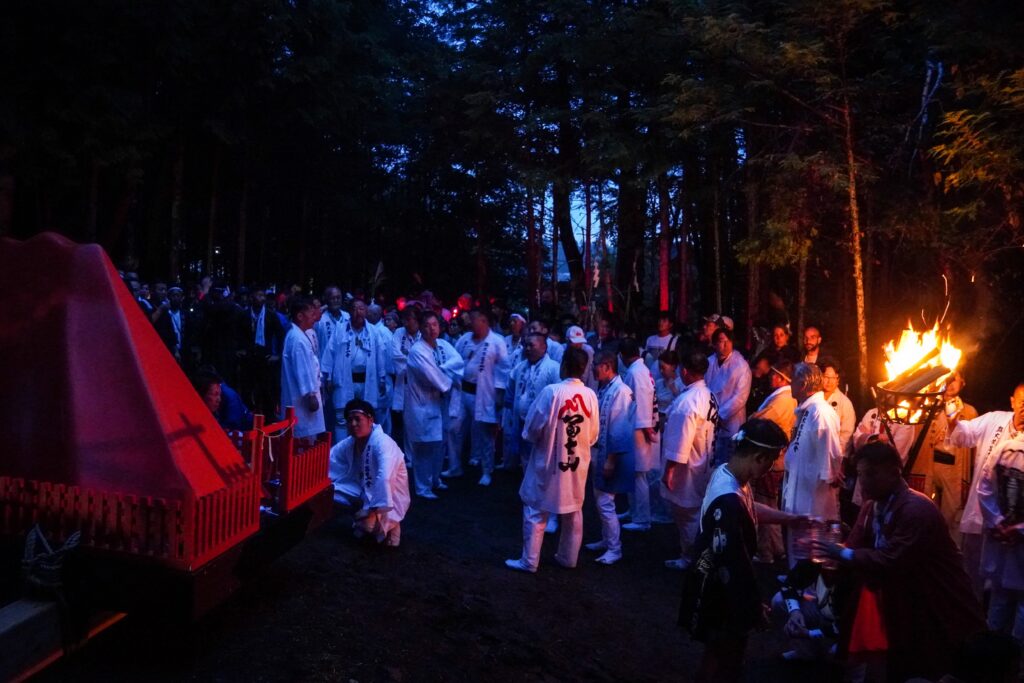
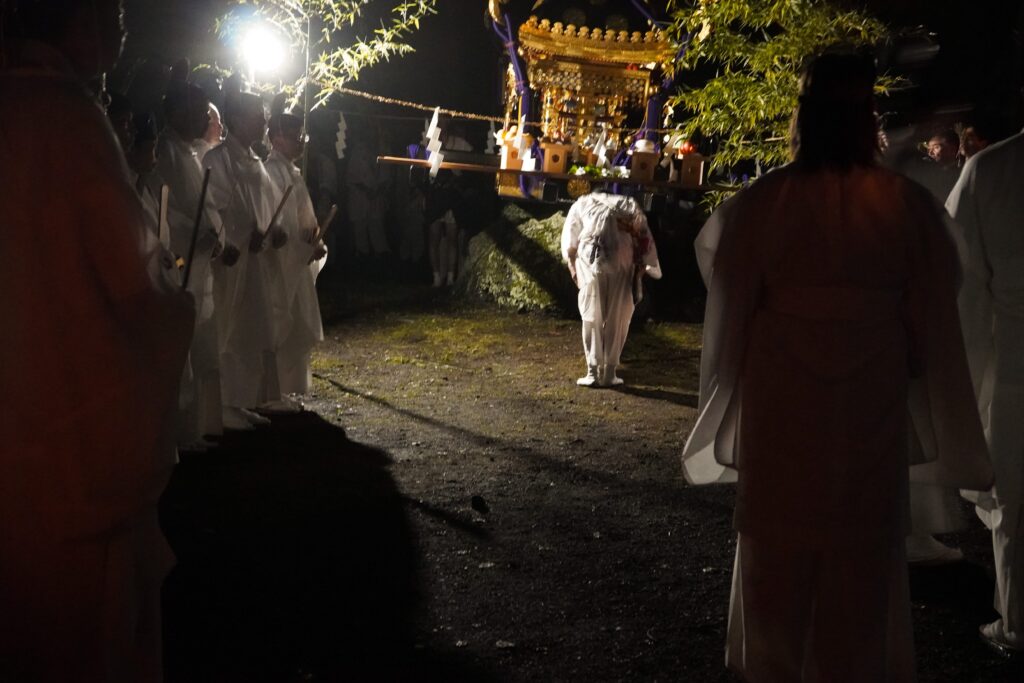
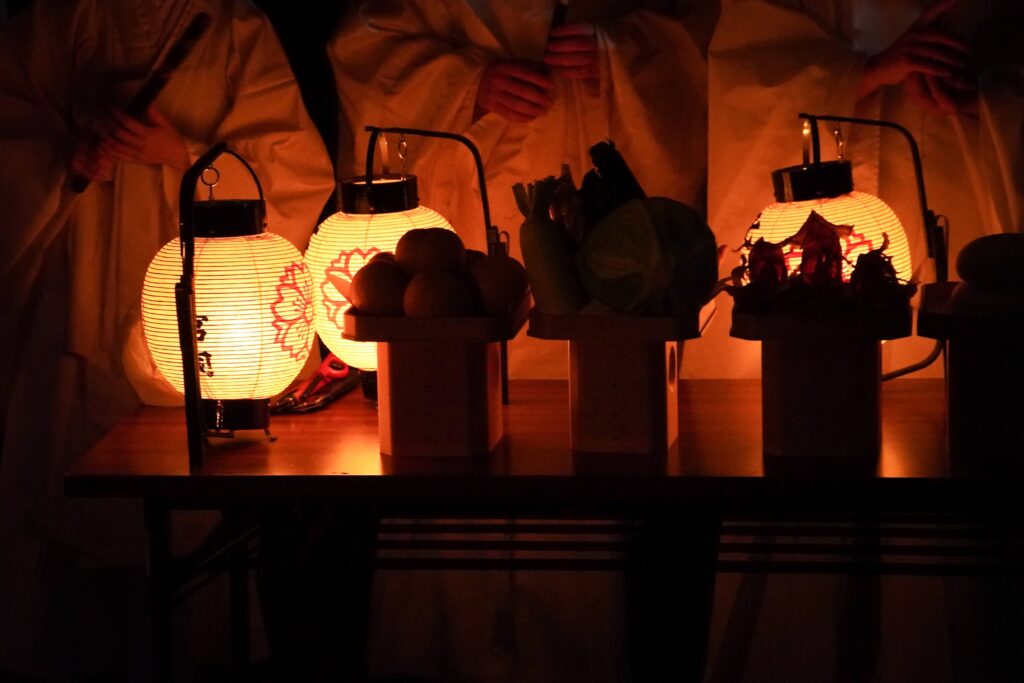
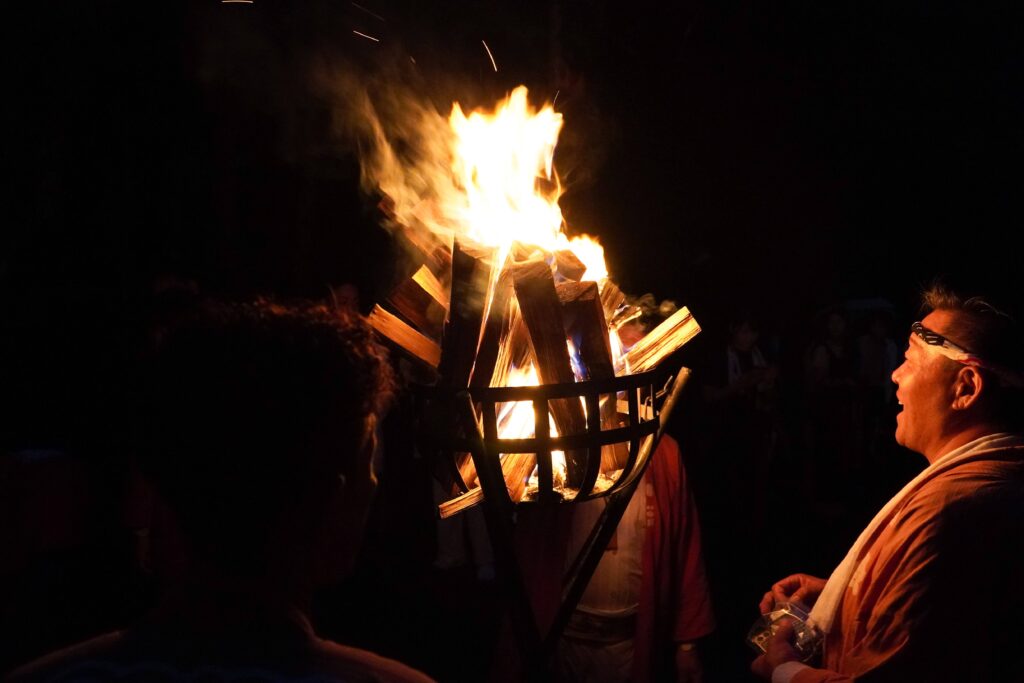
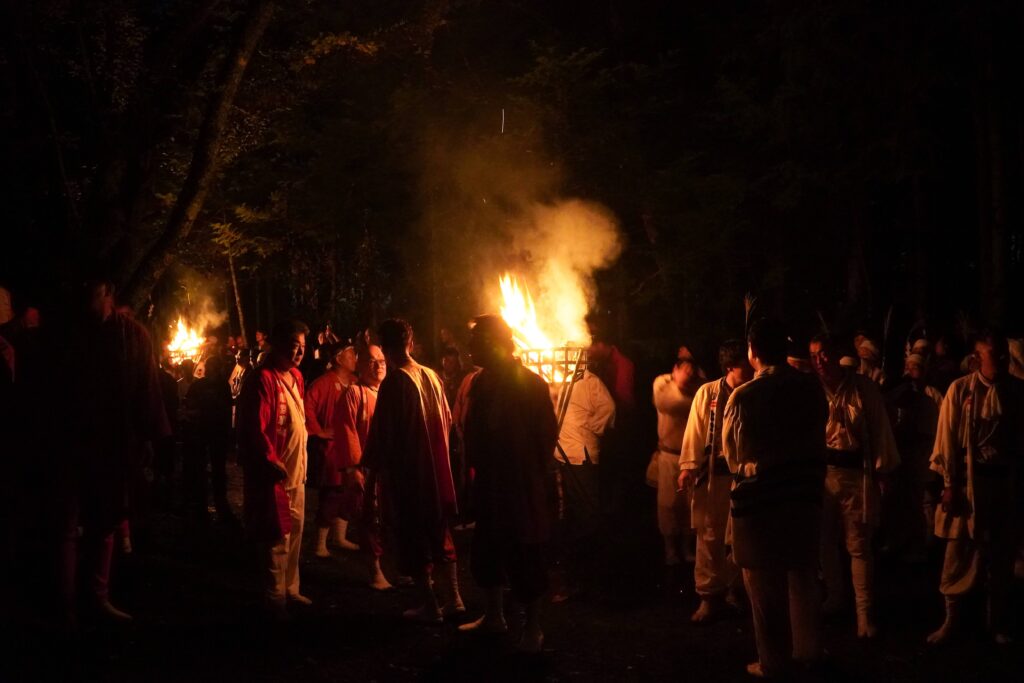
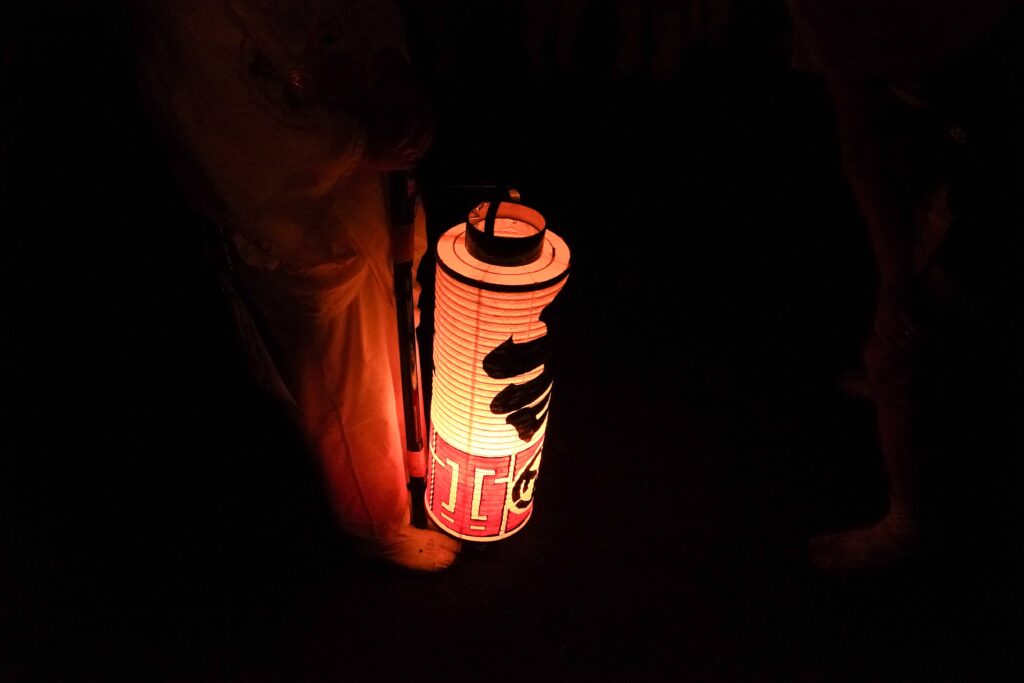
Once the ritual finished, a festival organizer quietly swung a lantern toward the darkness.
Beyond the pitch-black forest lies Suwa Shrine’s Takamagahara. Guided by lights brought by a group rushing from Takamagahara through the dark, the mikoshi began moving toward the illumination.
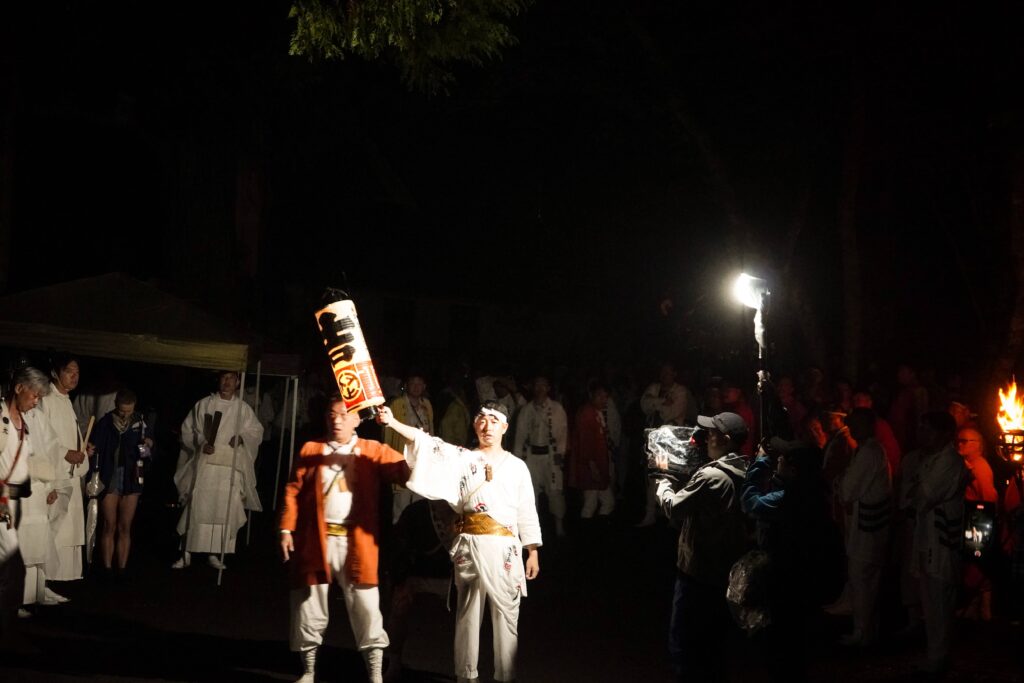
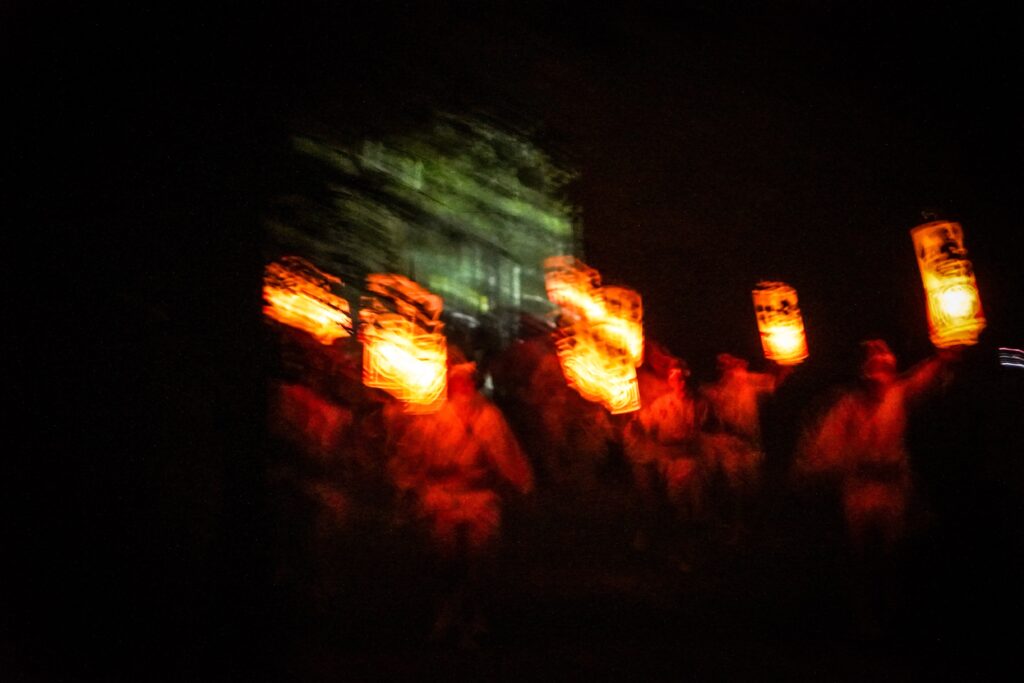
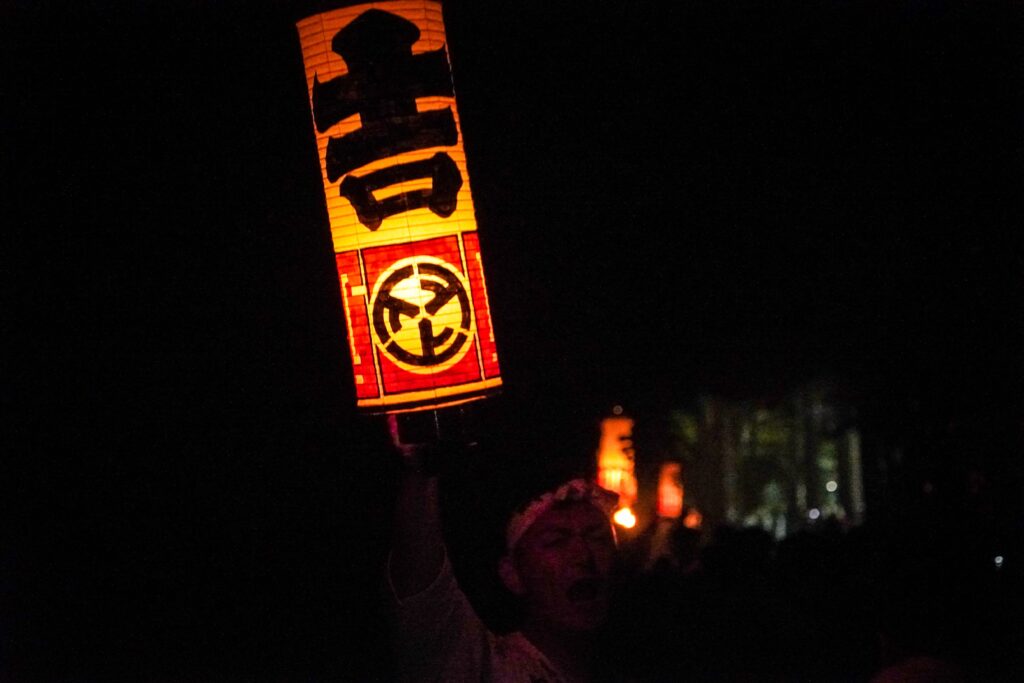
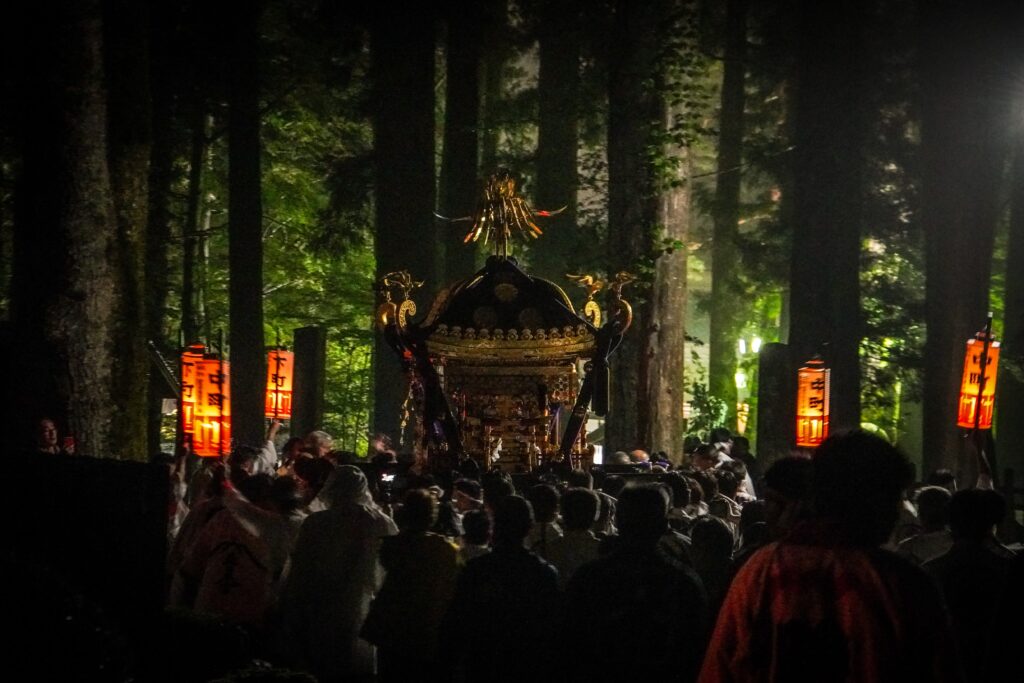
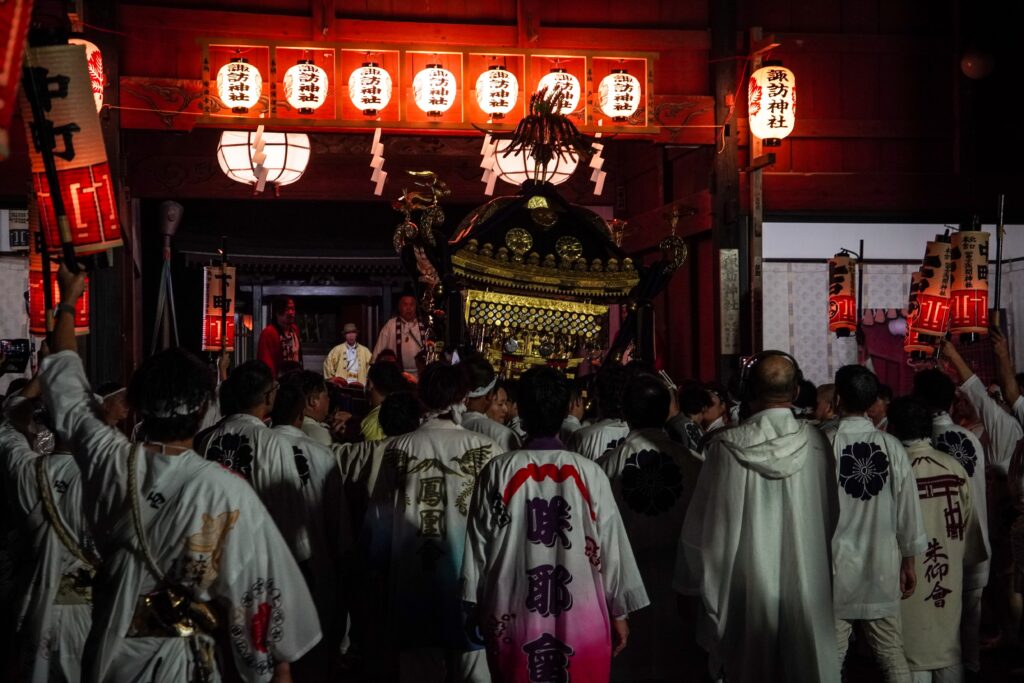
The moment they reached the open space of Takamagahara, the crowd erupted into cheers. Chants of “Wasshoi!” filled the air as the mikoshi surged forward through the middle of the crowd.
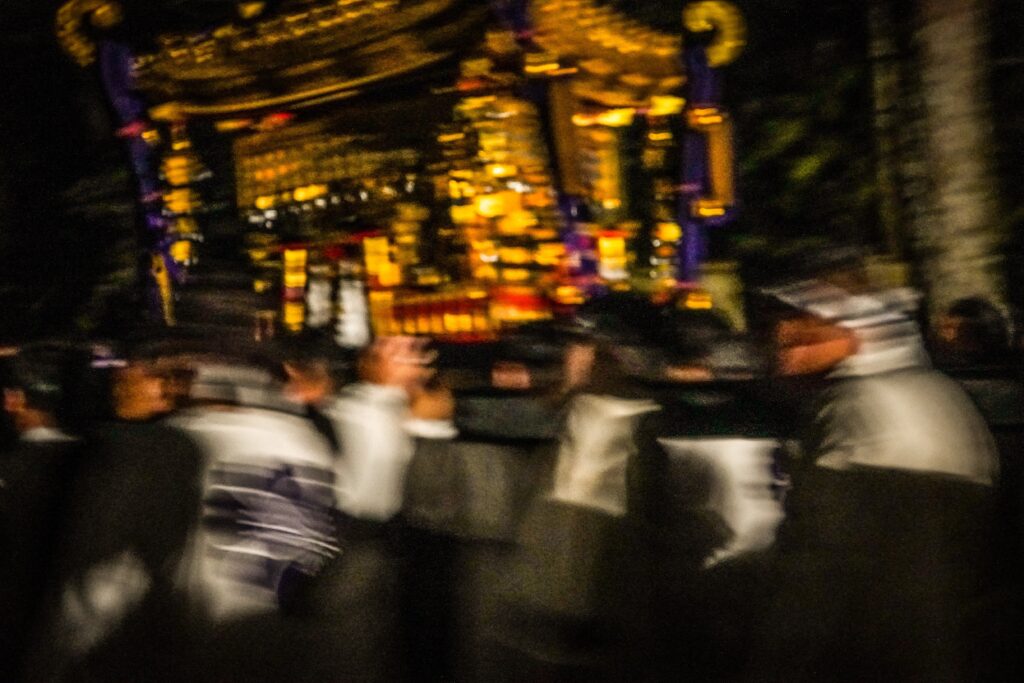
The mikoshi spun clockwise, a direction said to generate energy—over and over. The Oyama Mikoshi joined in shortly after, and visitors holding their Susuki grass branches joined the movement, engulfing Takamagahara in excitement. The festival had reached its peak.
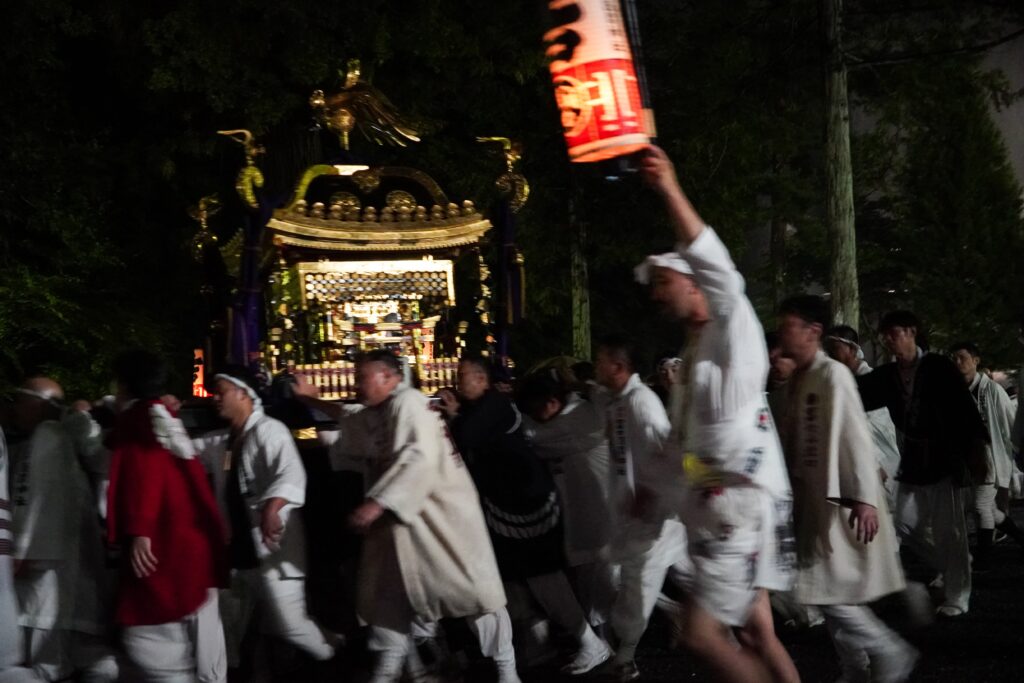
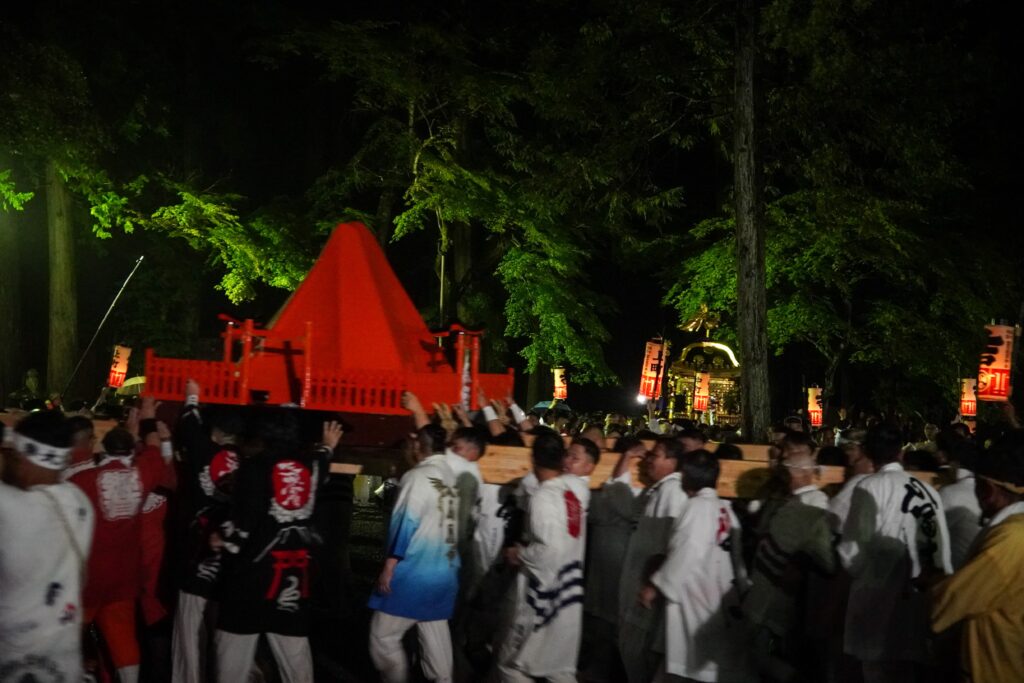
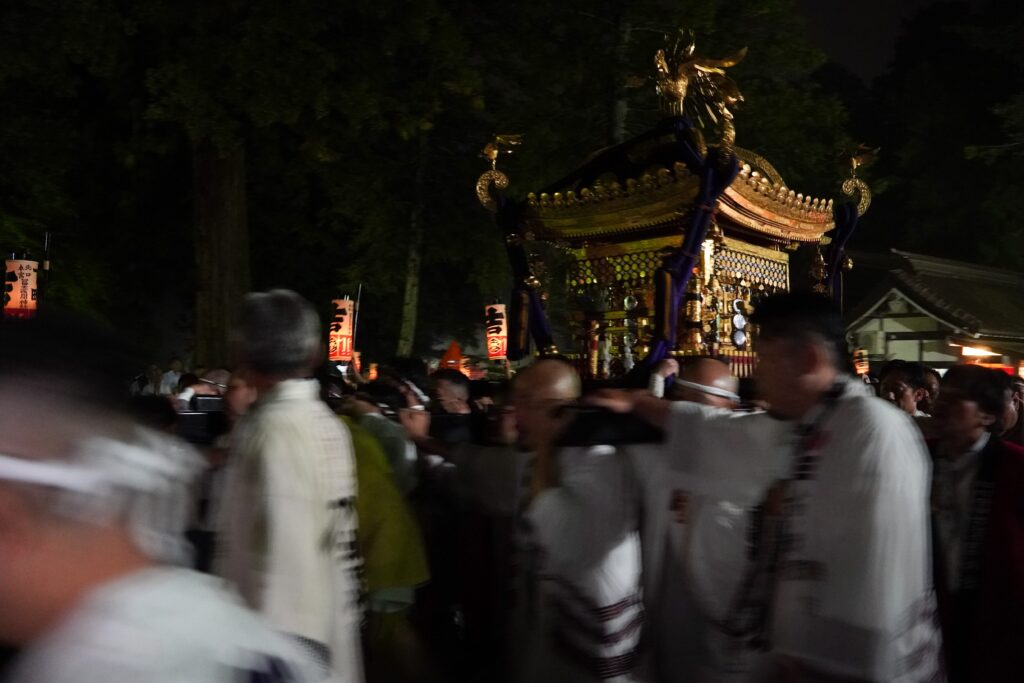
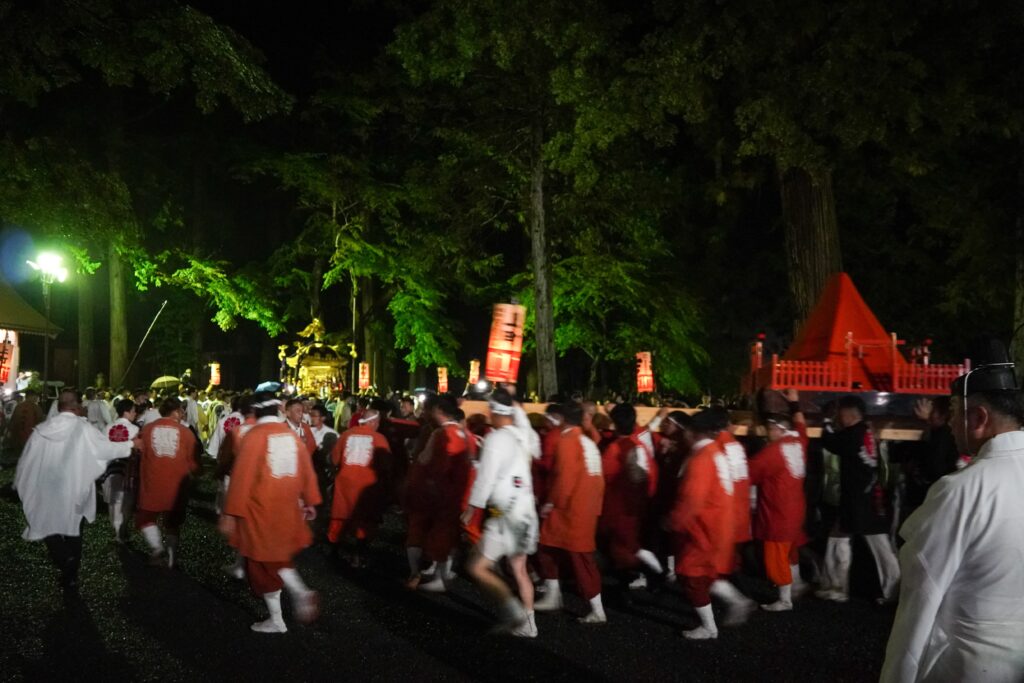
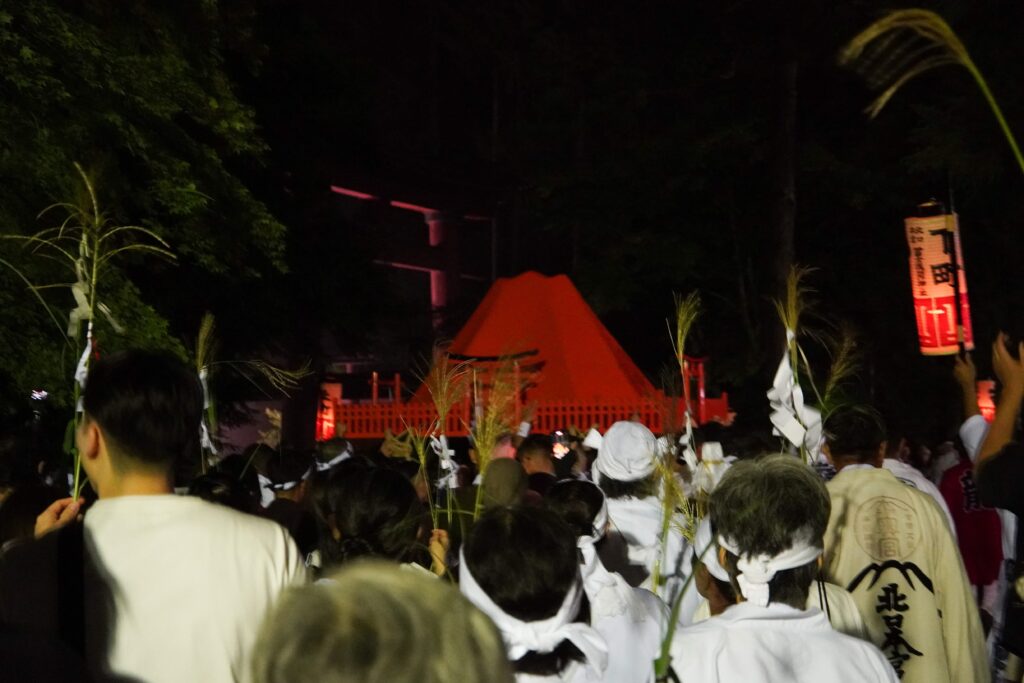
After the excitement subsided, a shinto prayer was quietly recited, and the two mikoshi were returned inside Suwa Shrine.
A white curtain was lowered, and everything blurred by the night and heat slowly returned to its original form. The two-day festival came to an end.
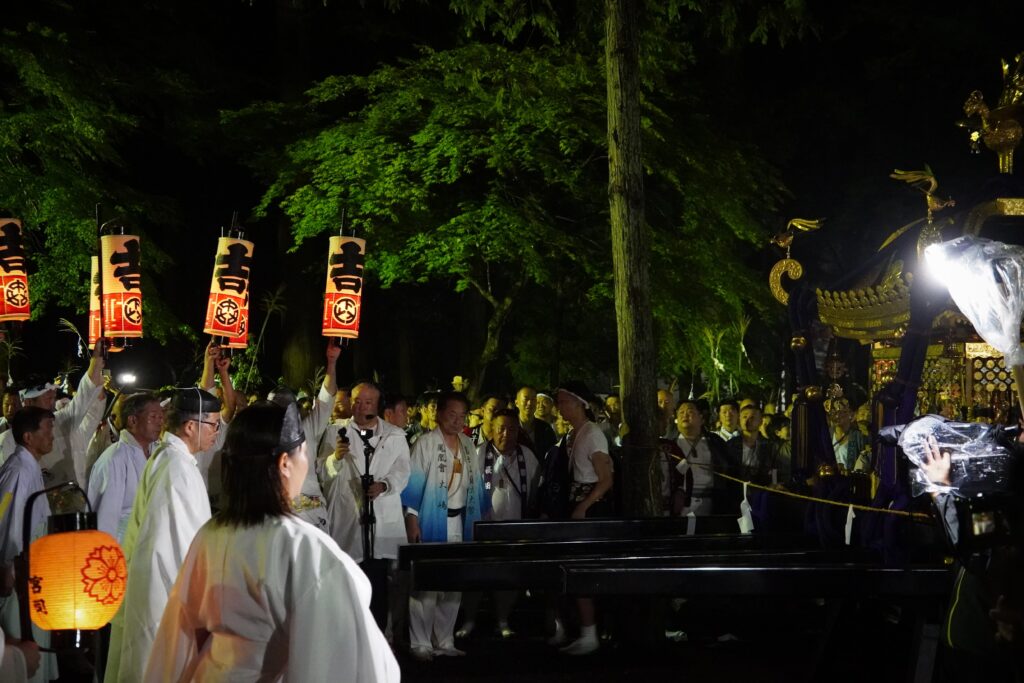
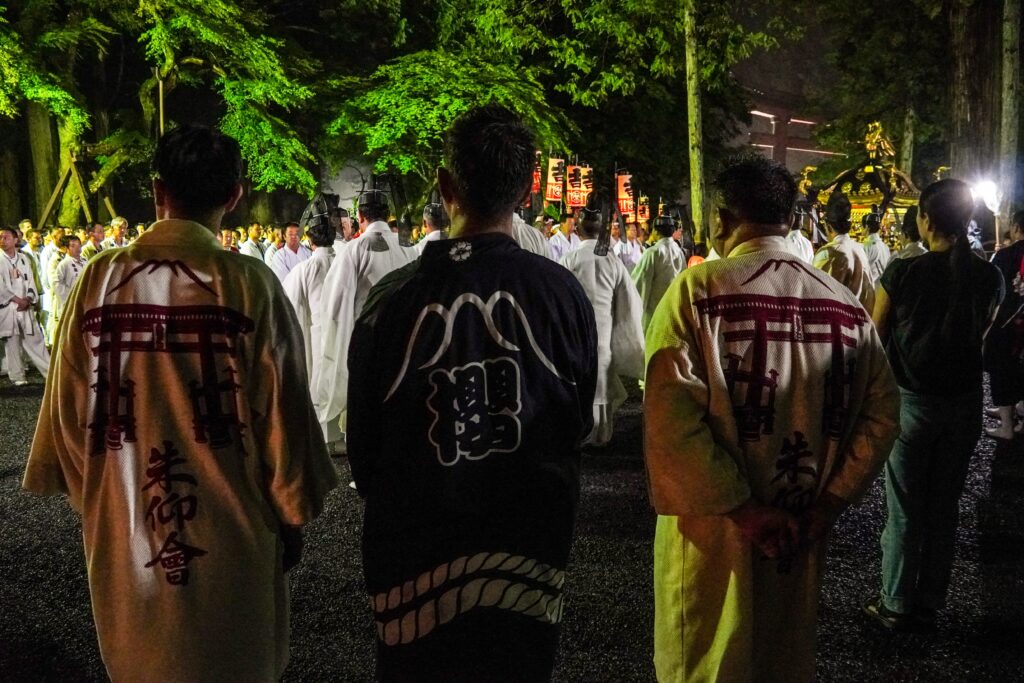
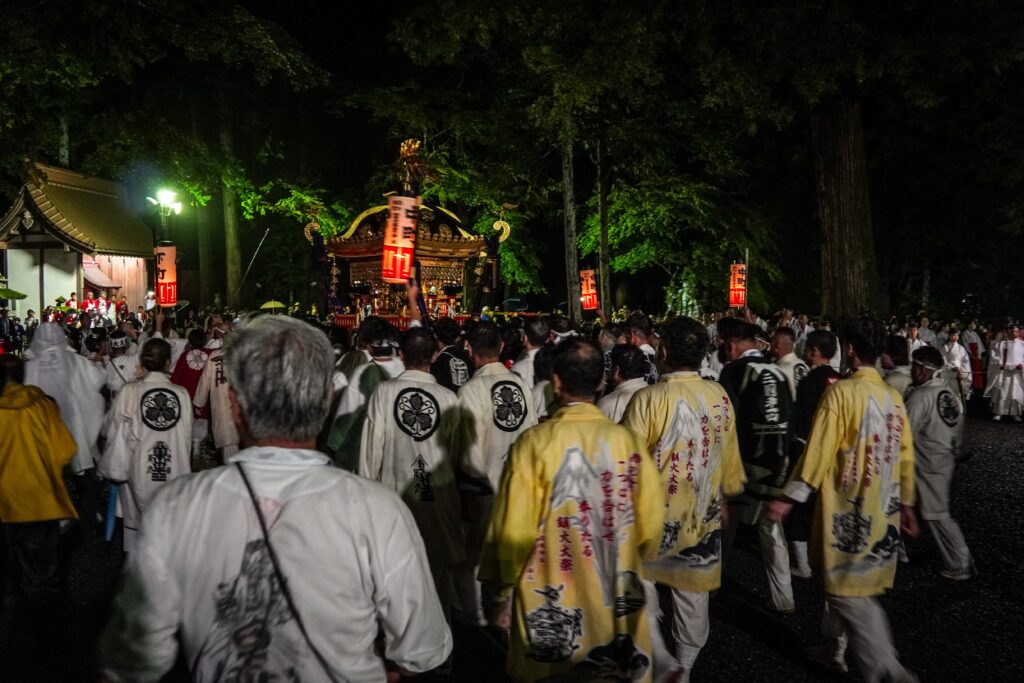
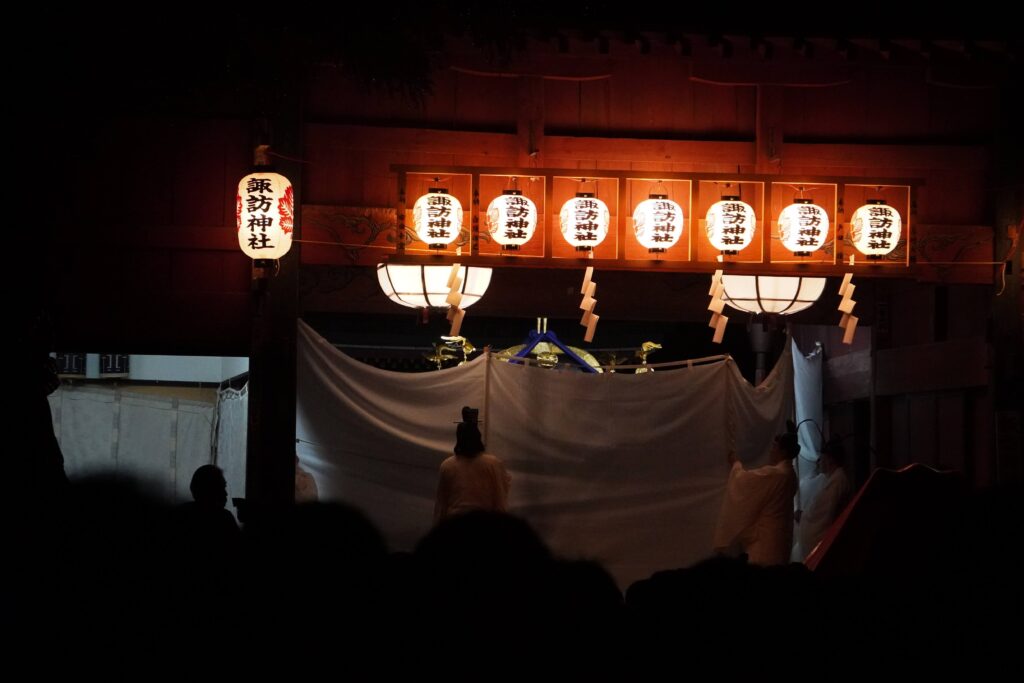
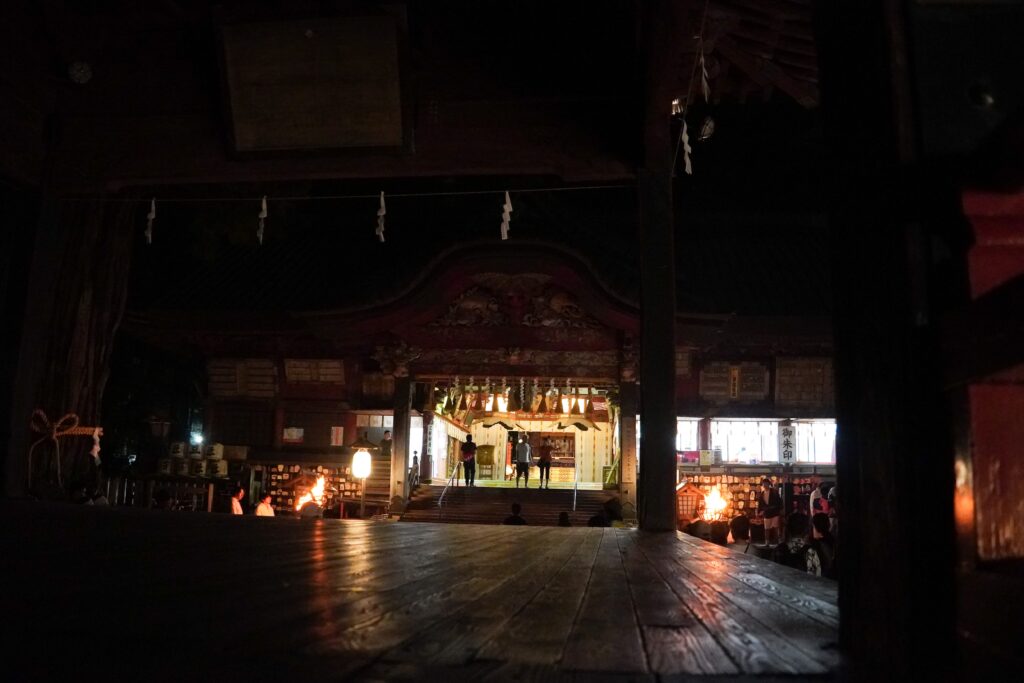
The mikoshi return to Suwa Shrine in the end, not Sengen Shrine. The Myojin Mikoshi always leads the way, and the most critical rituals are conducted at its ancient sacred stone and in front of Suwa Shrine.
While Suwa Shrine usually appears secondary to Sengen Shrine, it is the original local guardian deity (ubusunagami) that stood at the core of faith for the people at the northern foot of Mount Fuji since ancient times. Tomorrow, it will hand the main role back to Sengen Shrine, quietly watching over the town from the side once again.