Perhaps due to the lingering effects of a typhoon, the weather was unsettled all last week.
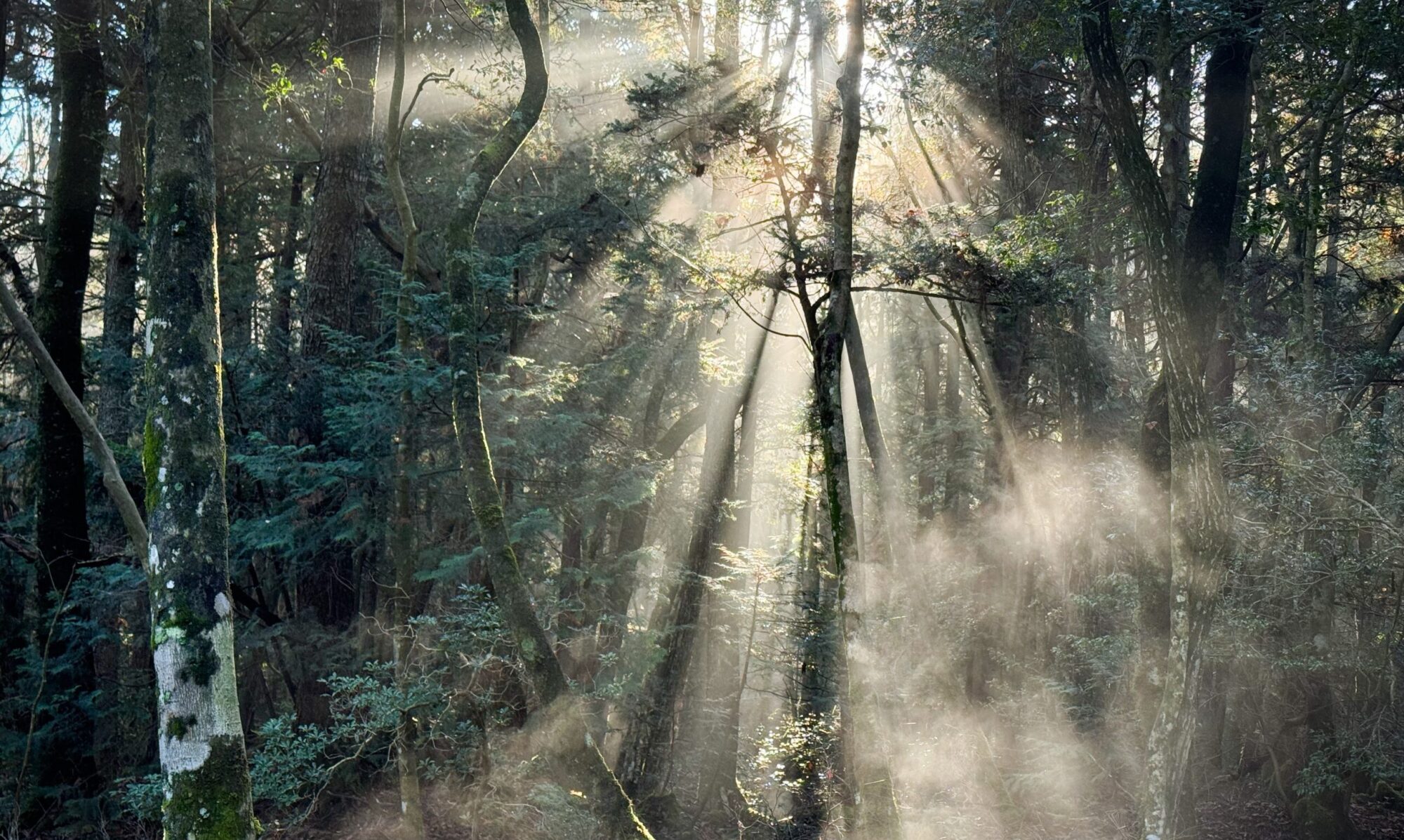
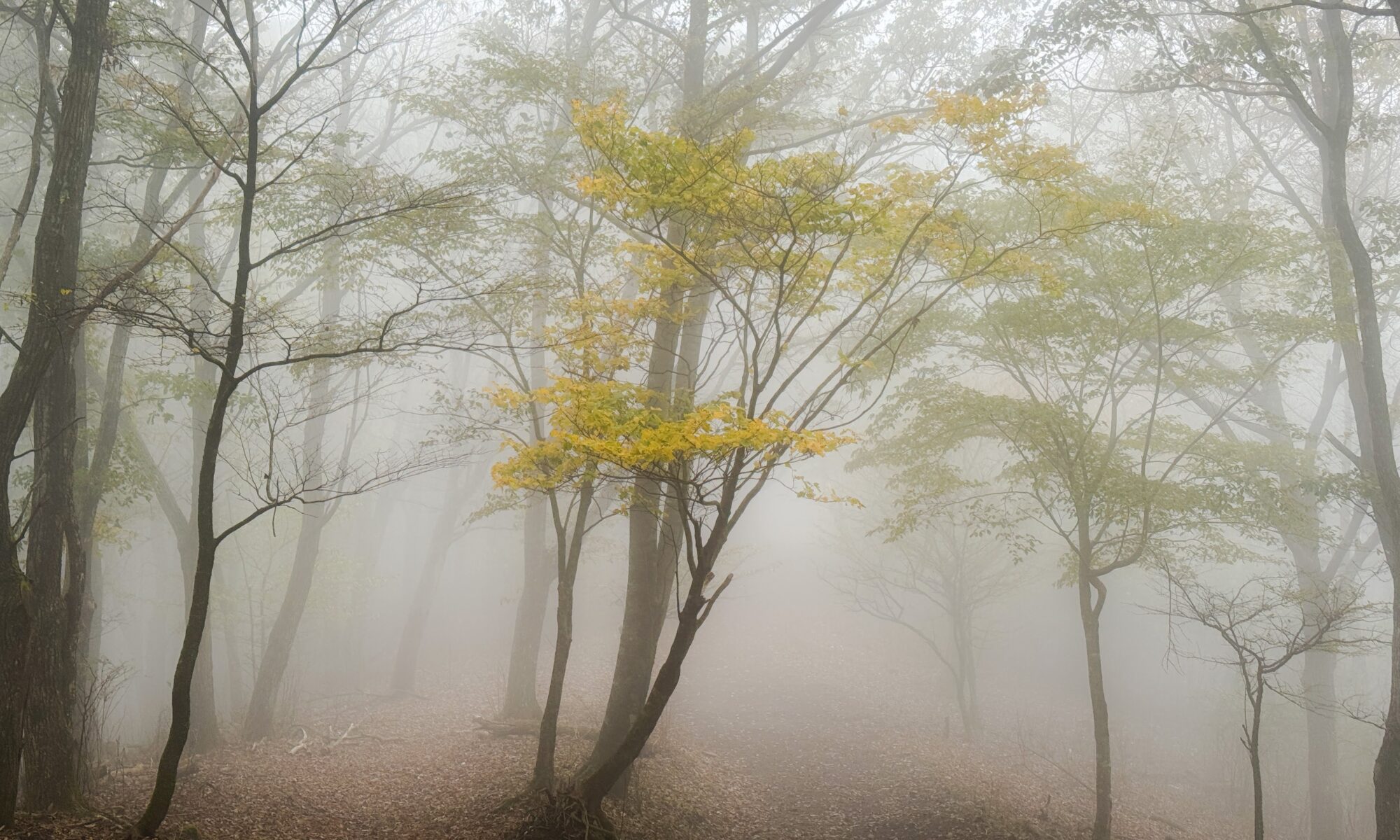
I live at an elevation of about 1,200 meters, so my neighborhood occasionally finds itself right inside the clouds. On days like that, the forest feels entirely otherworldly.
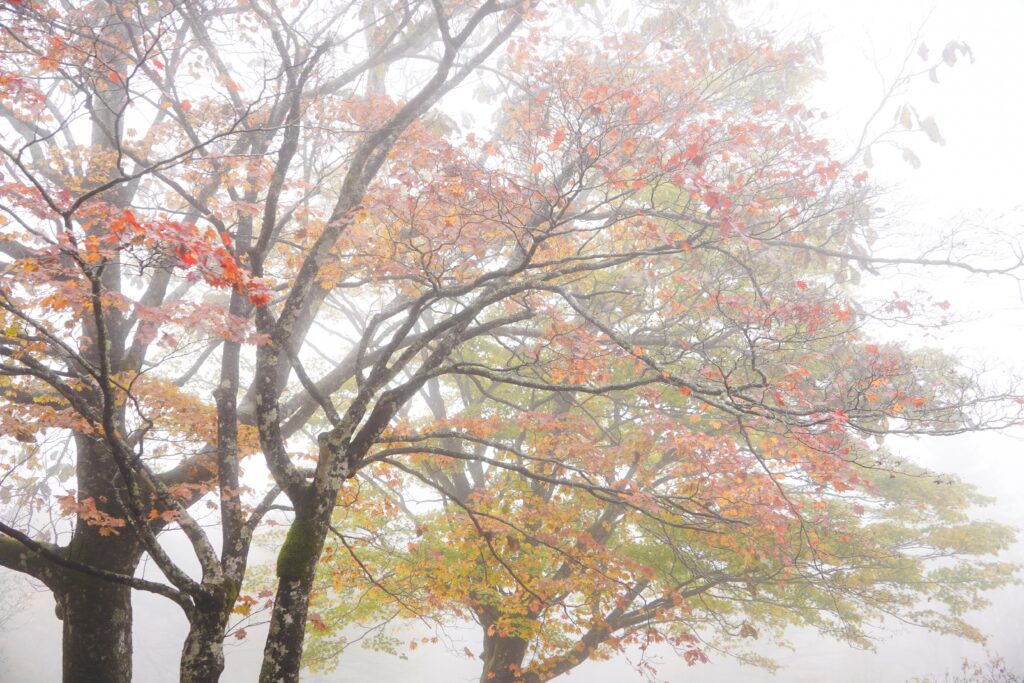
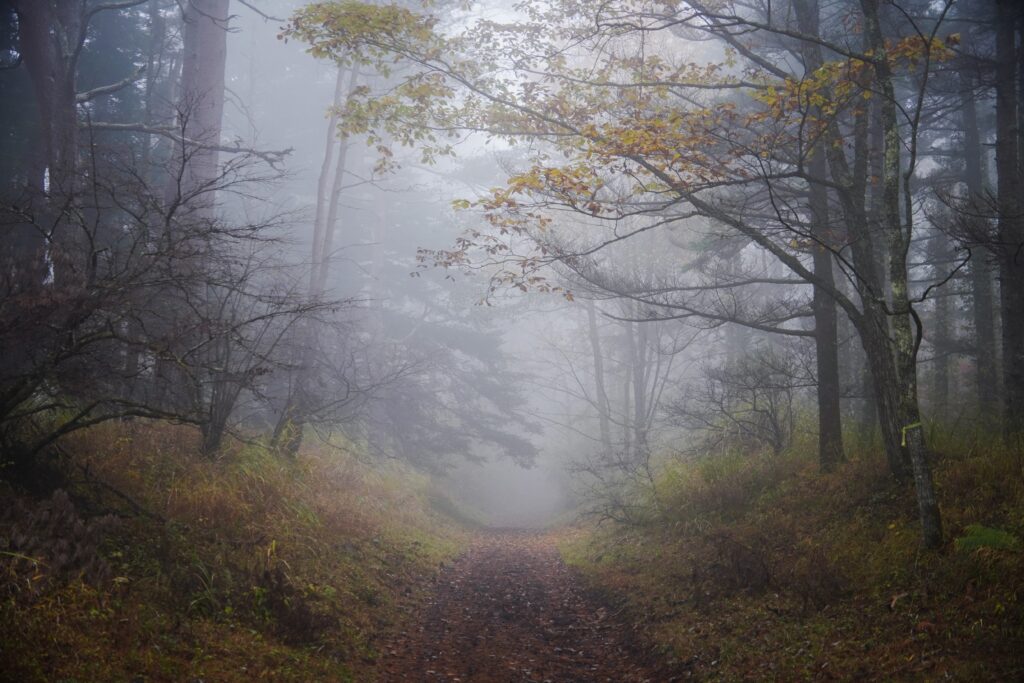
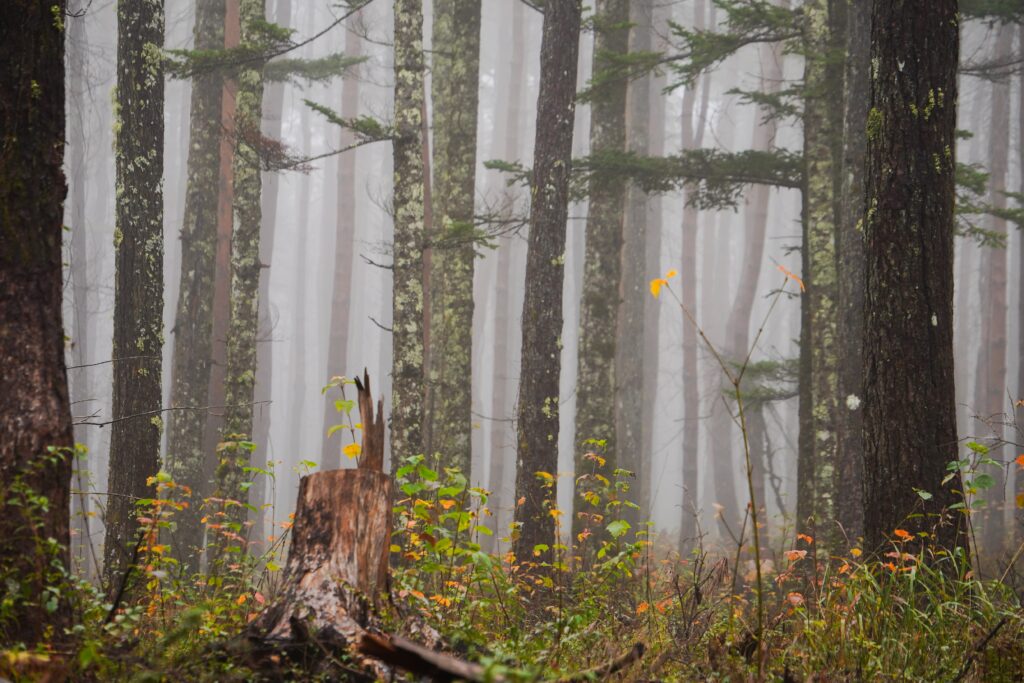
Even when we aren’t quite inside the clouds, there are plenty of days when a low, heavy blanket of gray hides Mount Fuji completely.
When that grand, distant landmark vanishes, your gaze naturally drops to the ground beneath your feet and the trees right in front of you.
Naka-no-chaya to Umagaeshi
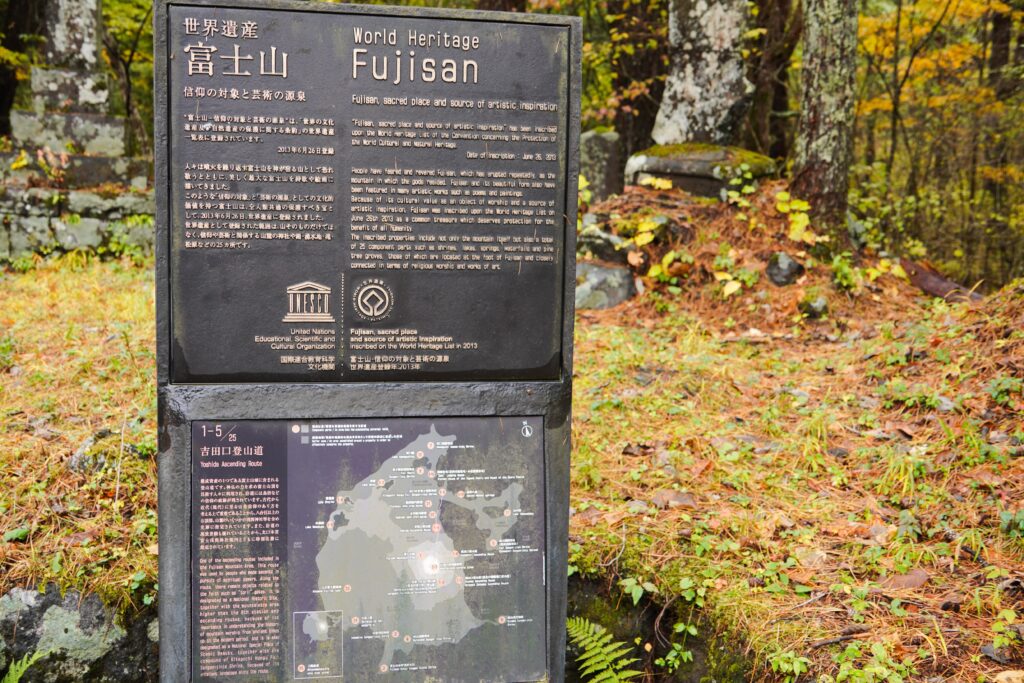
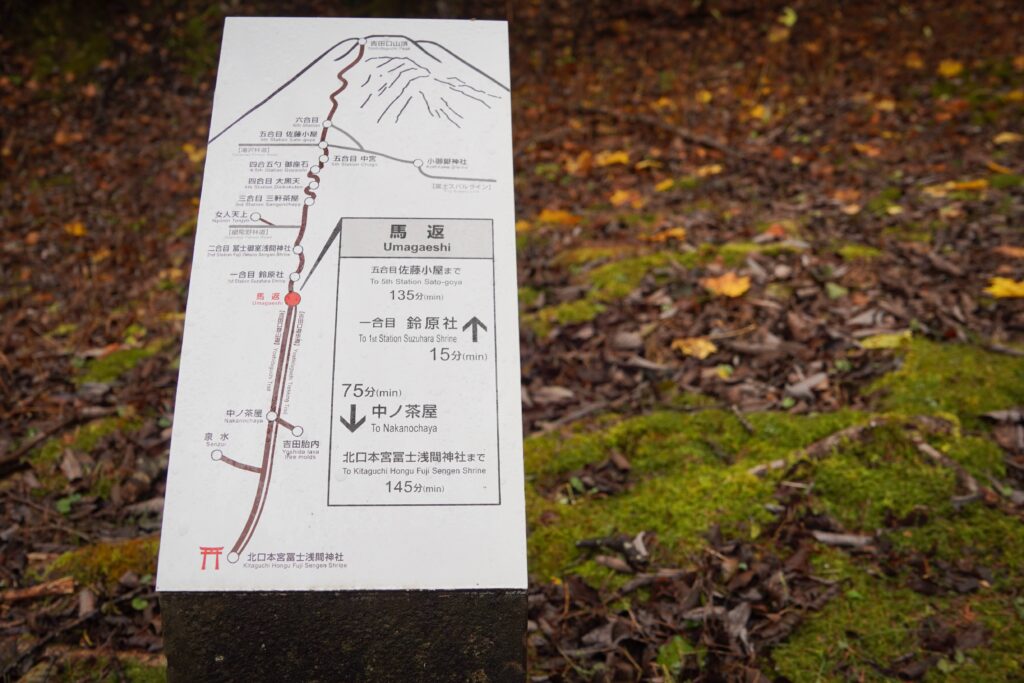
There are plenty of wonderful trails nearby that are a joy to walk even without a view of the peak. One of them is the Yoshida Trail, the historic pilgrimage route leading from Kitaguchi Hongu Fuji Sengen Shrine up the mountain. From the Taisho era into the Heisei era, buses actually ran along this stretch, carrying hikers up to Umagaeshi just below the 1st Station. Once the Fuji Subaru Line toll road opened and made reaching the 5th Station effortless, the bus lost its passengers and eventually ceased operations. Over time, the route was reclaimed from motor traffic and returned to what it was meant to be: a path for walking.
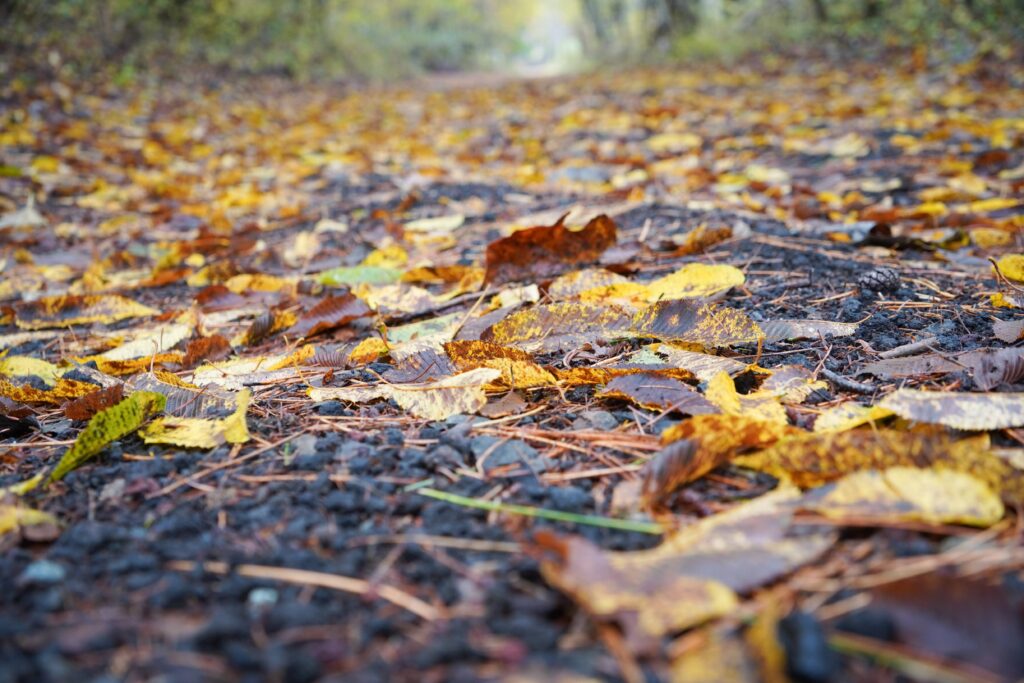
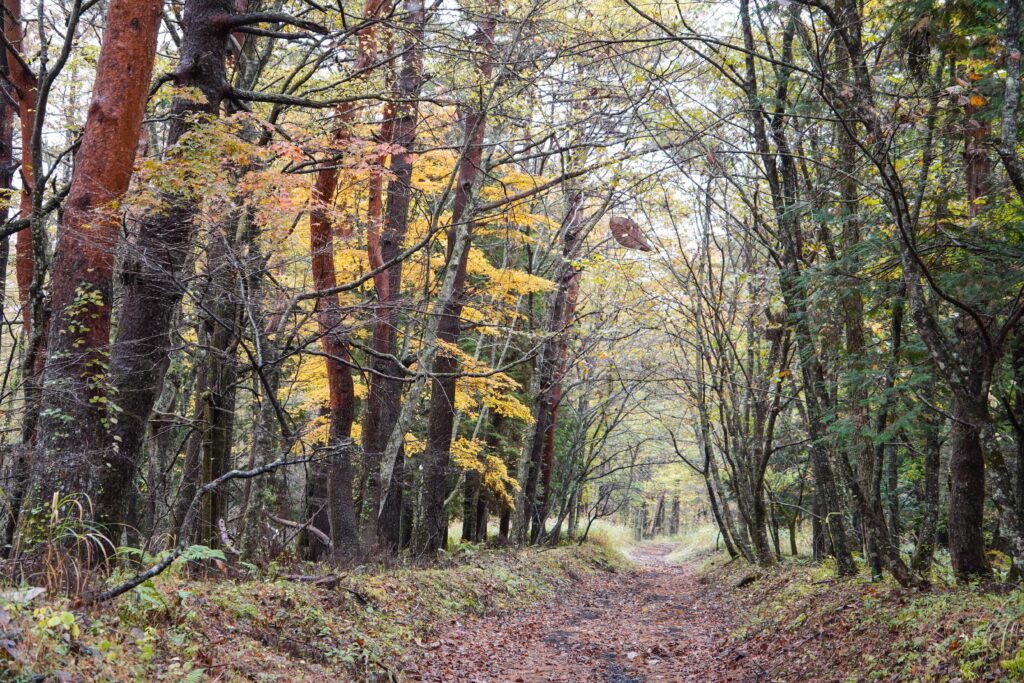
On this day, I walked the middle section from Naka-no-chaya to Umagaeshi. It’s a mixed forest of broad-leaved trees like Japanese oak, maple, and white birch alongside conifers such as pine, hemlock, and fir.
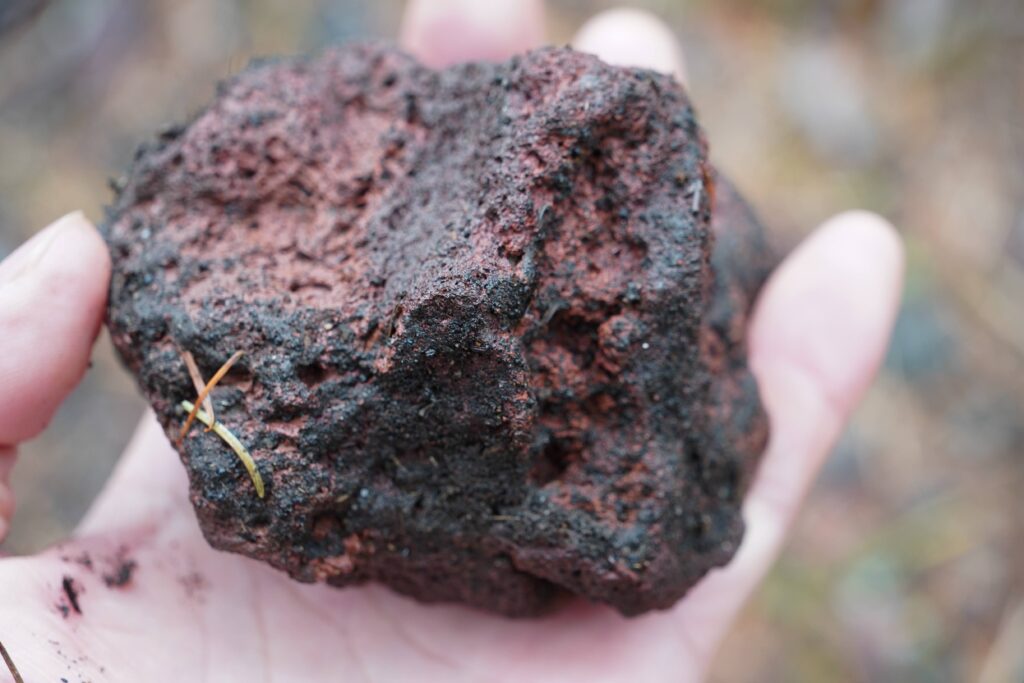
On the surface, it’s simply a pleasant forest-bathing walk, but look closer and you’ll see you are walking directly over old lava flows. It is fascinating to observe how the vegetation has reset itself over the volcanic rock, and you can spot weathered stone monuments and old ruins quietly resting along the trail. Even when the mountain is out of sight, you can still feel its presence and let your mind wander into its past.
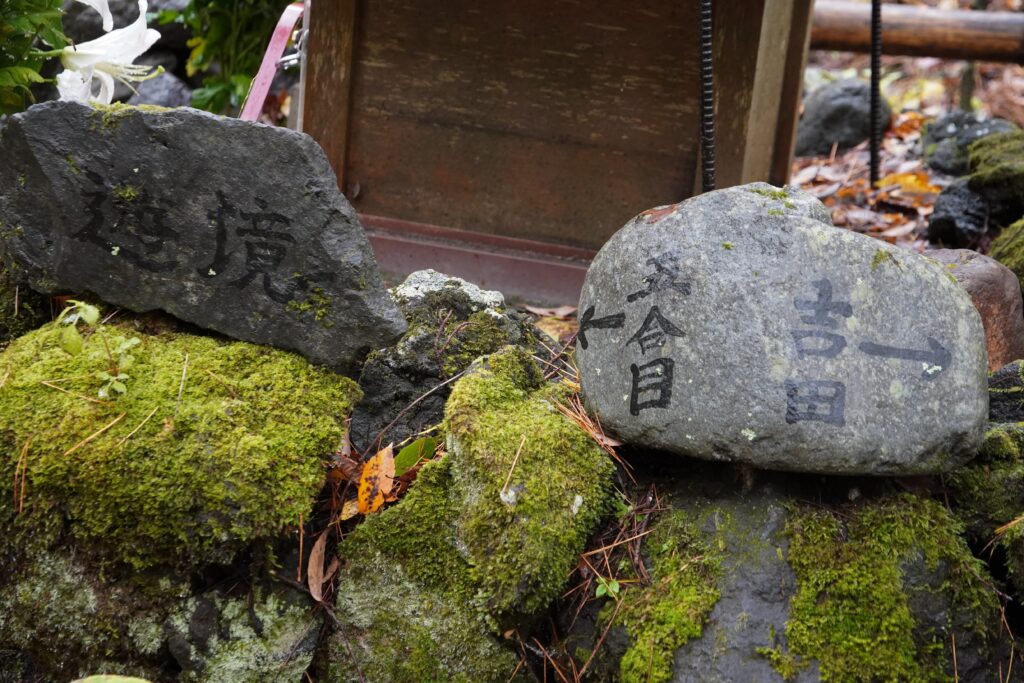

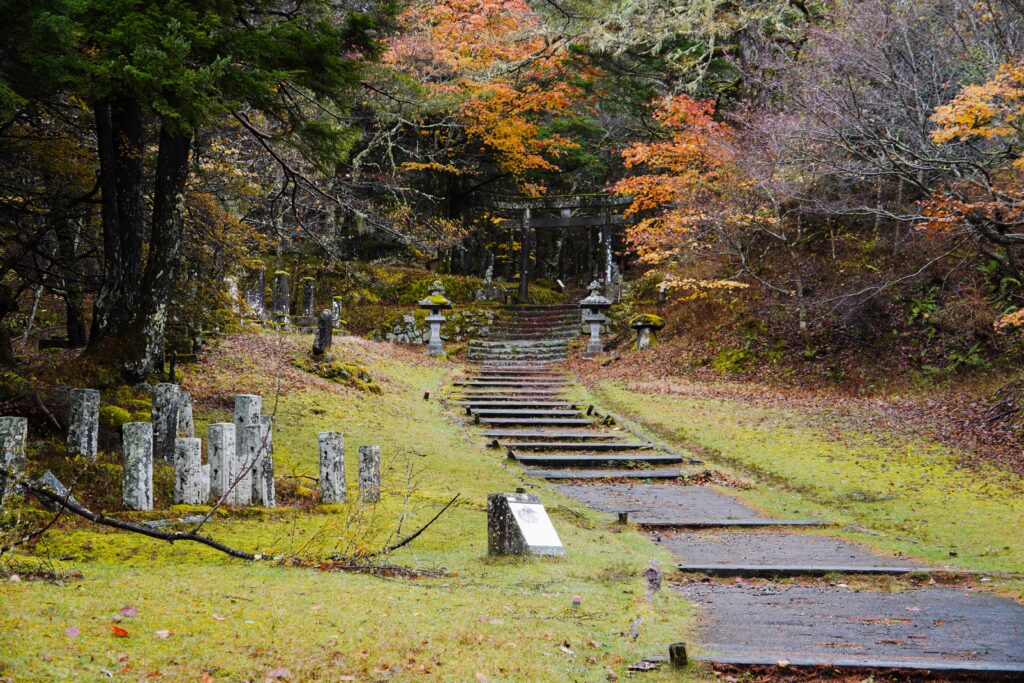
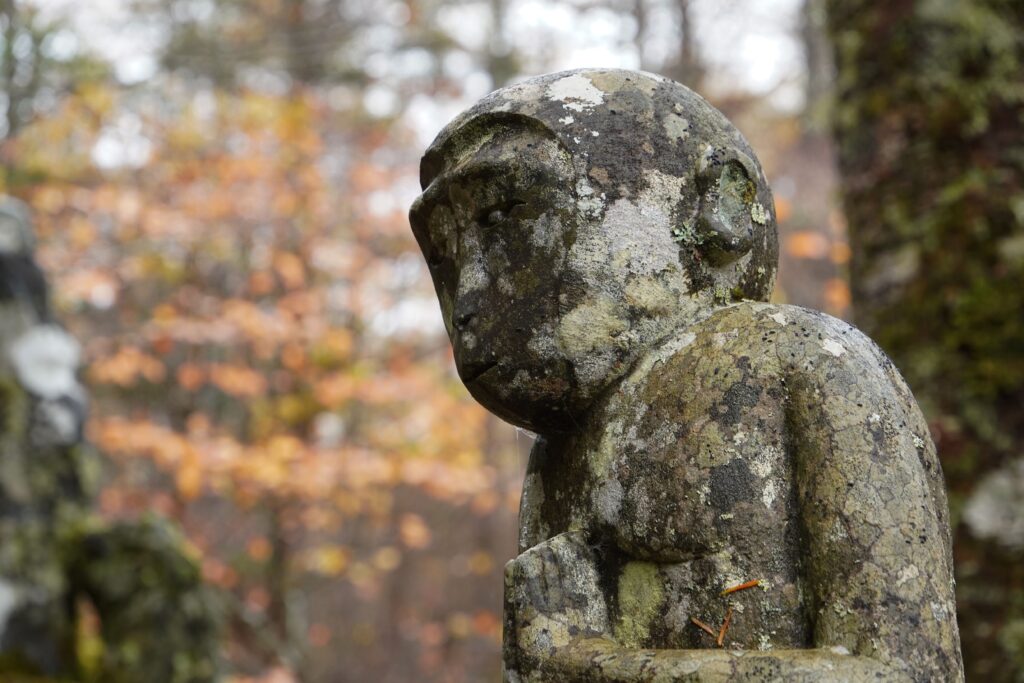
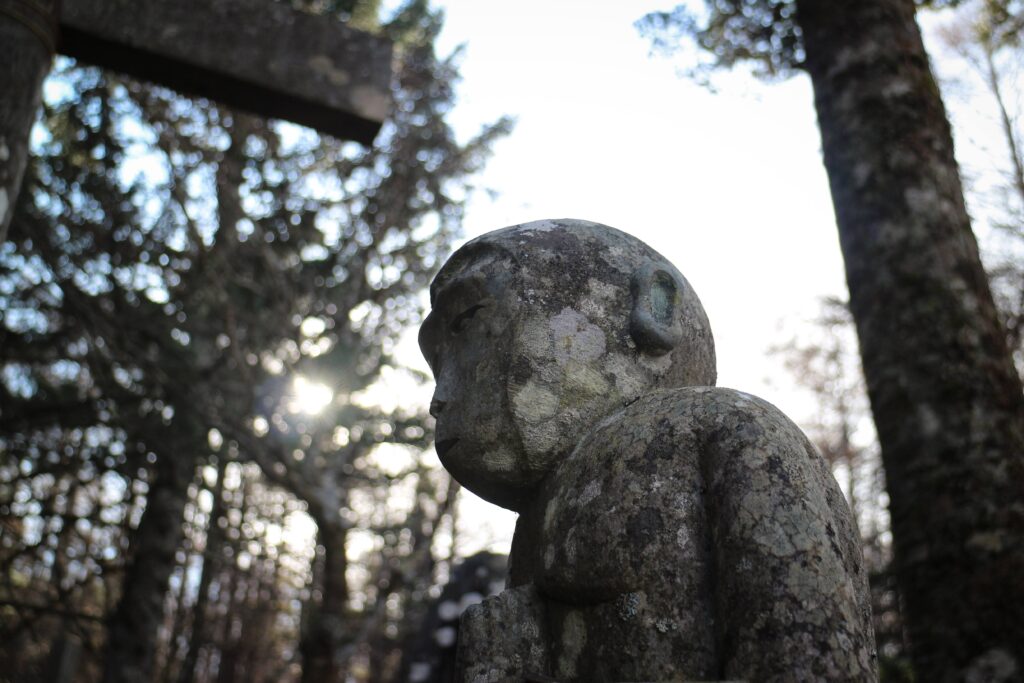
Arriving at Umagaeshi, the first thing that catches your eye is a pair of stone monkeys standing in place of traditional guardian dogs beside a moss-covered torii gate.
Stepping through that gate marks your entrance into the sacred realm of Mount Fuji.
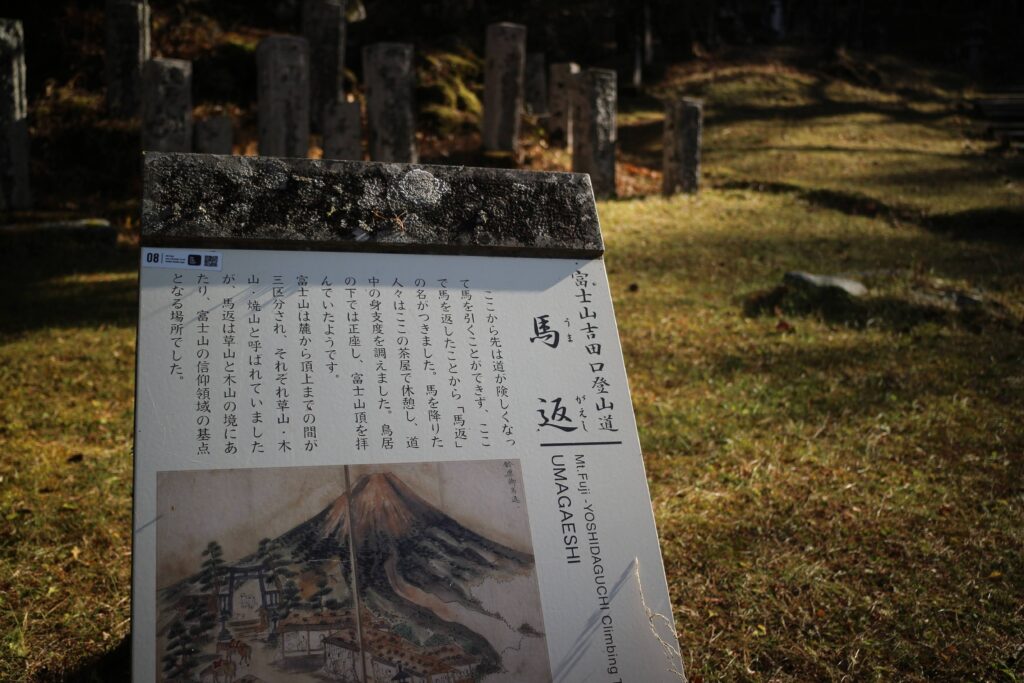
In the past, pilgrims purified themselves here before beginning the steep climb toward the summit.
(I’ll save the stretch from here up to the 5th Station for another time.)
Yoshida Tainai Shrine
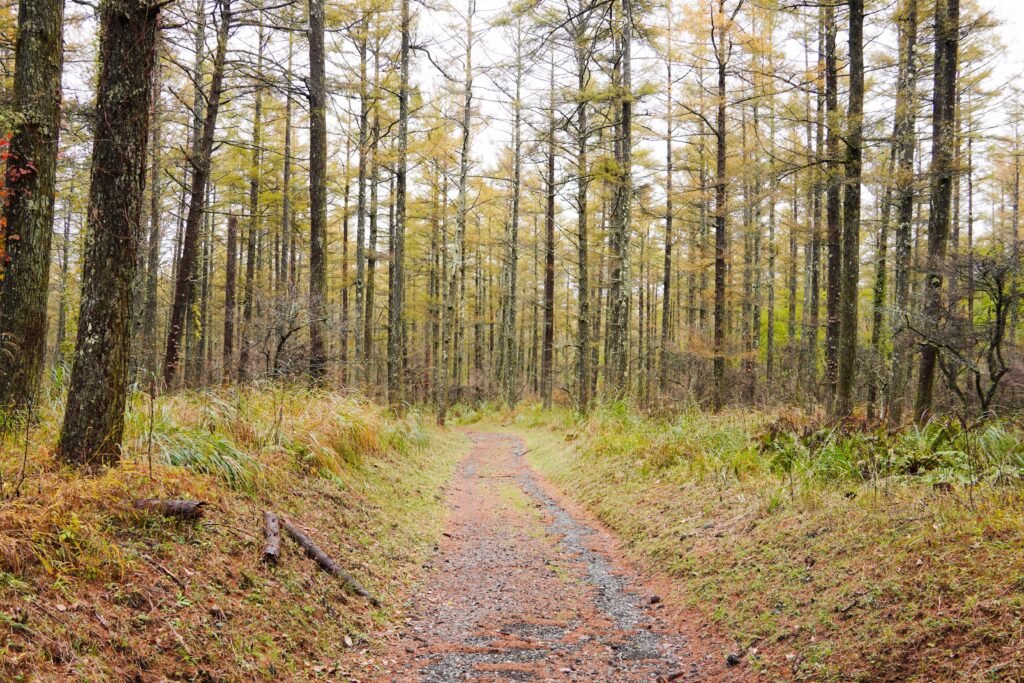
Another path branches off from Naka-no-chaya, winding through a larch forest toward a different shrine.
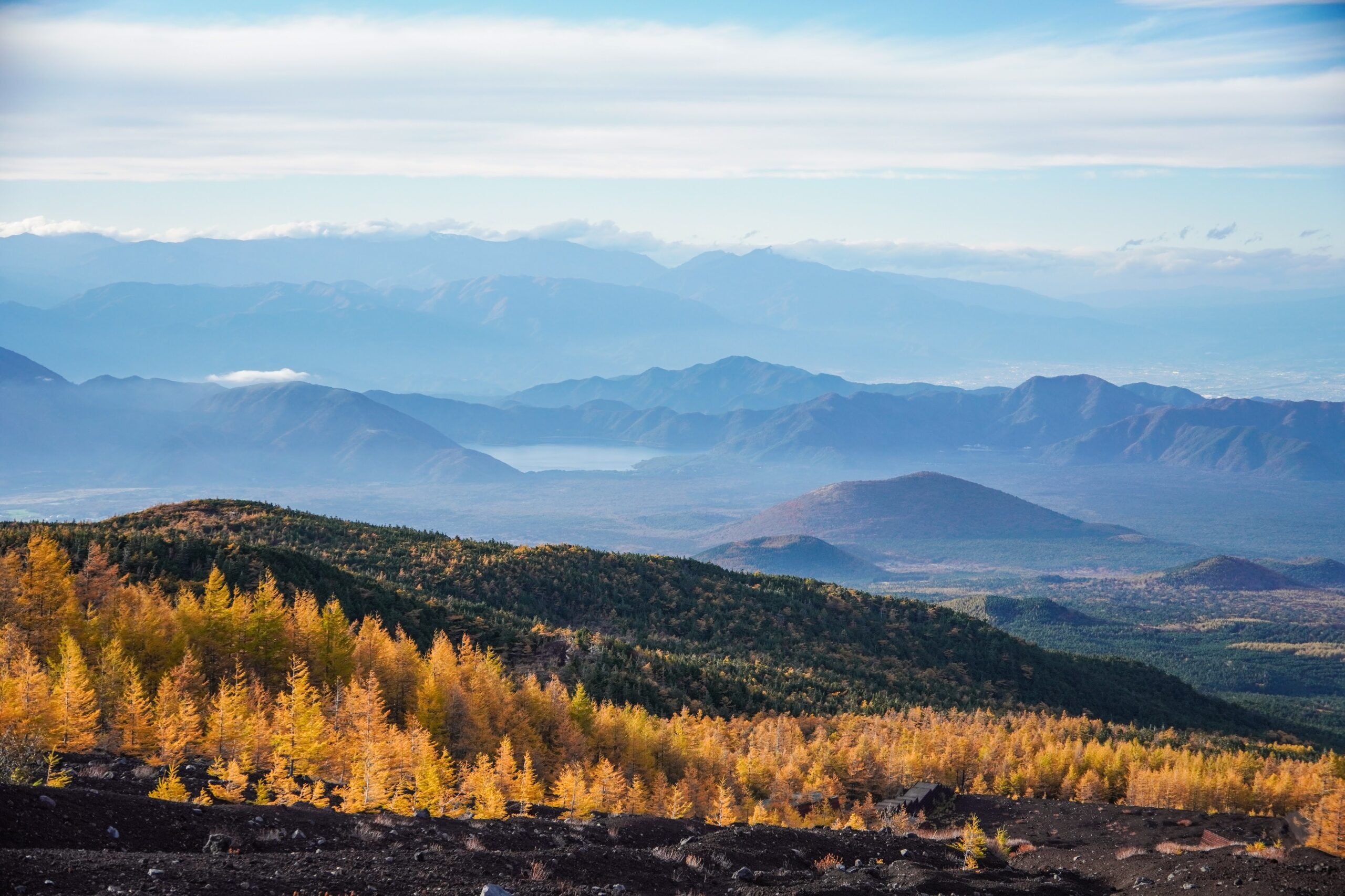
Because the volcanic soil here is poor in water and nutrients, hardy Japanese larches were chosen for reforestation. Their wind-borne seeds drifted higher up the slopes, where stunted larches now grow wild, hugging the ground to withstand the harsh winds near the 5th Station.
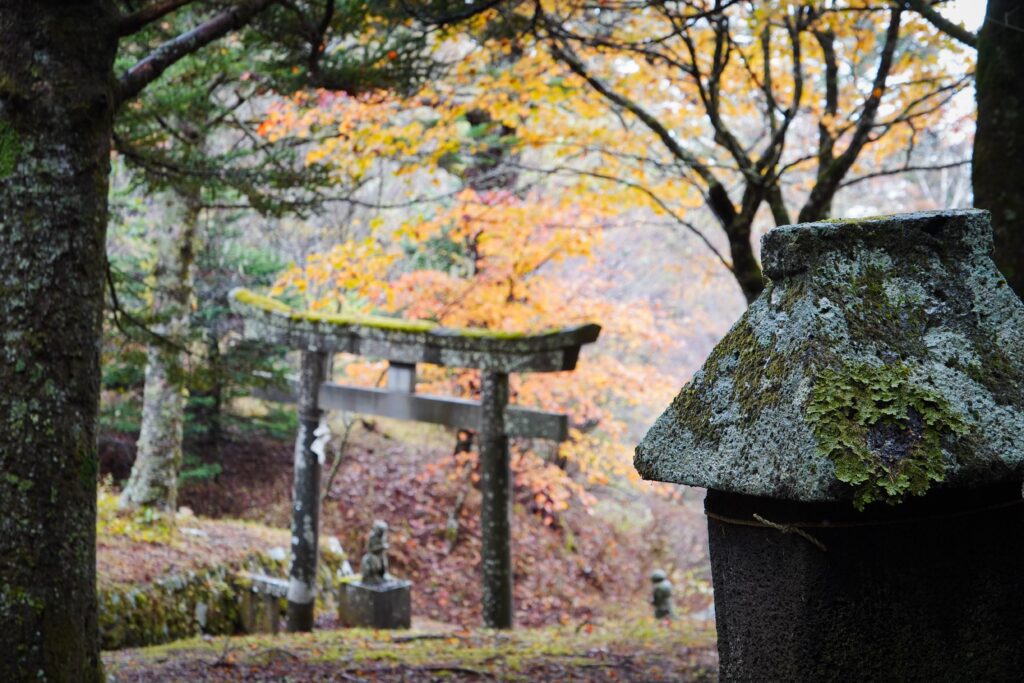
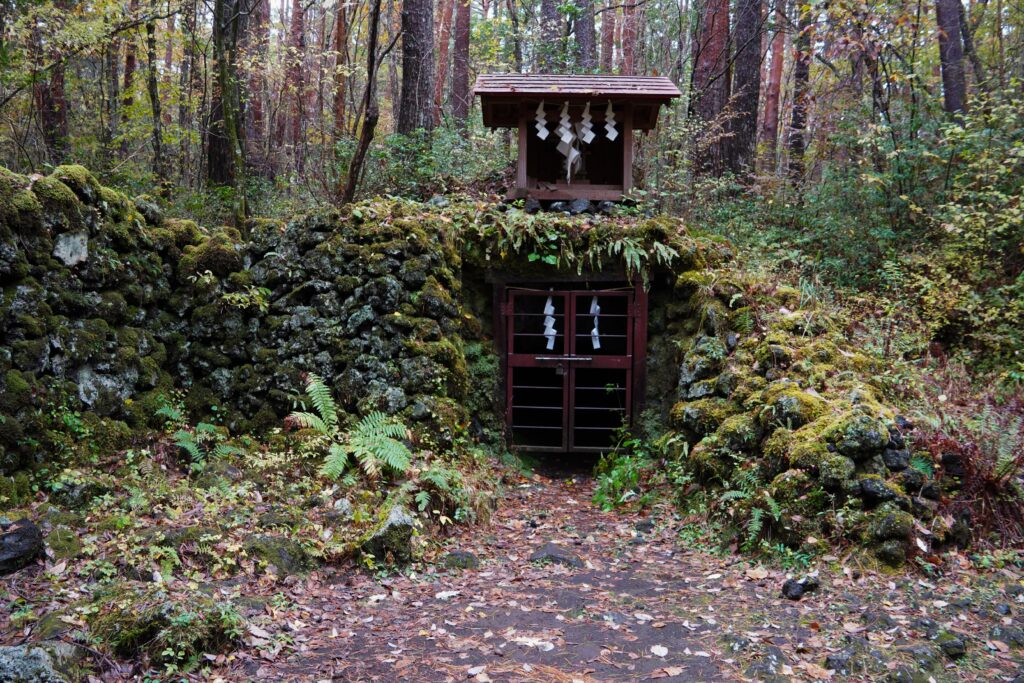
Further along this trail, another torii gate appears: Yoshida Tainai Shrine.
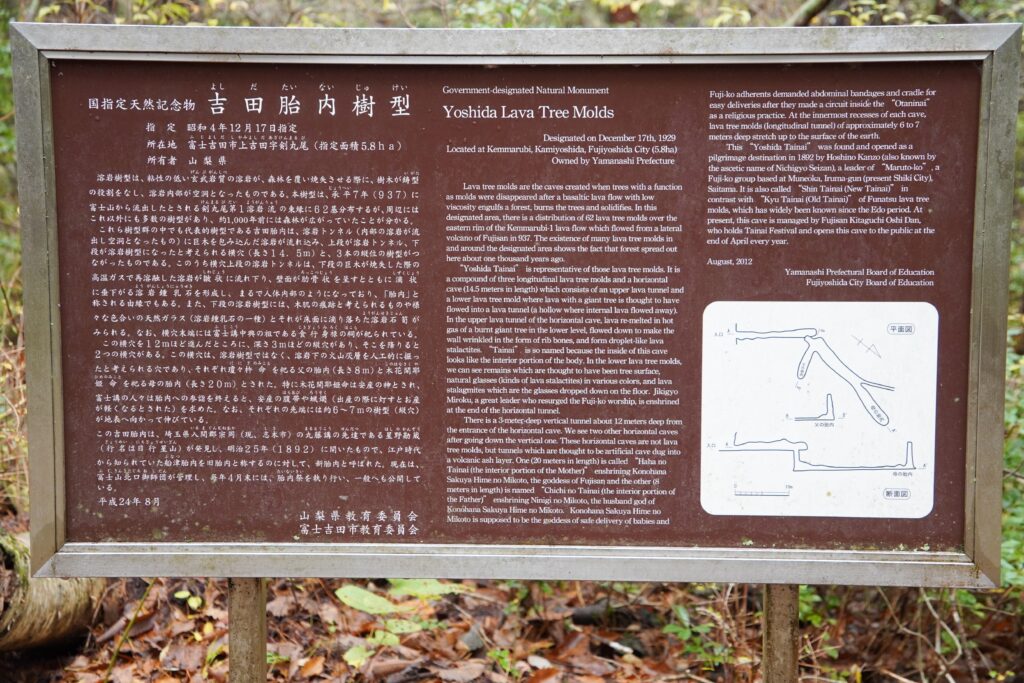
Inside lies a cave system formed by interconnected lava tubes and tree molds. Centuries ago, pilgrims treated these narrow, womb-like tunnels as a sacred passage, crawling through them to pray for spiritual rebirth.
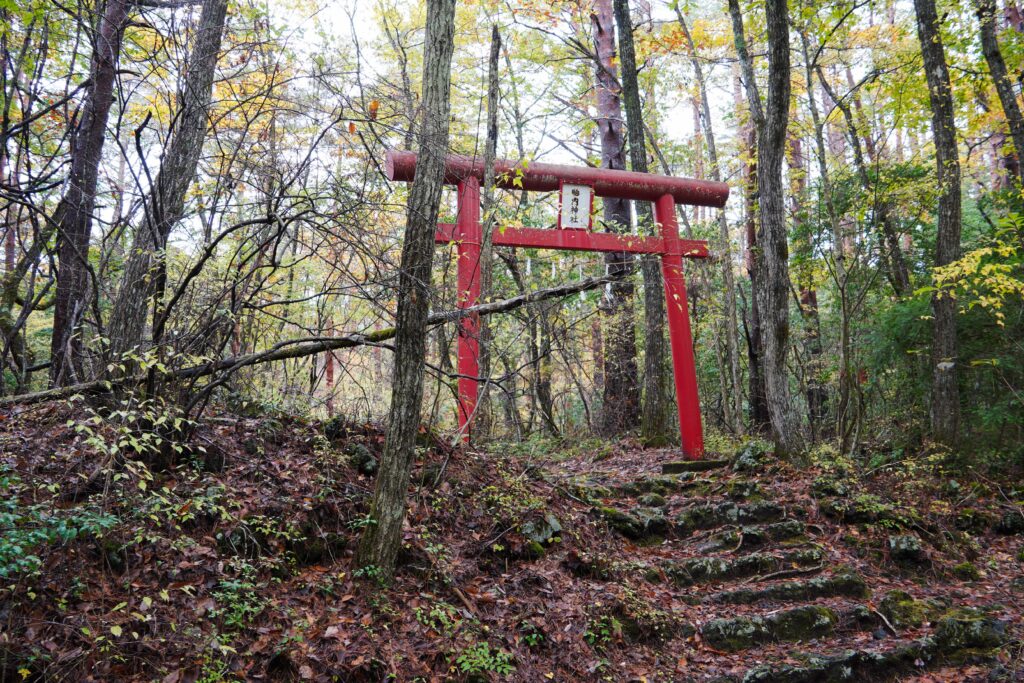
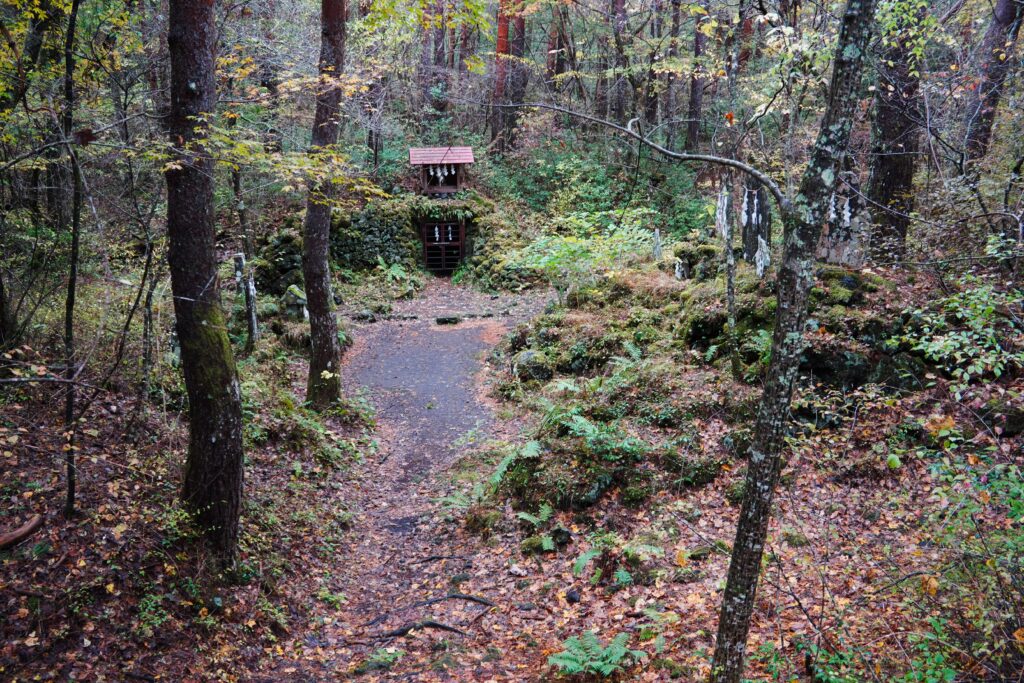
Even when Mount Fuji itself is invisible, we can still perceive the mountain’s true form through its lava, its vegetation, and the remnants of ancient pilgrimages.
While almost every other living creature exists purely in the “here and now,” this ability to perceive the unseen is perhaps the trait humans have specialized in more than any other.
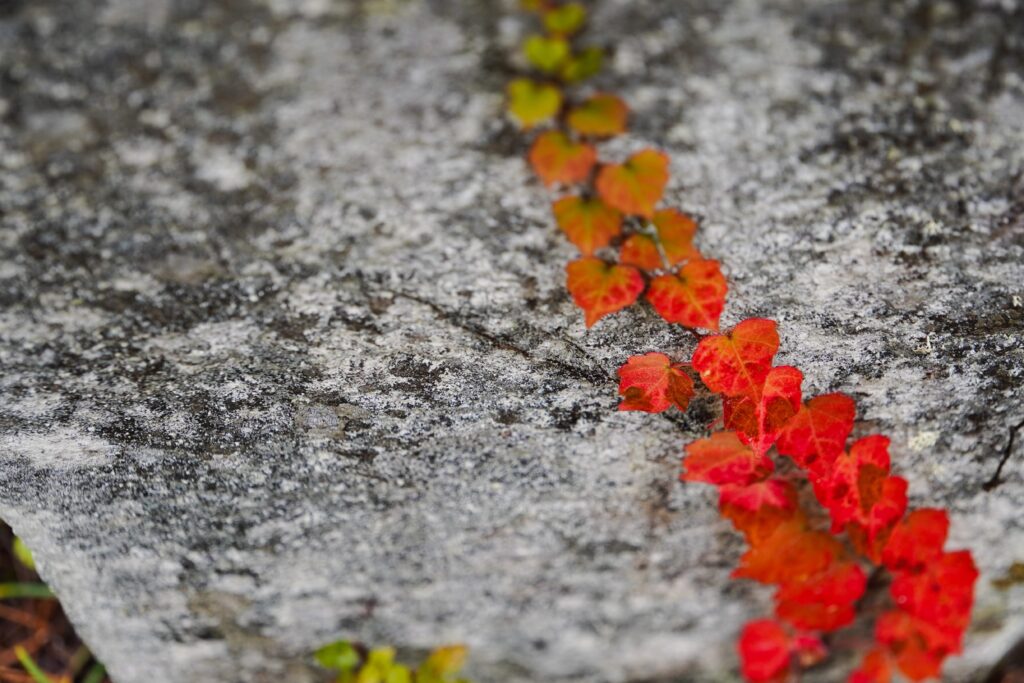
Omoi wo haseru
To “let one’s mind wander” (omoi wo haseru), this peculiar capacity to imagine things not physically present, may be a mechanism our ancestors developed long ago to cultivate the land and survive in large groups.
Sowing seeds while trusting in an autumn harvest yet to come. Agriculture is only possible when you can project your mind into a future that doesn’t exist yet. (Of course, nomadic herding and hunting likely required their own versions of this foresight, too.)
Furthermore, when large numbers of people unrelated by blood began living together and working side by side, they needed something to point them all in the same direction. That something was “stories”, a concept famously explored in Sapiens.
By sharing the memories of the pioneers who first cleared the land, and weaving tales of the changing seasons and natural disasters into gods and myths, strangers could unite around a single narrative and till the soil together.
Picturing a future harvest. Believing in the same story as someone outside your own kin.
Thousands of years later, that exact same power of imagination still pulses quietly inside us as if it were the most natural thing in the world.
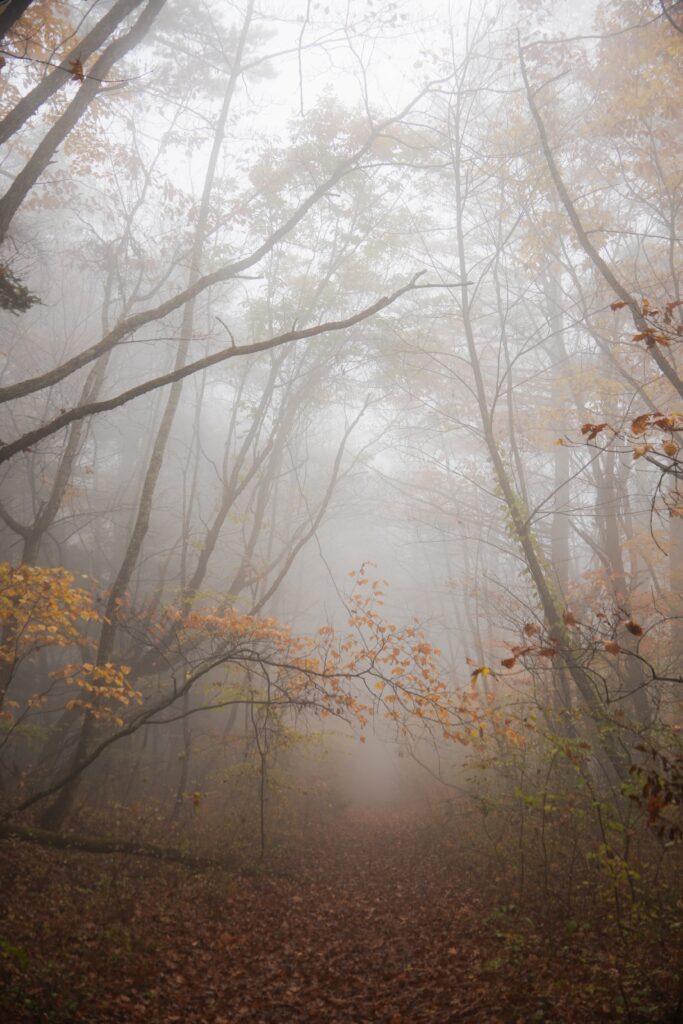
From a single, ordinary black stone, we envision rivers of molten lava erupting from deep underground millennia ago.
From a quiet torii gate surrounded by trees, we hear the footsteps and breathing of white-robed pilgrims who once purified their bodies here, carrying the same shared story in their hearts as they climbed toward the peak.
Precisely because the obvious visual symbol of the summit is hidden, we check the geology beneath our boots, learn the origins of the trees, and gather scattered traces of history.
By leaning into that sense of wonder and layering these small observations one by one, the “invisible Mount Fuji” gradually takes shape within us, richer and more three-dimensional than before.
And today, Umagaeshi was completely wrapped in mist.
The temperature has dropped sharply; once these clouds finally clear, the peak will surely be covered in a fresh coat of snow.
It looks like someone even kindly placed a little red knit hat on one of the stone monkeys.
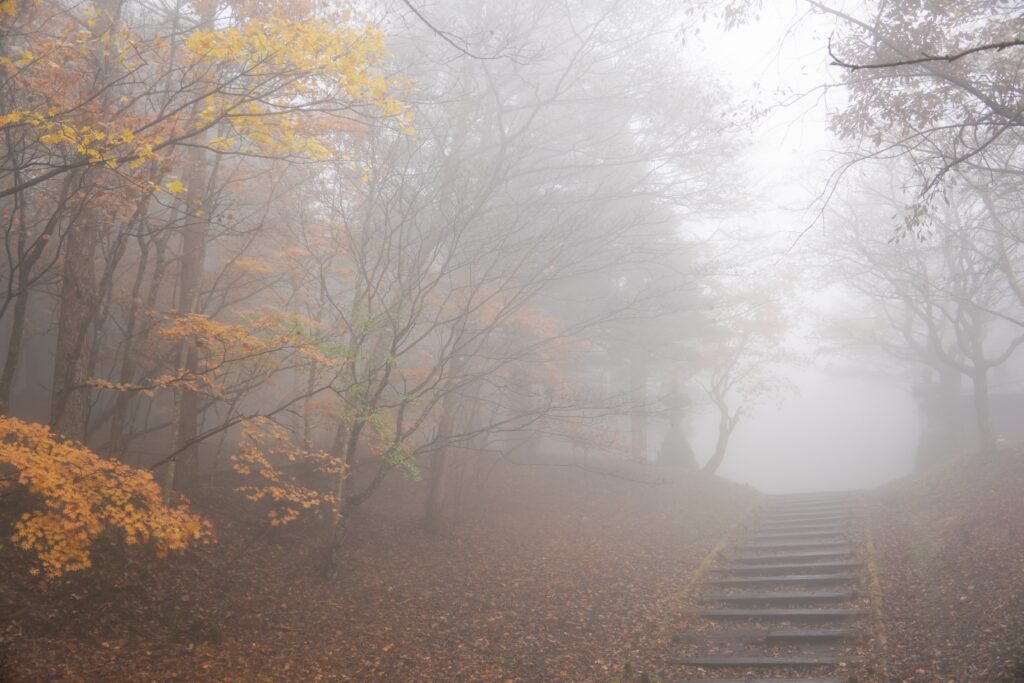
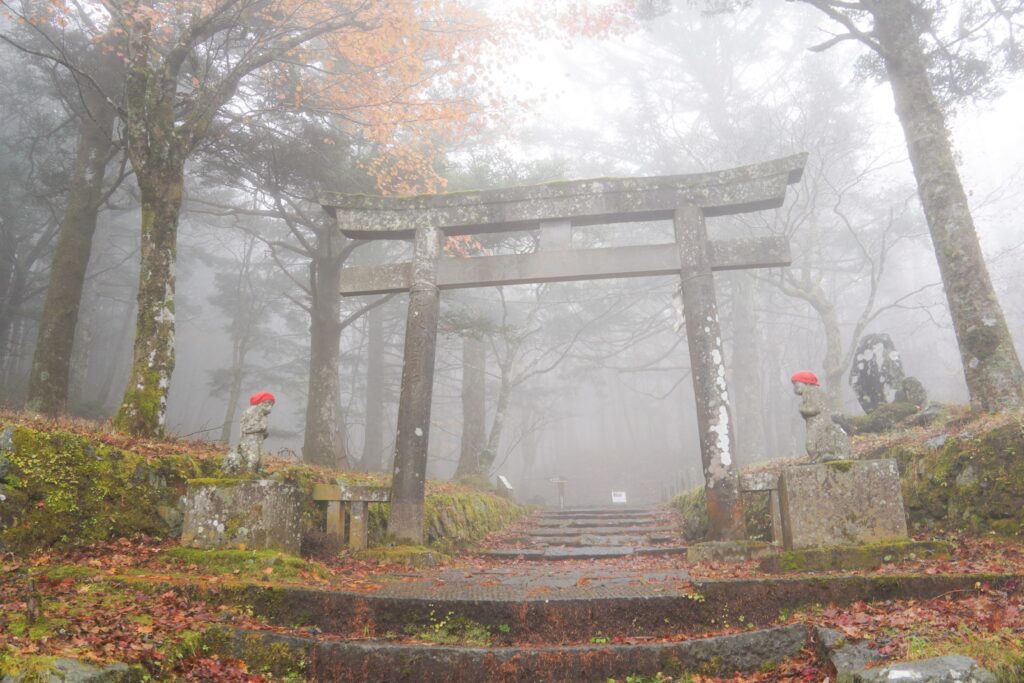
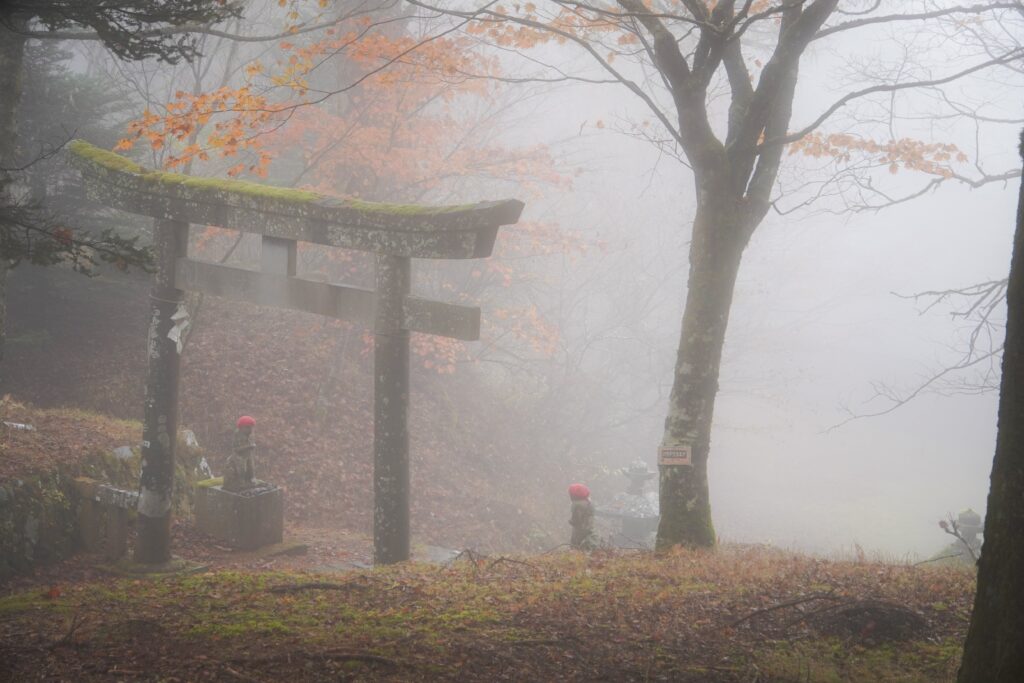
Walking through this mist, I almost feel like I might be spirited away.
Trail Overview
Naka-no-chaya to Umagaeshi & Yoshida Tainai
If you want to experience the quiet, historical side of Mount Fuji away from the crowds, this lower section of the historic Yoshida Trail is ideal especially on cloudy or misty days.
Route: Naka-no-chaya (Middle Tea House) → Umagaeshi → Naka-no-chaya → Yoshida Tainai Shrine→ Naka-no-chaya
Volcanic Ecology: A forest zone showcasing how planted and wild Japanese larches reclaim nutrient-poor lava fields.
Quiet Atmosphere: A peaceful, well-shaded forest trail with almost no crowds, especially atmospheric on misty or cloudy days.
Naka-no-chaya to Umagaeshi
Distance & Time: About 7 km round trip / 2.5 to 3 hours at a relaxed, observational pace
Elevation Gain: Approx. 350m (from ~1,100m at Naka-no-chaya to ~1,450m at Umagaeshi)
Difficulty: Easy to Moderate (gentle incline along an unpaved forest road and well-maintained woodland trails)
Highlights: The historical boundary where pilgrims dismounted their horses and entered the sacred mountain zone on foot, guarded by rare stone monkey statues.
Naka-no-chaya to Yoshida Tainai
If you want a short, quiet walk through Mount Fuji’s volcanic forest and history without steep climbs, this trail is a great choice.
Distance & Time: About 2–3 km round trip / 1 to 1.5 hours at an easy pace
Elevation Gain:Approx. 100m (from ~1,100m at Naka-no-chaya to ~1,200m at Yoshida Tainai)
Difficulty: Easy (gentle woodland path through a larch forest)
Highlights: Yoshida Tainai: A fascinating geological site featuring ancient lava tree molds (yogan jukei) used by Edo-period pilgrims for symbolic rebirth rituals.
Optional Extension
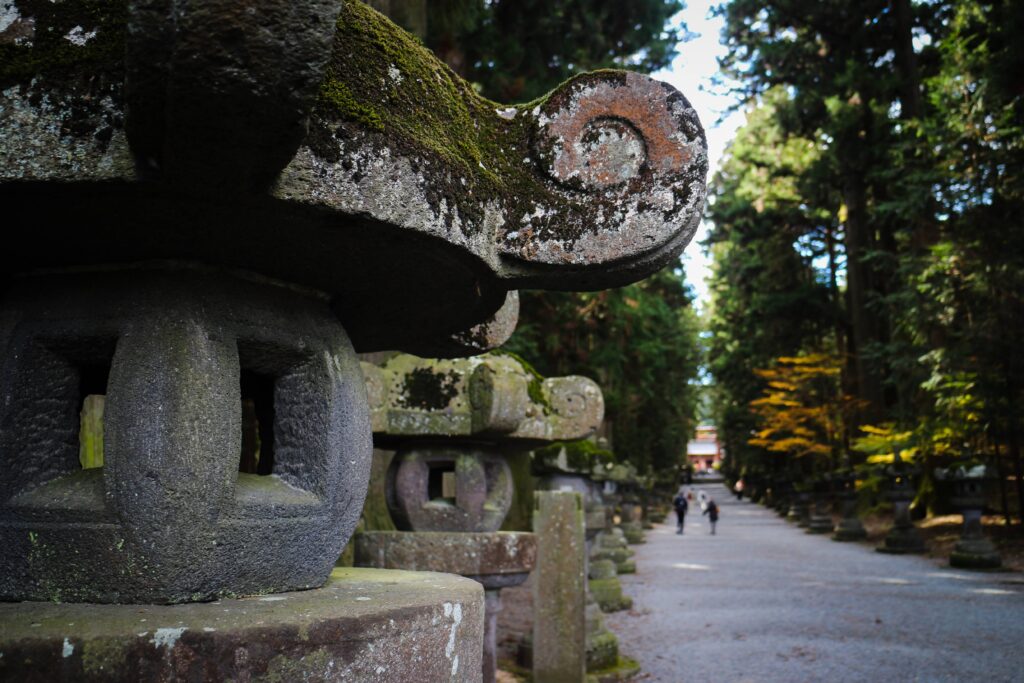
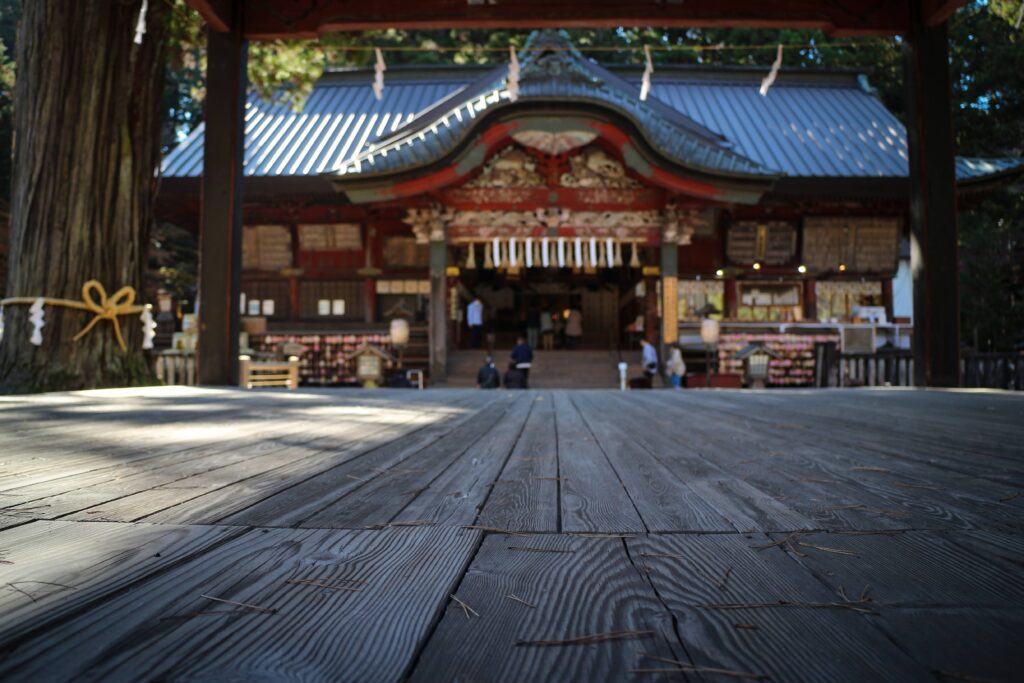
Starting from Kitaguchi Hongu Fuji Sengen Shrine
If you prefer to walk the historic trail from the very beginning, you can start at Kitaguchi Hongu Fuji Sengen Shrine (approx. 850m elevation). This adds about 4 km, 1.5 hours, and 250m of elevation gain one way to reach Naka-no-chaya.
Access
Accessible by car or taxi (about 15–20 minutes from Fujisan Station or Kawaguchiko Station). Free parking is available near Naka-no-chaya.
Return Transport: There is no public bus service at Naka-no-chaya or Umagaeshi. Unless you are walking back down the same trail, make sure to arrange a taxi in advance for your way back.
If you visit on a clear day when Mount Fuji is visible, check out my recommended route here.
It is especially stunning in late October during autumn