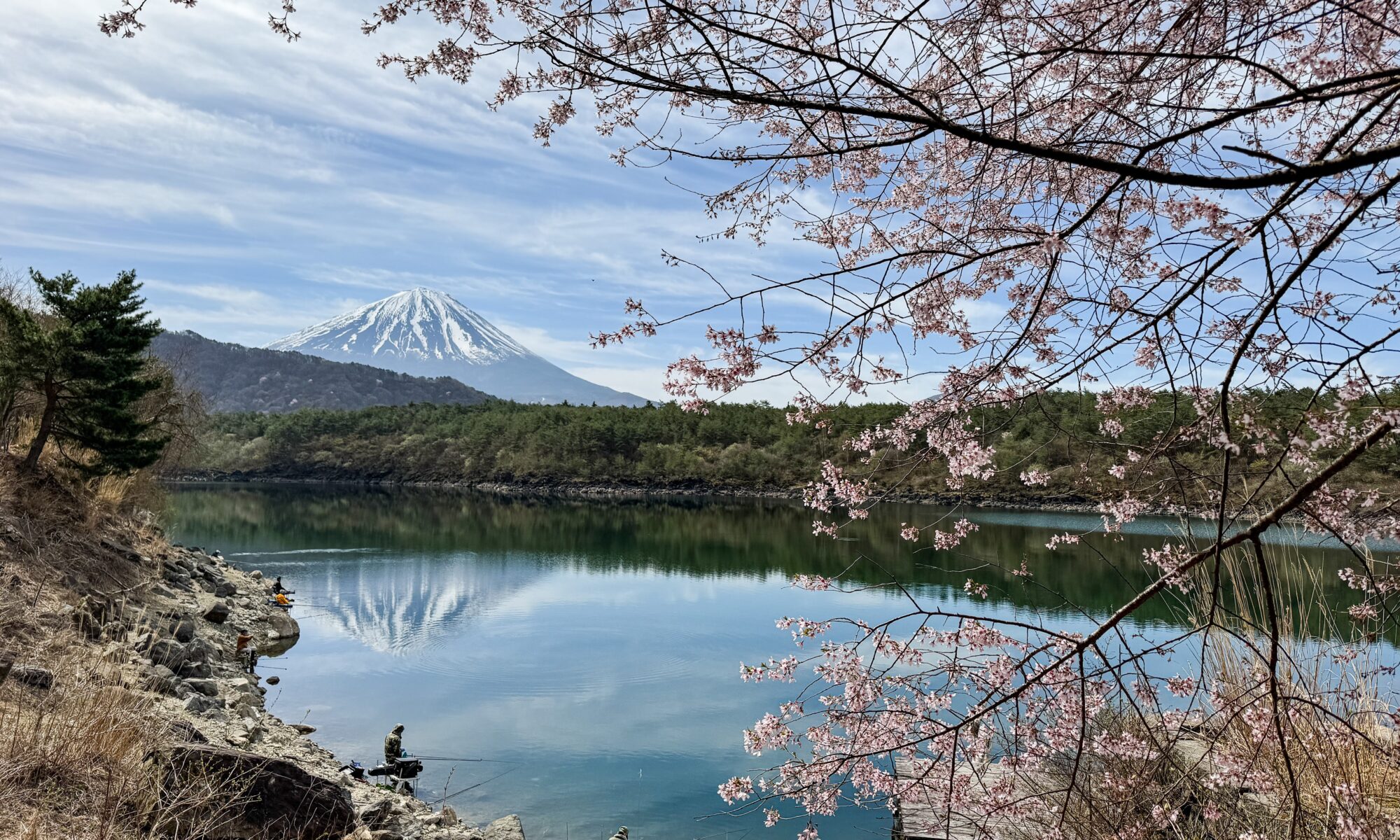
Cherry blossoms are in full bloom at Lake Saiko.
After the long winter, the season the wildlife has been waiting for has finally arrived.
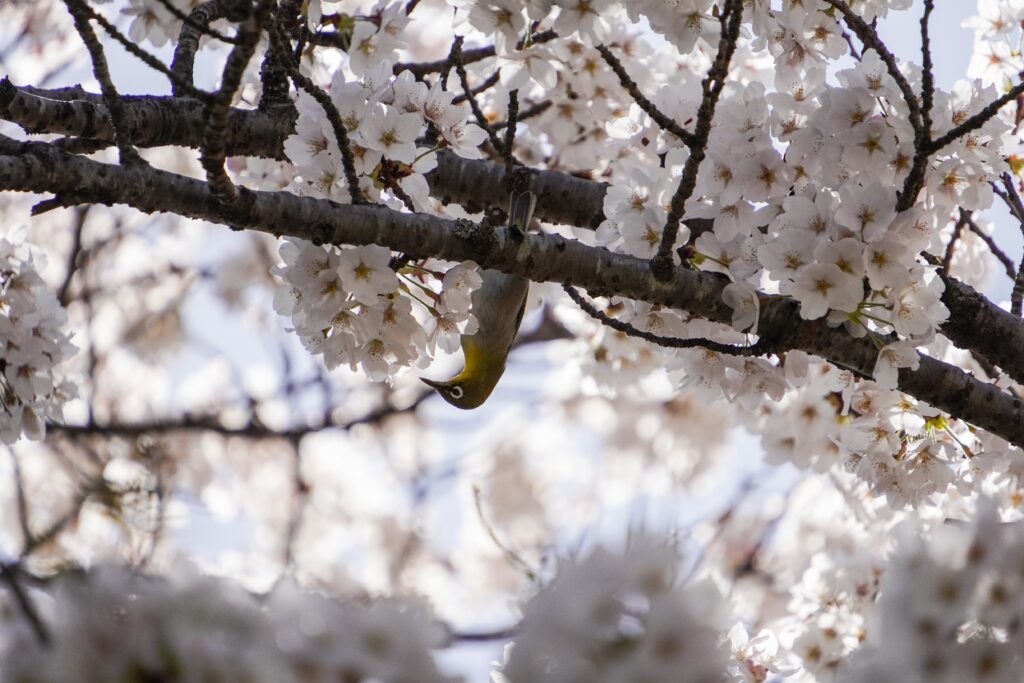
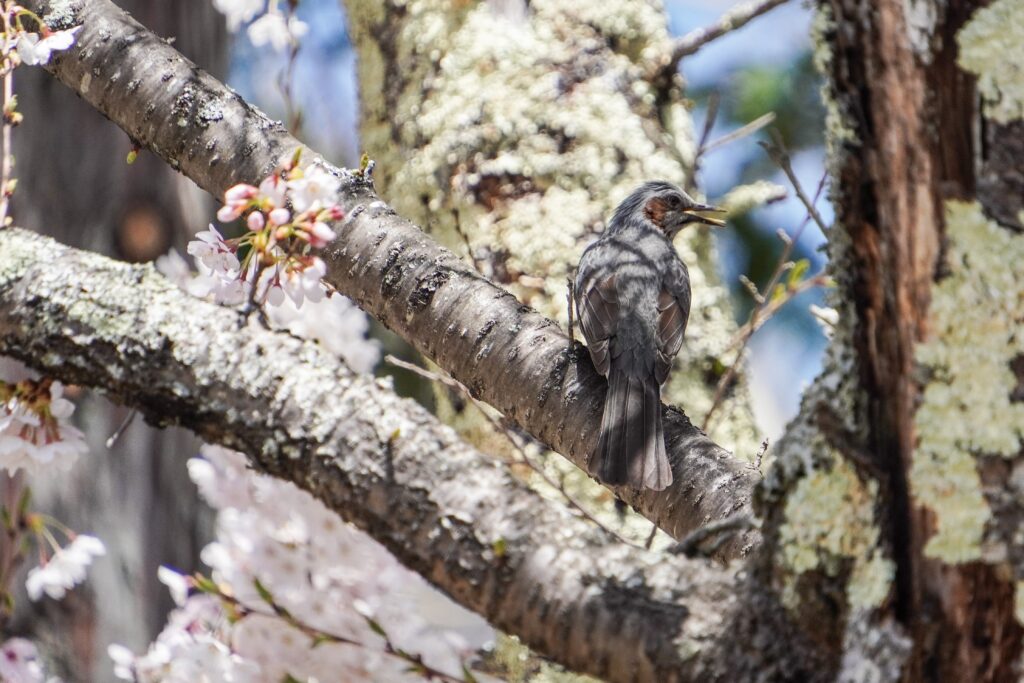
Japanese White-eyes and Bulbuls fly around seeking cherry nectar. Insects gather at the flowers too. The forest is full of life.

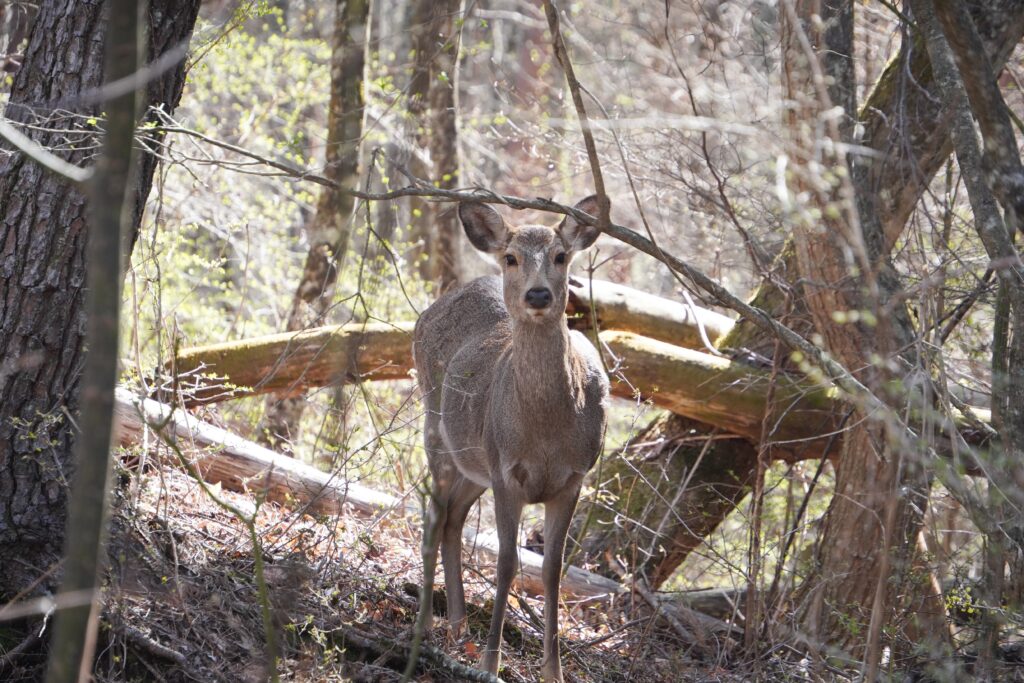
The strong wind last night knocked down many branches. Sika deer are eating the fresh buds from those branches. It seems they found an unexpected feast.
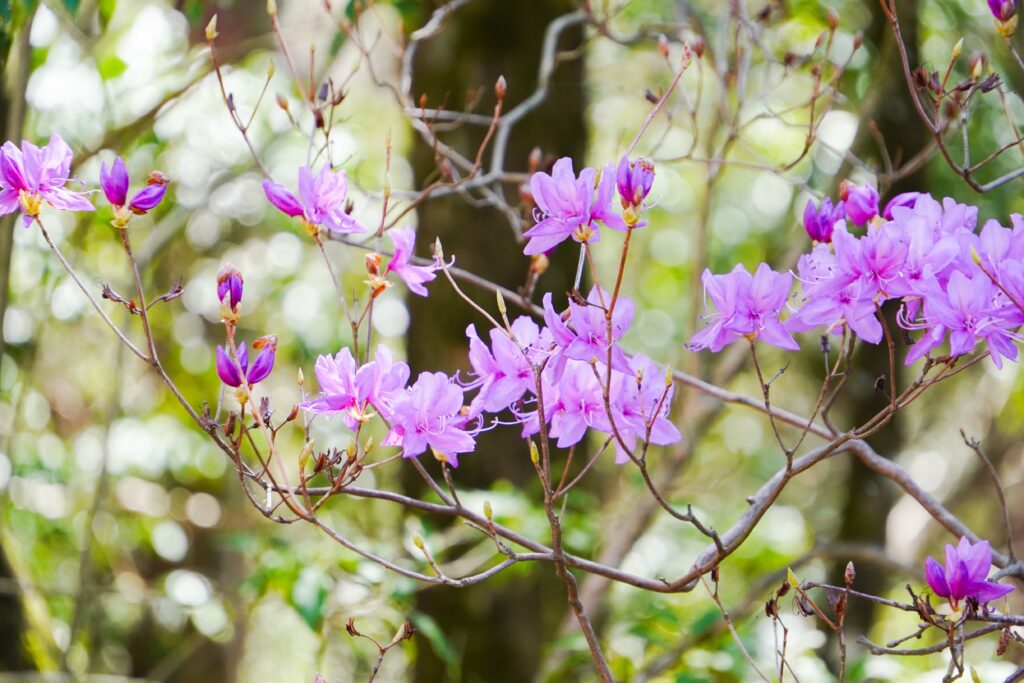
In the Aokigahara forest, Mitsuba-tsutsumi (azaleas) have started to bloom. For a while, their lovely purple flowers will welcome us.
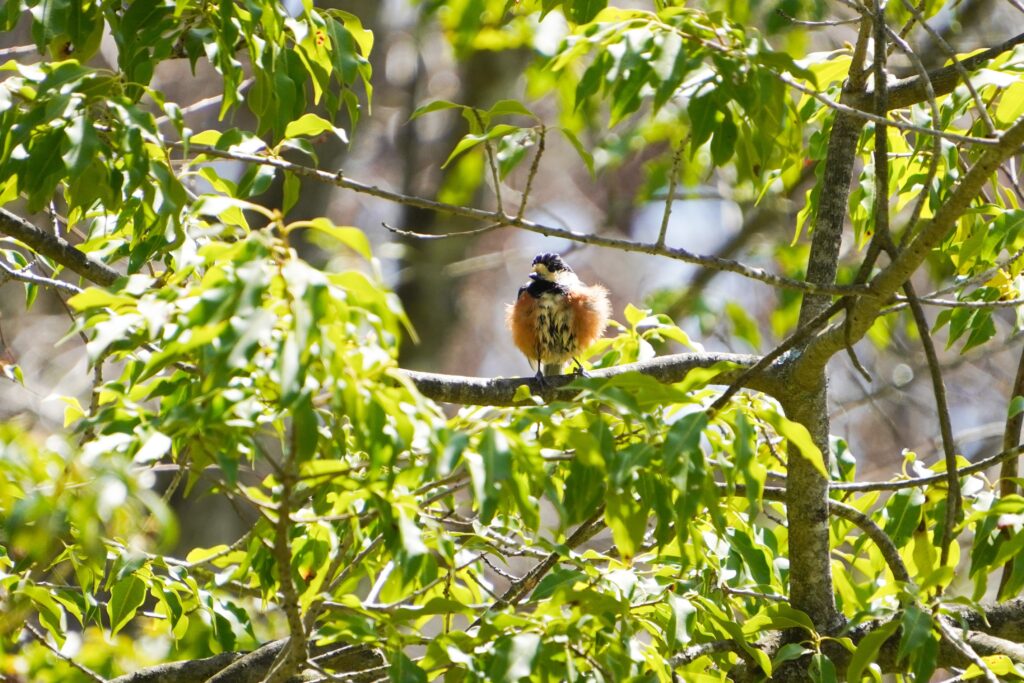
A wet Yamagara bird after a bath, a Great Tit busily carrying dried grass.
For birds, this is the season for nest building.
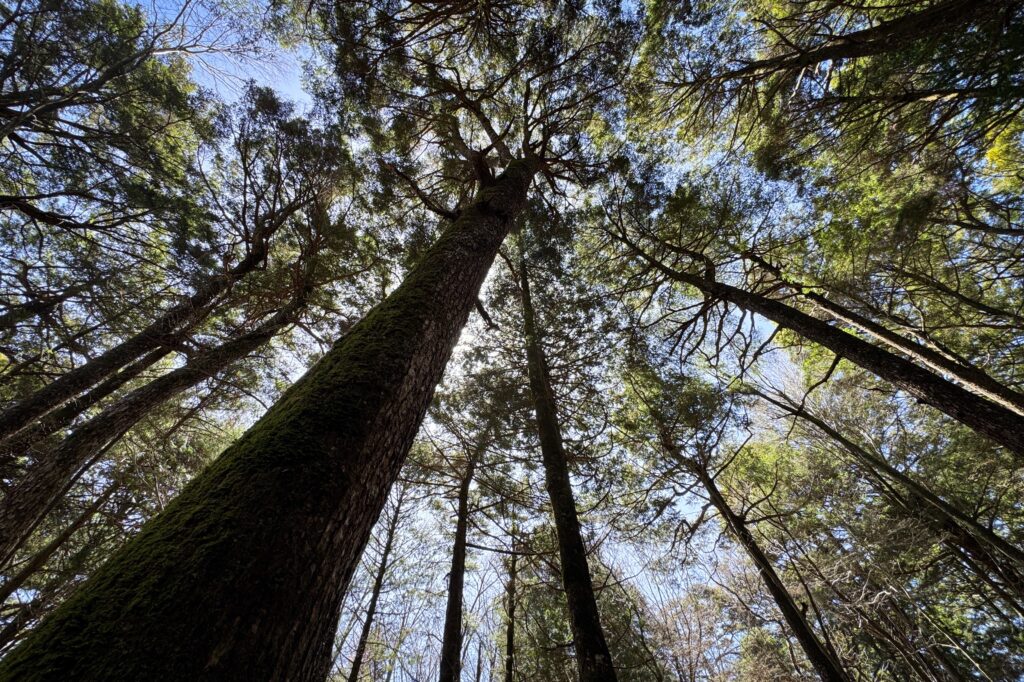
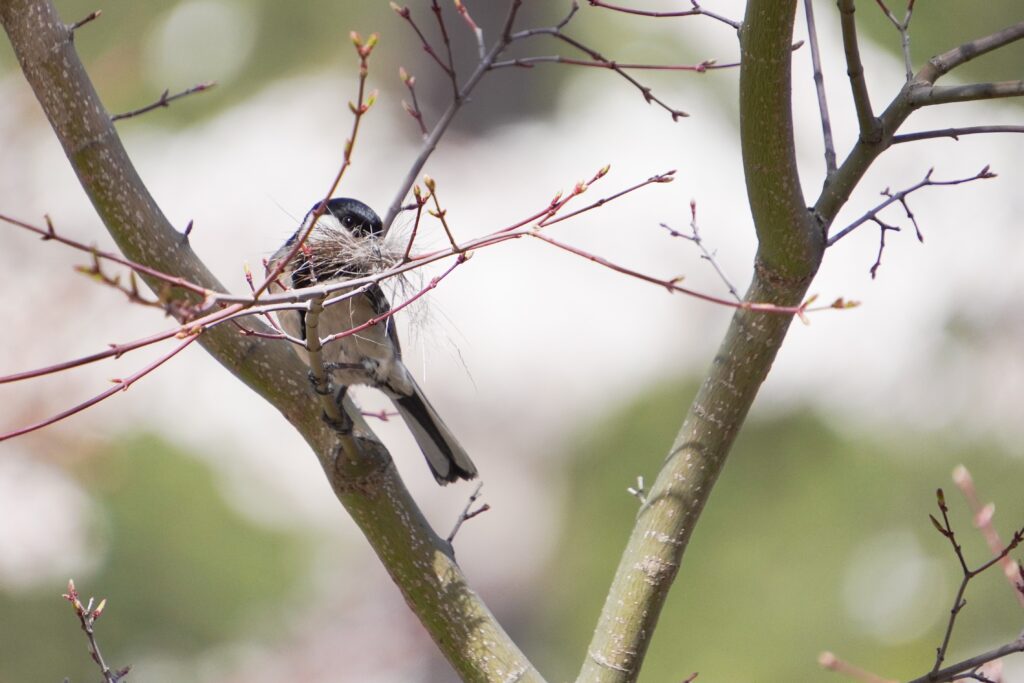
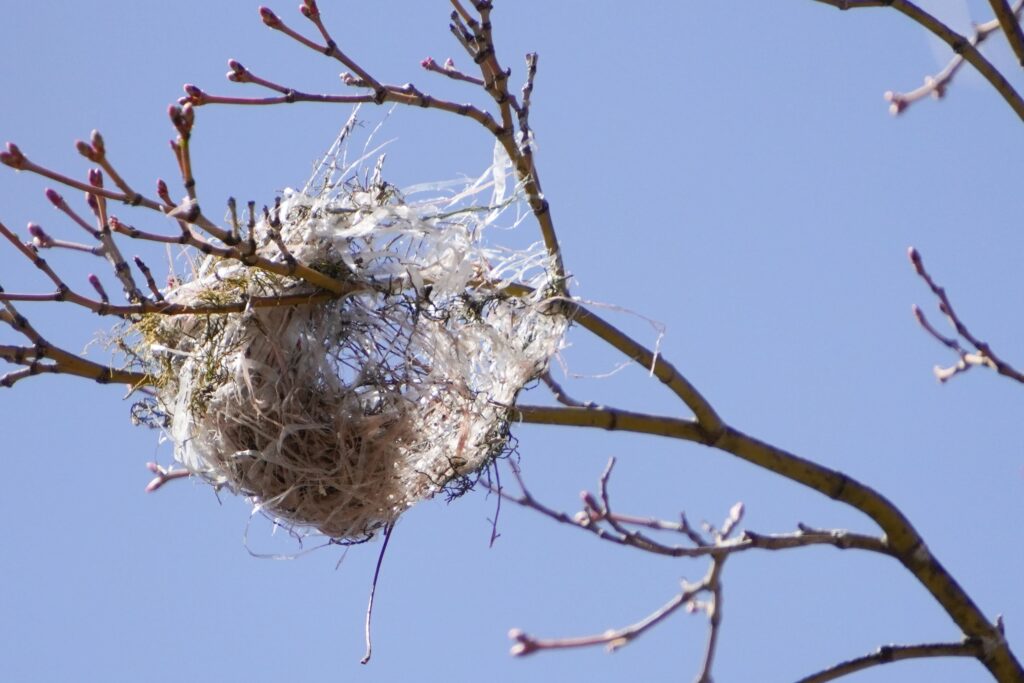
Looking up, I found a nest under construction. Based on the size and location, it is likely a Japanese White-eye’s.
Looking closely, the nest is full of plastic tape.
Light, strong, and easy to find—this material might have looked like the “perfect material” to the birds.
However, there are several dangers that natural materials do not pose.
For example:
Strong plastic can tangle around a chick’s thin legs or neck, and they cannot remove it themselves.
Unlike moss or twigs, plastic is waterproof. When it rains, water stays inside the nest and takes away the chicks’ body heat.
If they eat it by mistake, it stays in their stomach and can lead to death.
The forest here is rich, and there are plenty of natural materials like twigs and moss. Still, they choose “human trash” because it is efficient and convenient.
The phrase “don’t litter” is often ignored because it sounds too obvious.
However, seeing this nest full of plastic shows us how much our small actions threaten the lives of others.
Perhaps we can only change our behavior when we see the actual results of the trash we throw away.
And the idea that something we find “convenient” can unknowingly become “deadly”—this might apply to us humans in this modern age as well.