I recently travelled to Rausu and the Notsuke Peninsula in Hokkaido. When I first visited Shiretoko in winter about five years ago, I was simply overwhelmed by the sight of the Sea of Okhotsk covered in drift ice. At that time, I didn’t give much thought to its ecological role or the creatures living there. This time, I wanted to understand why the environment around Shiretoko is so remarkably fertile.
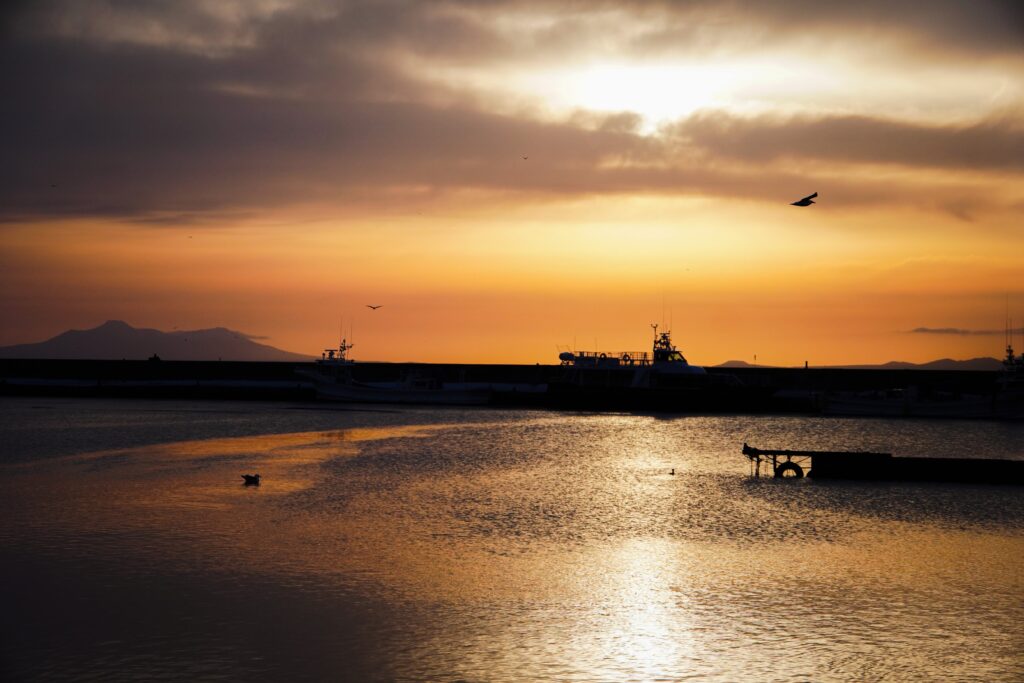
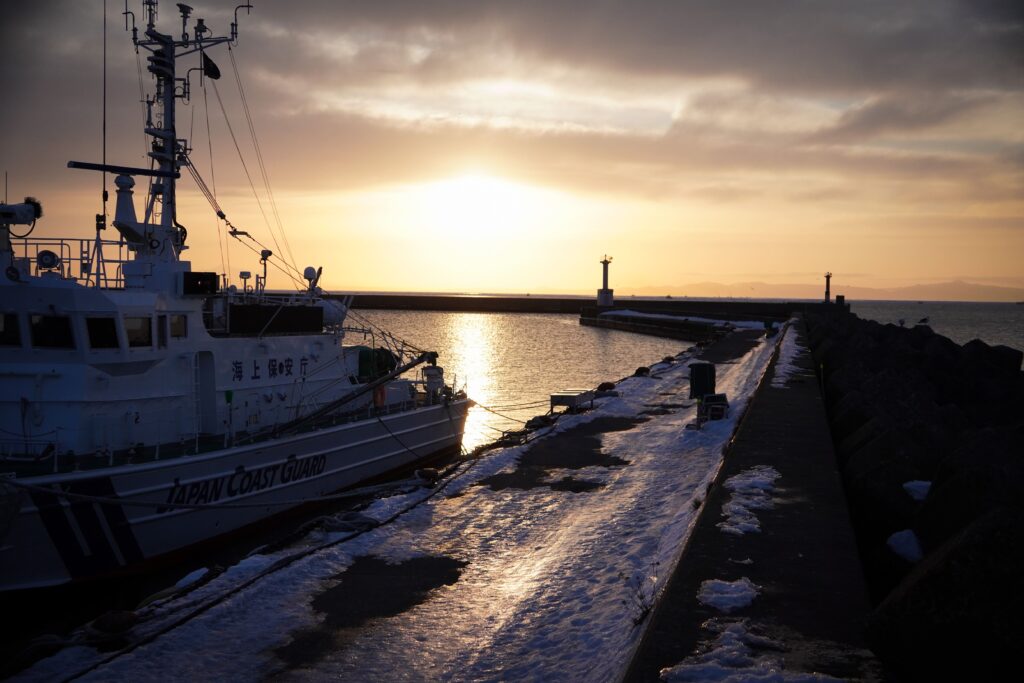
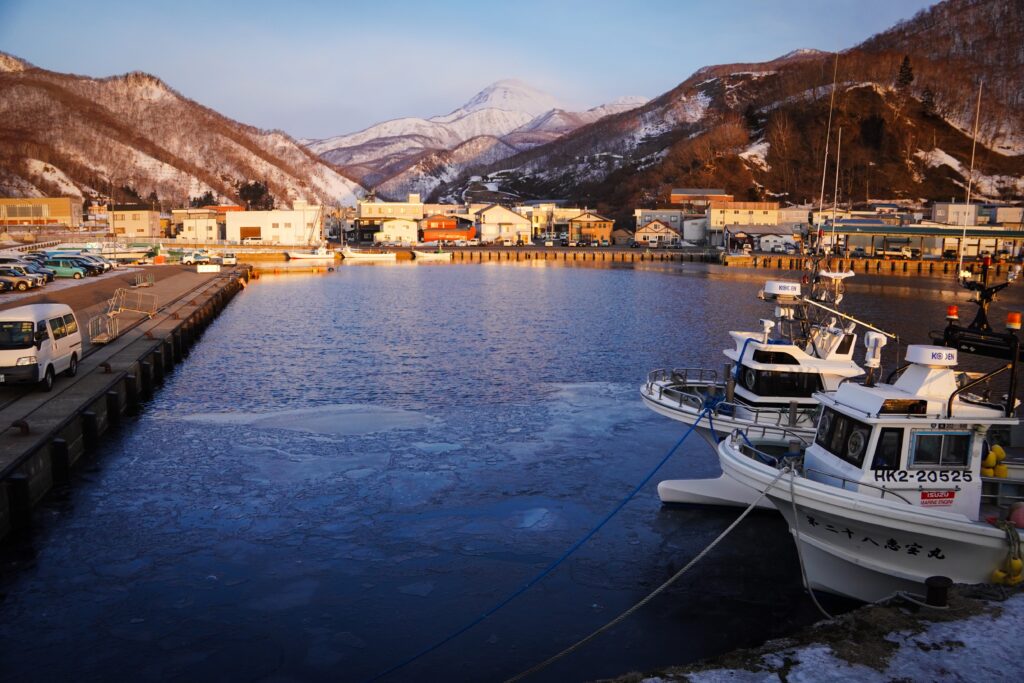
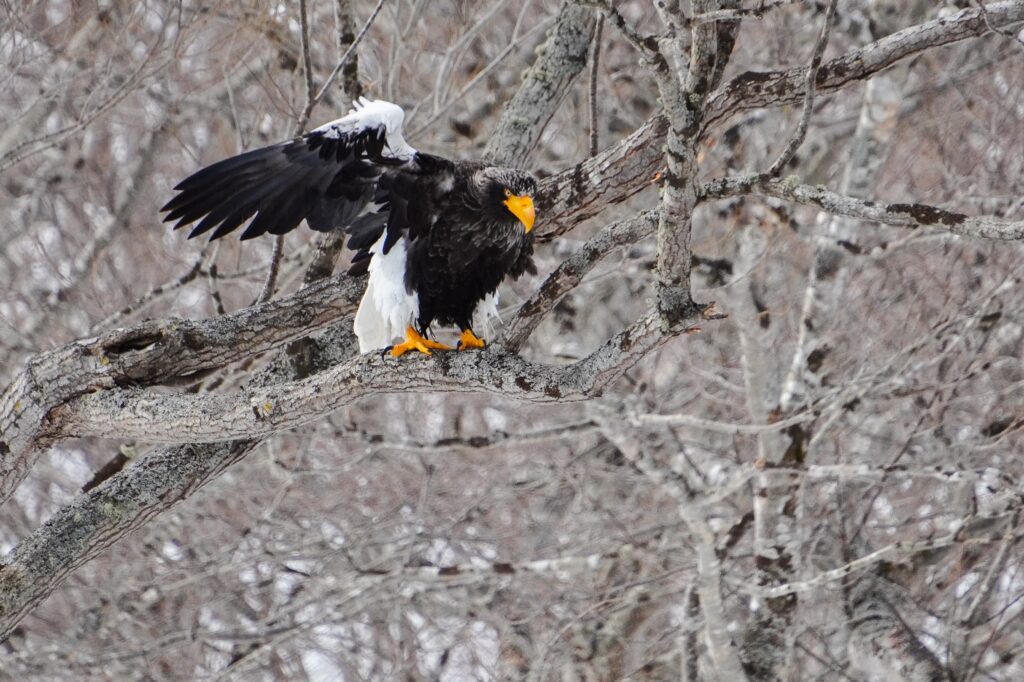
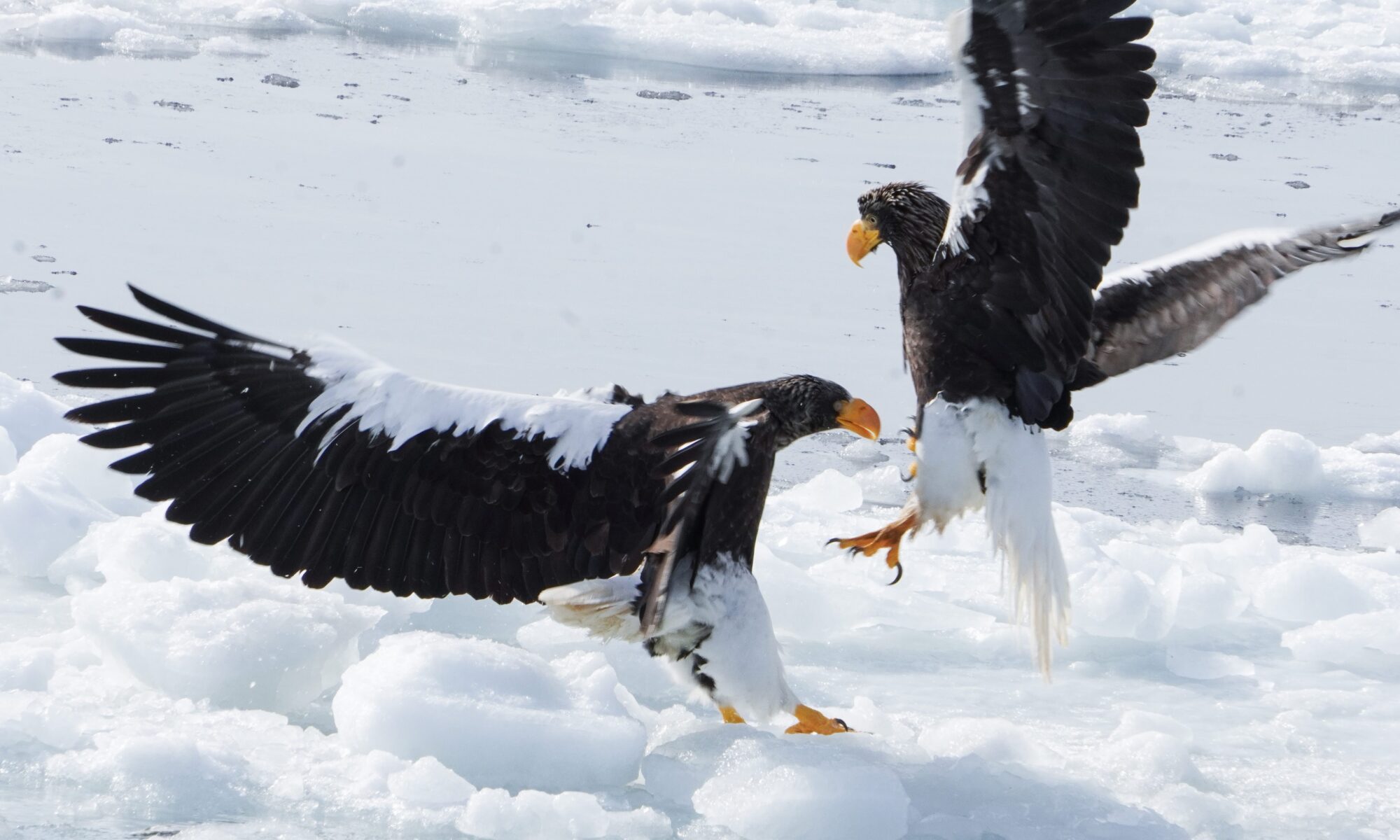
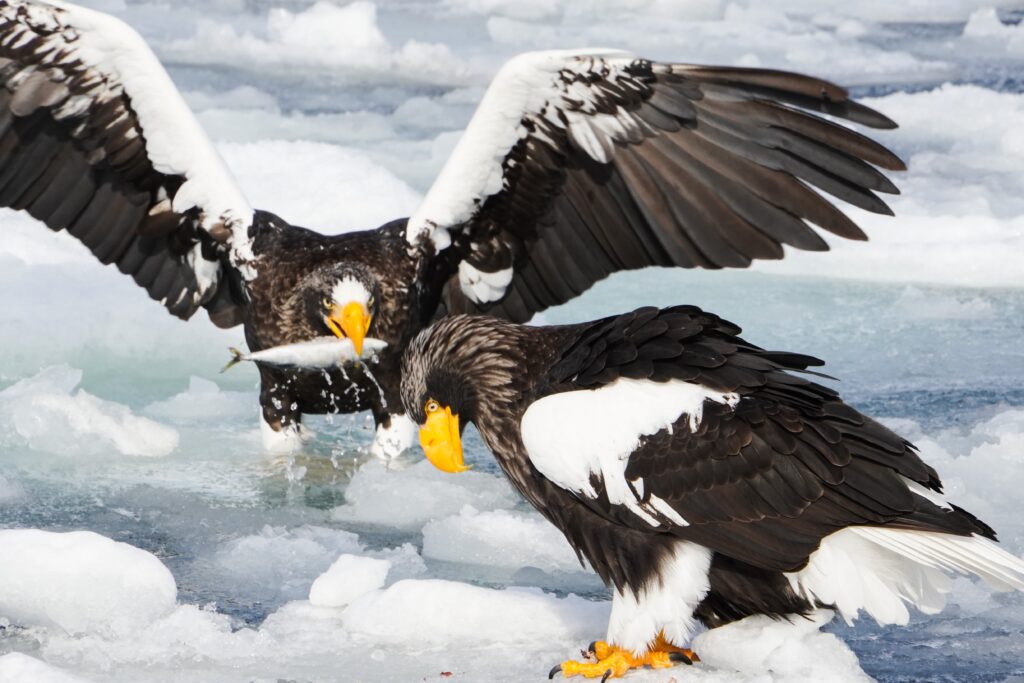
Setting out from Rausu port on a 9:00 am cruise, we encountered the sea ice within minutes. Perched upon the ice were countless Steller’s sea eagles and white-tailed eagles. It was a breathtaking scene, teeming with life.
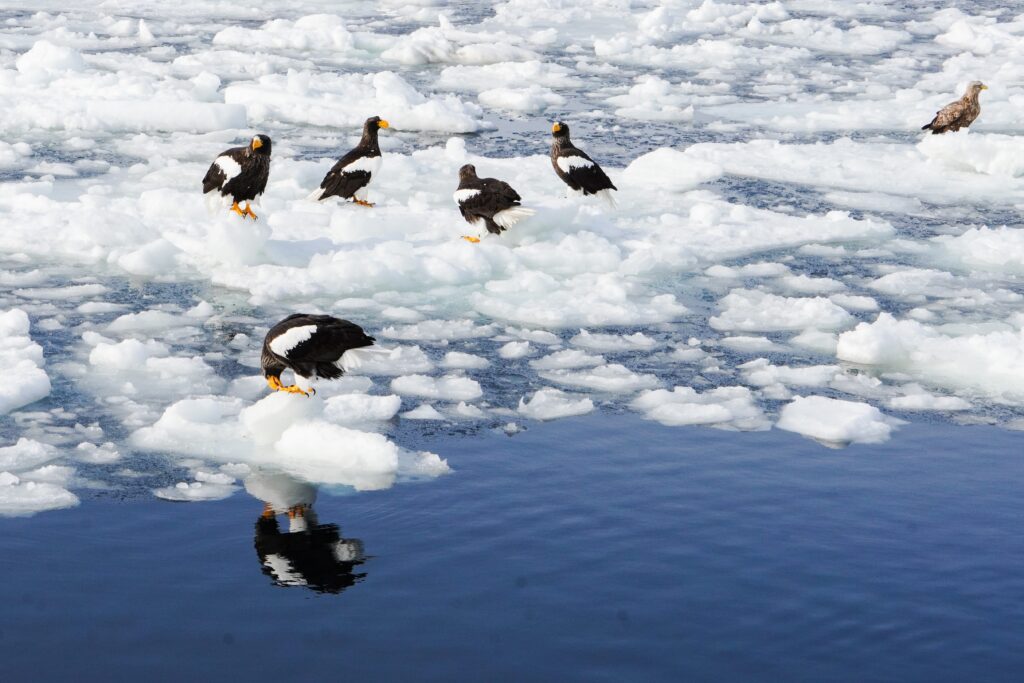
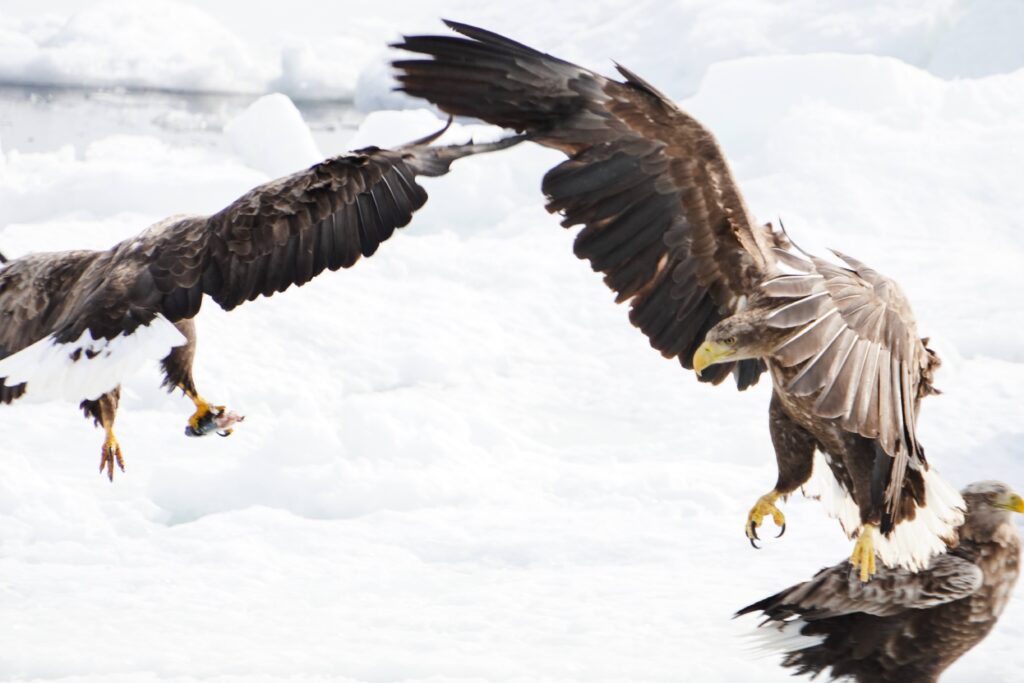
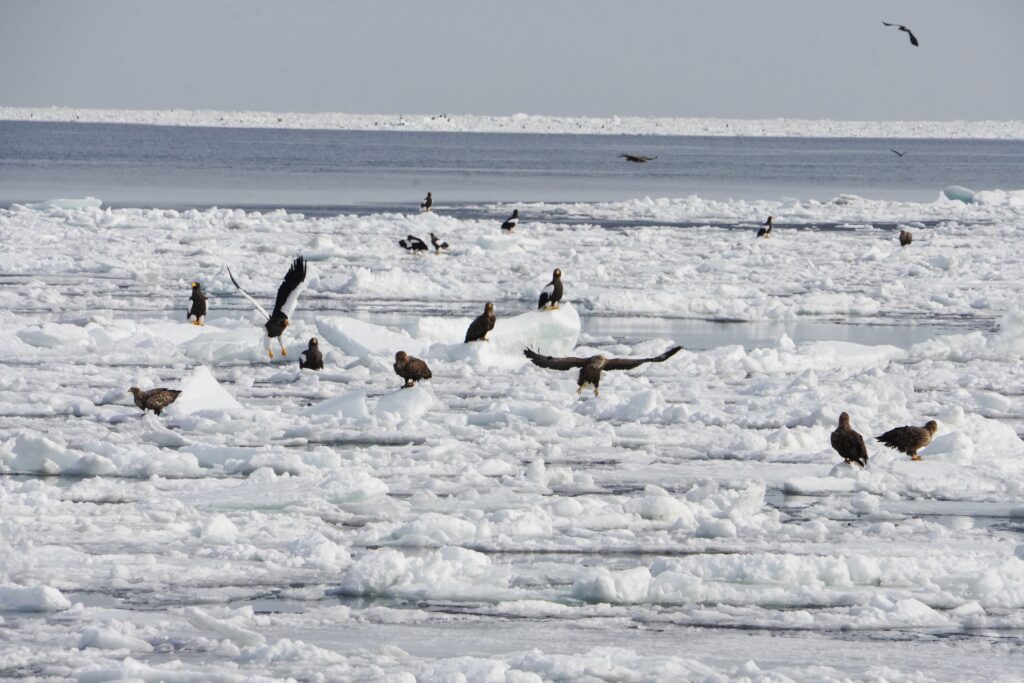
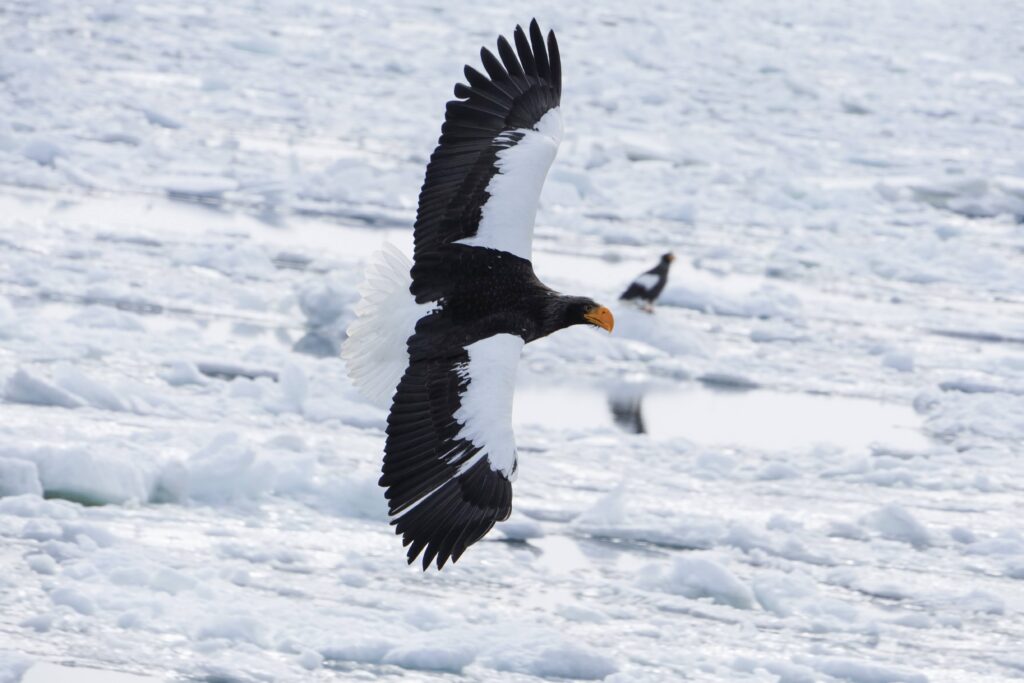
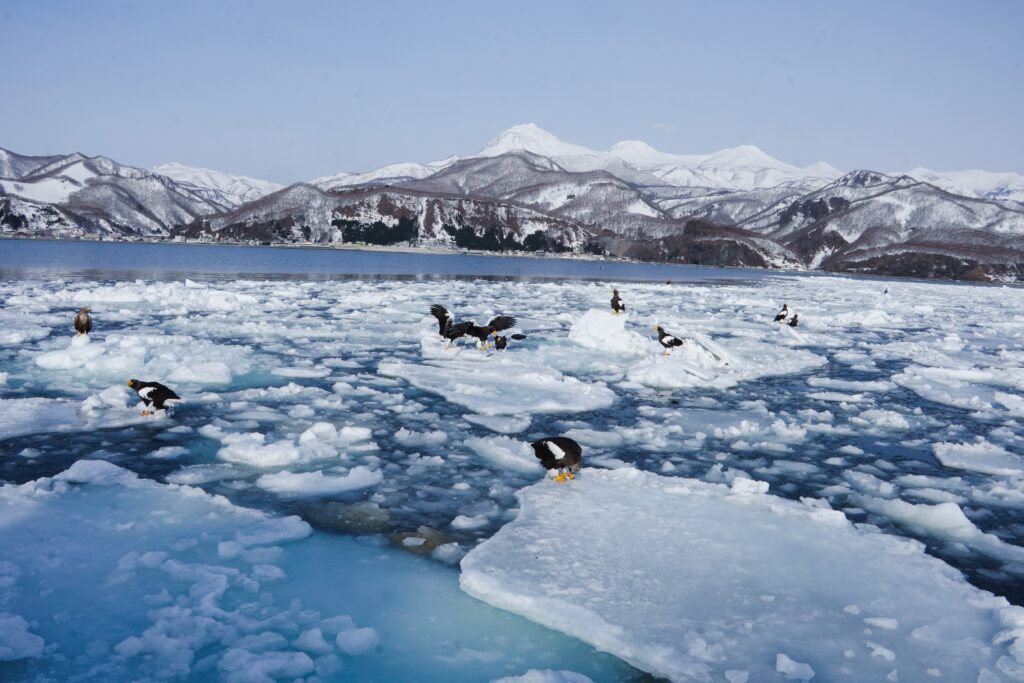
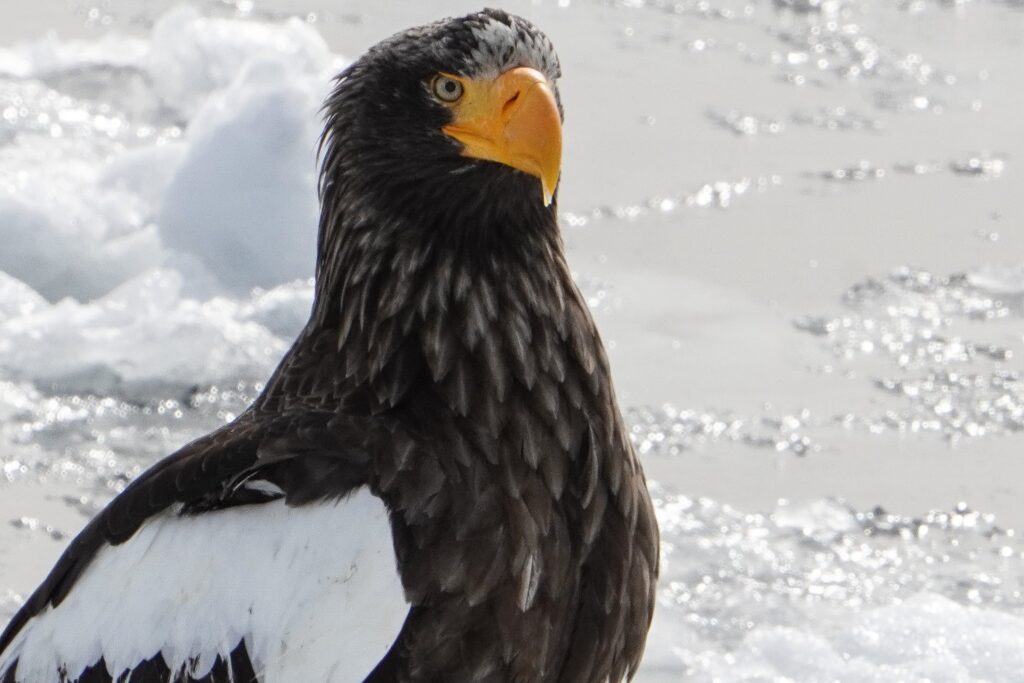
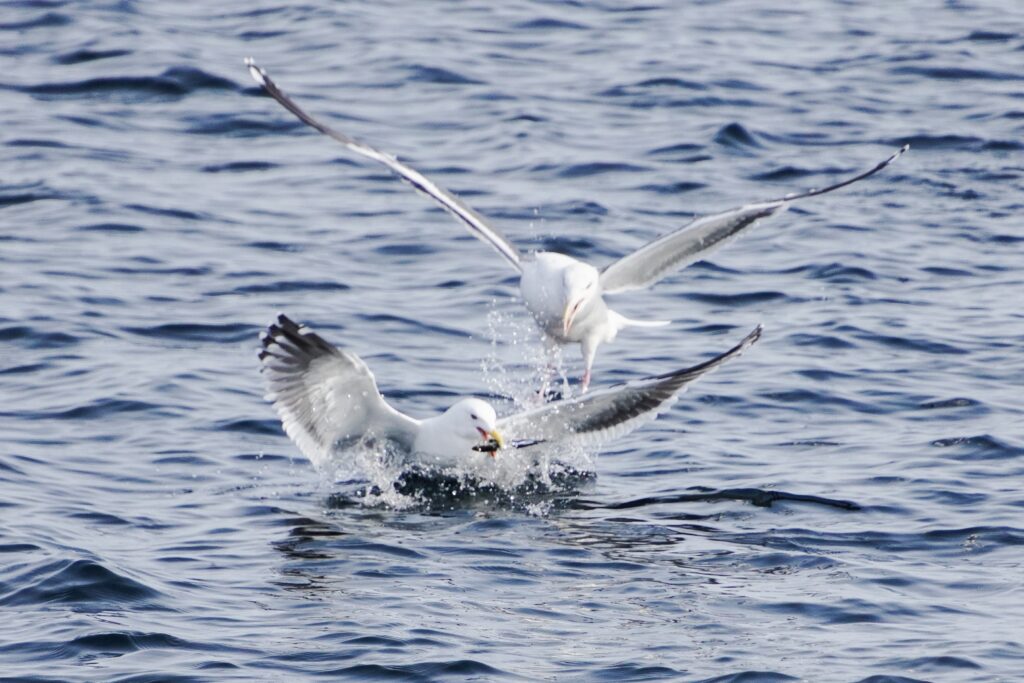
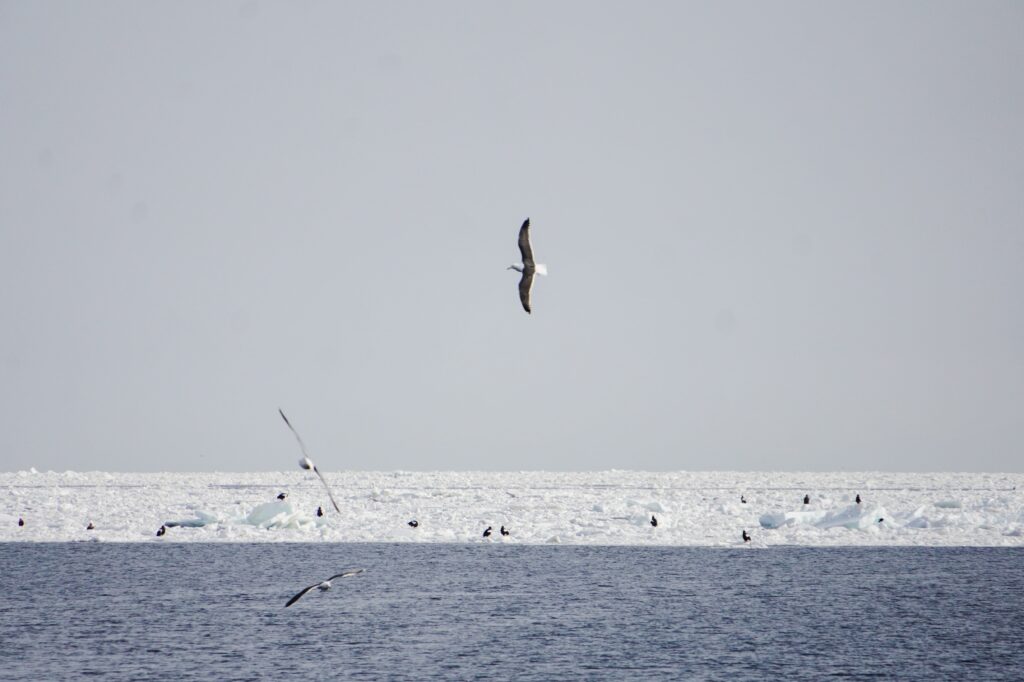
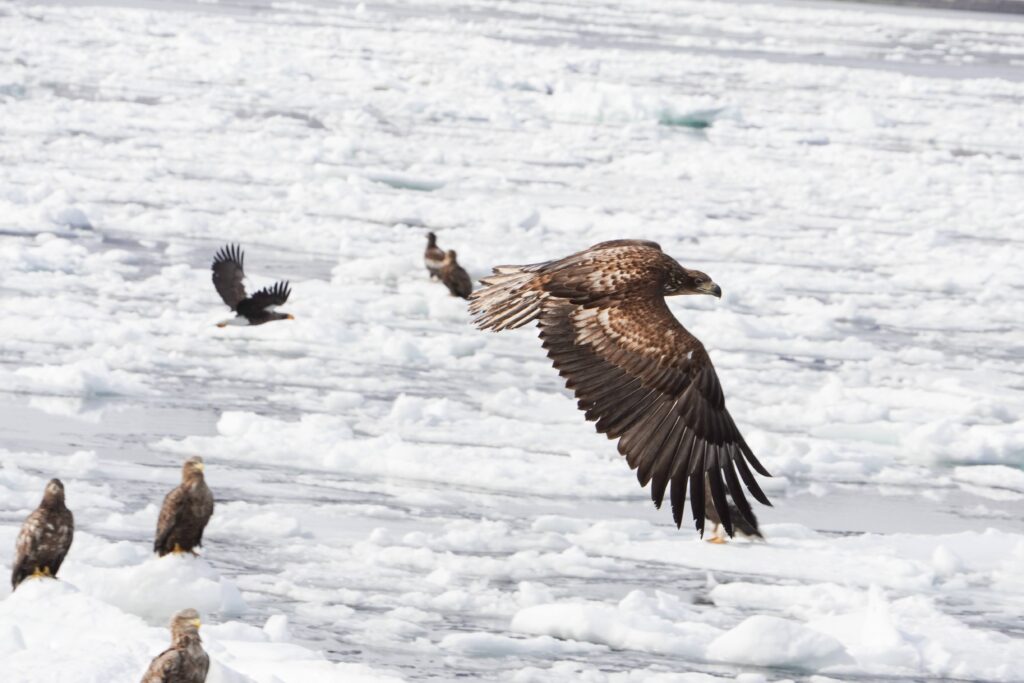
The ice was moving much faster than I had imagined; by the time we returned less than two hours later, the harbour was almost completely blocked, and the coastline was buried under a thick layer of white.
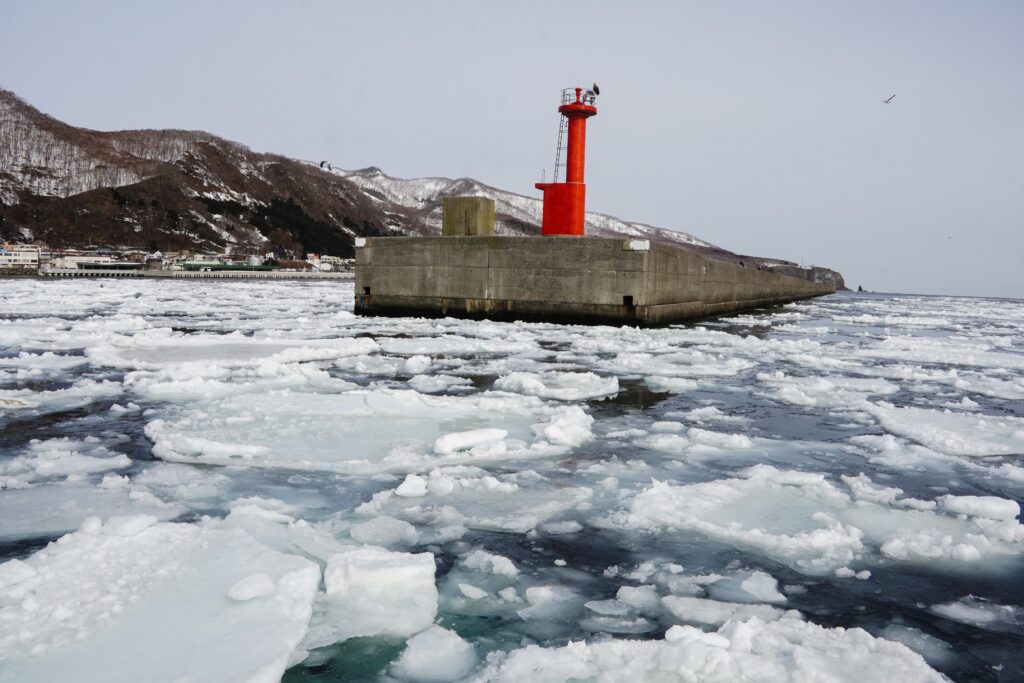
I visited the local visitor centre to learn about the relationship between this abundance and the sea ice. Based on their exhibits and my own research, I have summarised the cycle into four steps:
Step 1: A Gift from the Amur River
Freshwater containing iron from the wetlands of the Amur River flows into the sea and freezes. This ice, carrying essential iron, drifts southwards into the Sea of Okhotsk.
Step 2: Stirring the Ocean
As the ice grows, it expels salt. This creates cold, highly saline water that is heavy and sinks to the seabed. This process displaces the nutrient-rich water (containing nitrogen and phosphorus) from the bottom, pushing it up to the surface.
Step 3: A Two-Stage Food Supply
Early Boost (Feb–Mar): Ice Algae
Algae attached to the underside of the ice begins to grow early, sustaining zooplankton through the winter.
Main Boost (April): Spring Bloom
As the ice melts and sunlight increases, the iron and minerals brought to the surface trigger an explosion of phytoplankton. This is likely why Rausu is so famous for its kelp (konbu).
Step 4: The Food Chain and the Role of Salmon
The cycle moves from plankton to fish, sea mammals, and top predators like orcas. A vital part of this chain is the salmon. Nourished by this rich marine ecosystem, salmon return to Shiretoko’s rivers to spawn. There, they become a crucial food source for bears and birds. Eventually, their remains provide essential nutrients to the soil, acting as fertiliser that sustains the vast forests. These nutrients then flow back into the sea via the rivers, completing the circle.
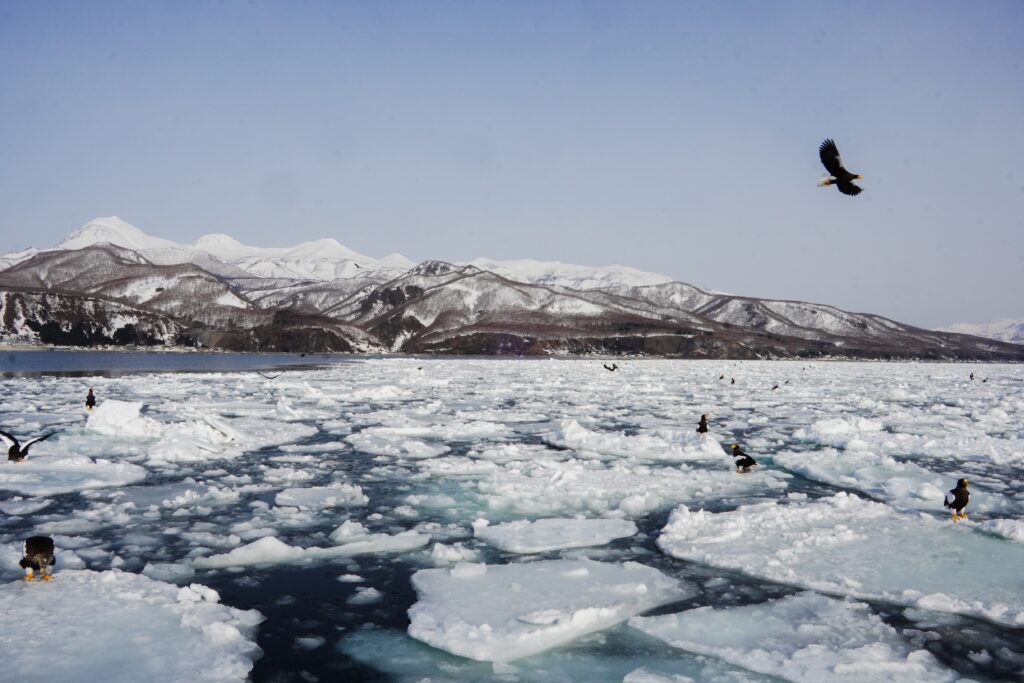
Everything is connected, from microscopic plankton to whales, and even the forests. The energy generated by the winter ice stirring the ocean transforms over years into the nutrients that keep the Shiretoko mountains lush.
Just as ice from the Amur River thousands of kilometres away nourishes this land, our own small actions may indirectly affect the other side of the planet. While wildlife is resilient and adapts to slow changes, human impact is now accelerating beyond the speed of natural adaptation. I felt a strong desire for this beautiful cycle to continue long into the future.
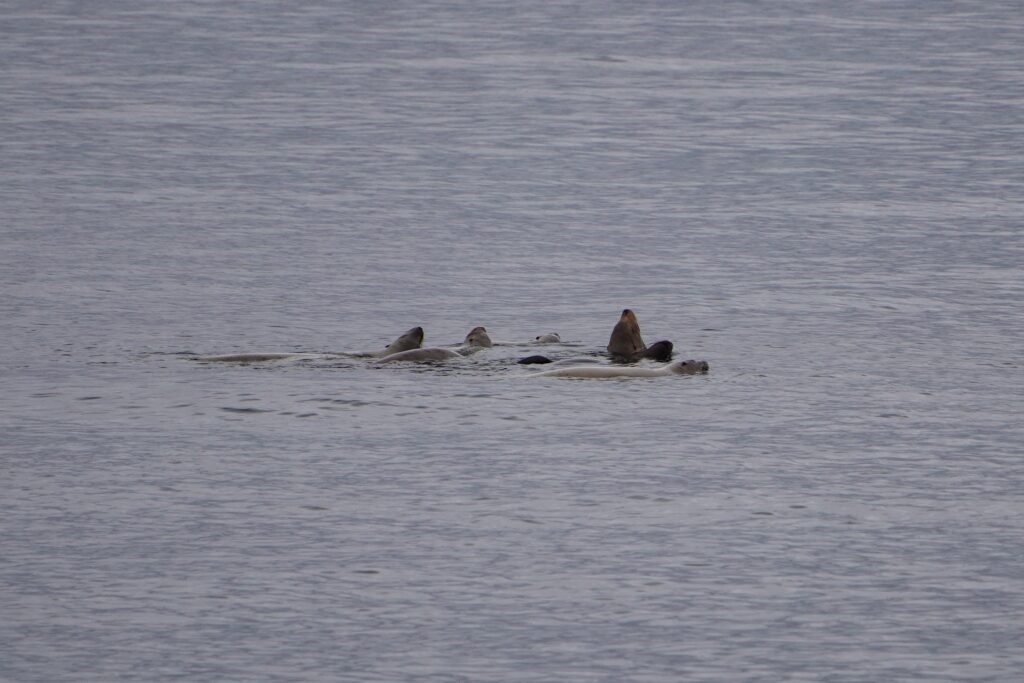
The following morning, the ice had vanished from the shore. In its place, a pod of sea lions was swimming, and the eagles had moved towards the land. My journey continued towards the Notsuke Peninsula.