The Oniwa and Okuniwa Scenic Routes
You don’t need to be a seasoned hiker to experience the profound beauty of Mt. Fuji up close. Even if you’re not confident in your stamina, you can still immerse yourself in the mountain’s majestic scenery and geological history.
We recommend two easy-to-access routes near the 5th Station: the Sky Promenade (御庭, Oniwa), a scenic 3 to 4 km path, and the charming Okuniwa Garden (奥庭). These trails offer spectacular views and are perfect for a gentle stroll, serving as an alternative to tackling the main summit climb.
Getting There: Accessing Oniwa and Okuniwa
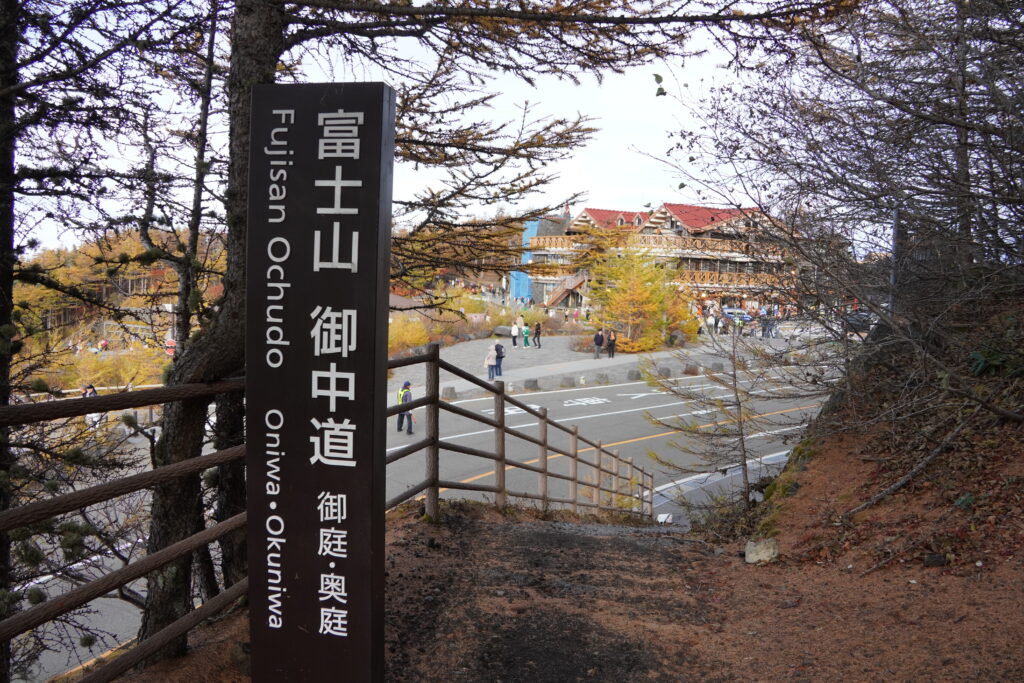
To reach both areas, take the bus from Kawaguchiko Station (河口湖駅) bound for the Mt. Fuji 5th Station (富士山五合目).
/For Okuniwa: Get off at the “Okuniwa Iriguchi” (奥庭入口) stop.
/For Oniwa: Get off at the “5th Station” (五合目) stop.
Suggested Route
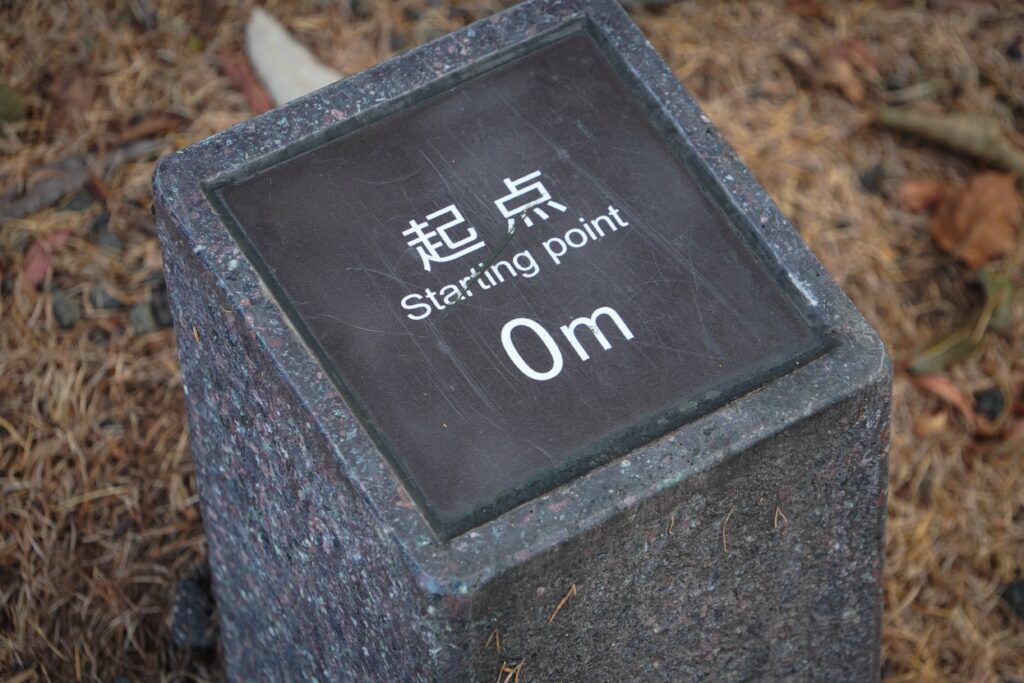
If you plan to visit both locations, we recommend starting at the 5th Station. From there, you can walk along the Oniwa route towards Okuniwa Iriguchi, traversing the lava plateau while enjoying uninterrupted views. Once you spot the path leading down below, descend and cross the road to reach Okuniwa Garden.
Practical Information
Restrooms are conveniently located at the 5th Station and Okuniwa Iriguchi. You can easily catch a bus back to Kawaguchiko Station from Okuniwa Iriguchi.
🚌 Check the Timetable: Always ensure you check the latest schedule for the Fujikyu Bus Mt. Fuji 5th Station Line before traveling.
The Oniwa Sky Promenade: Walking on the Mountain
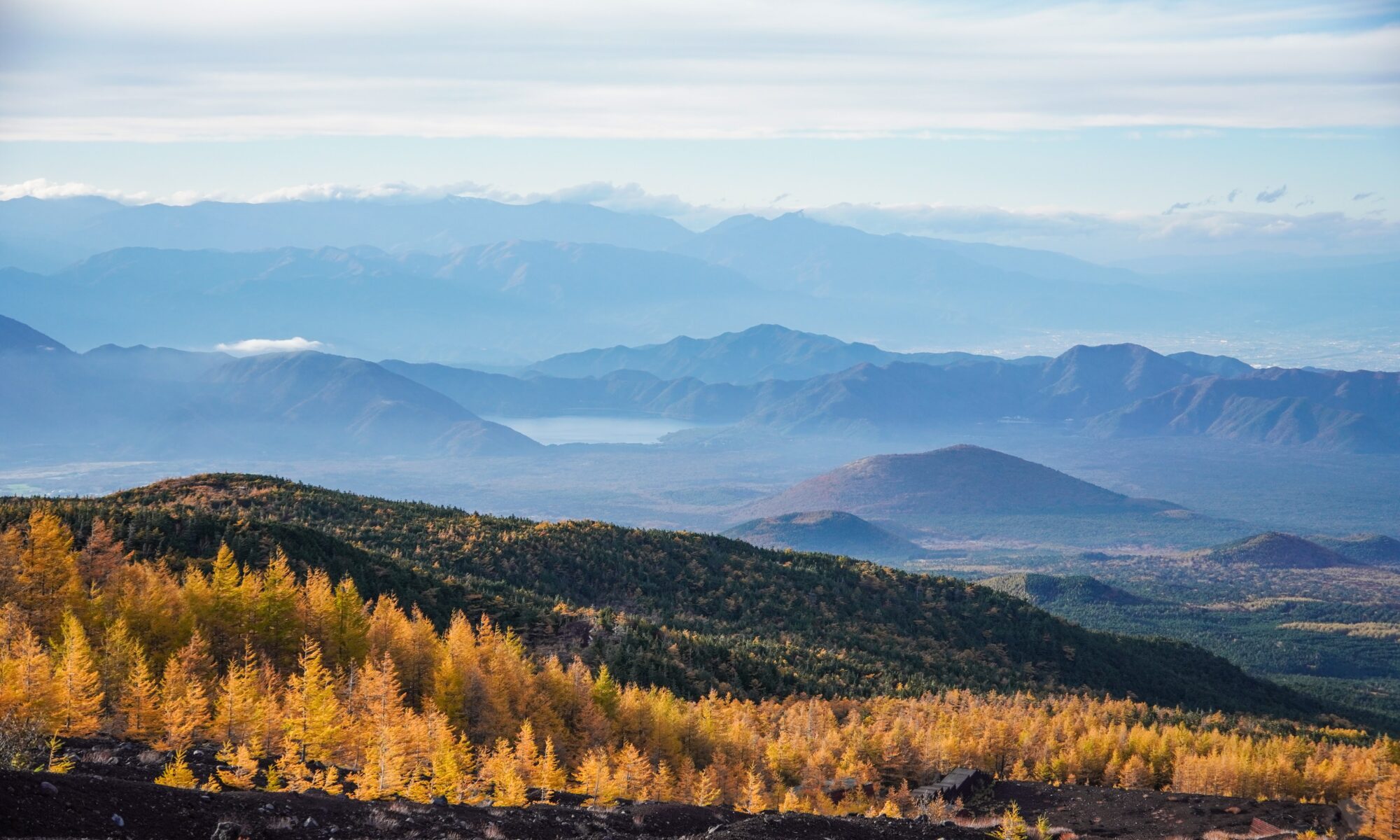
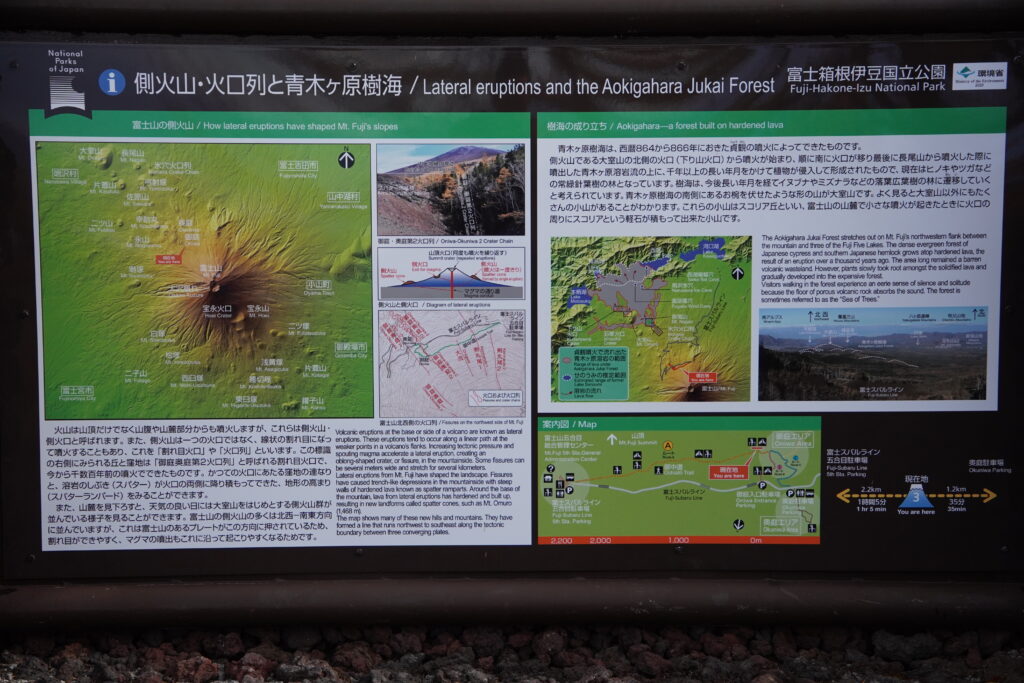
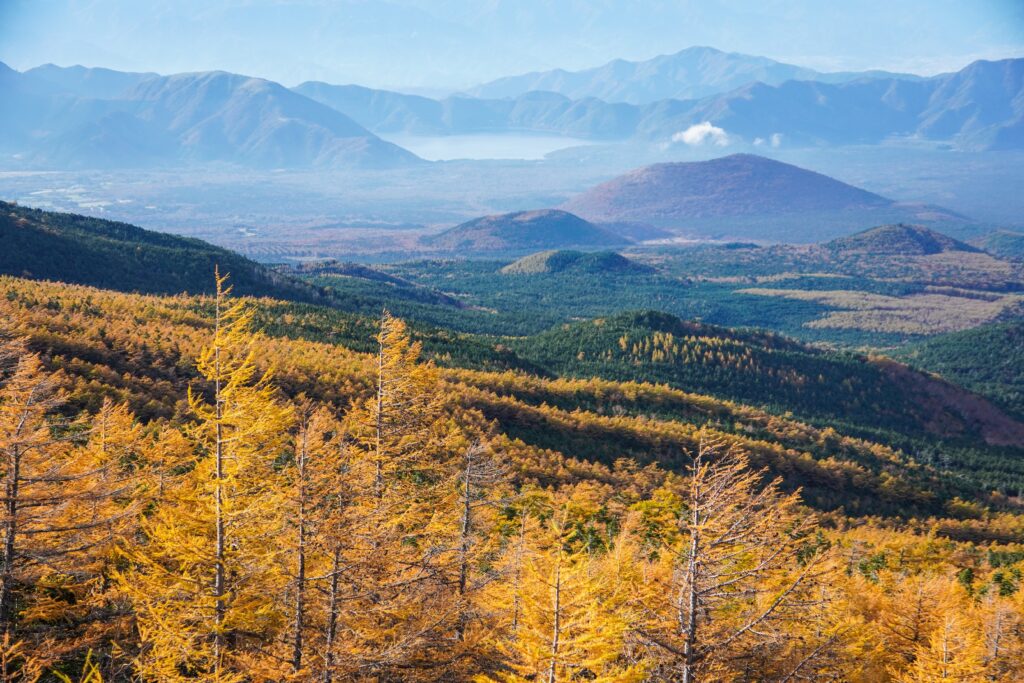
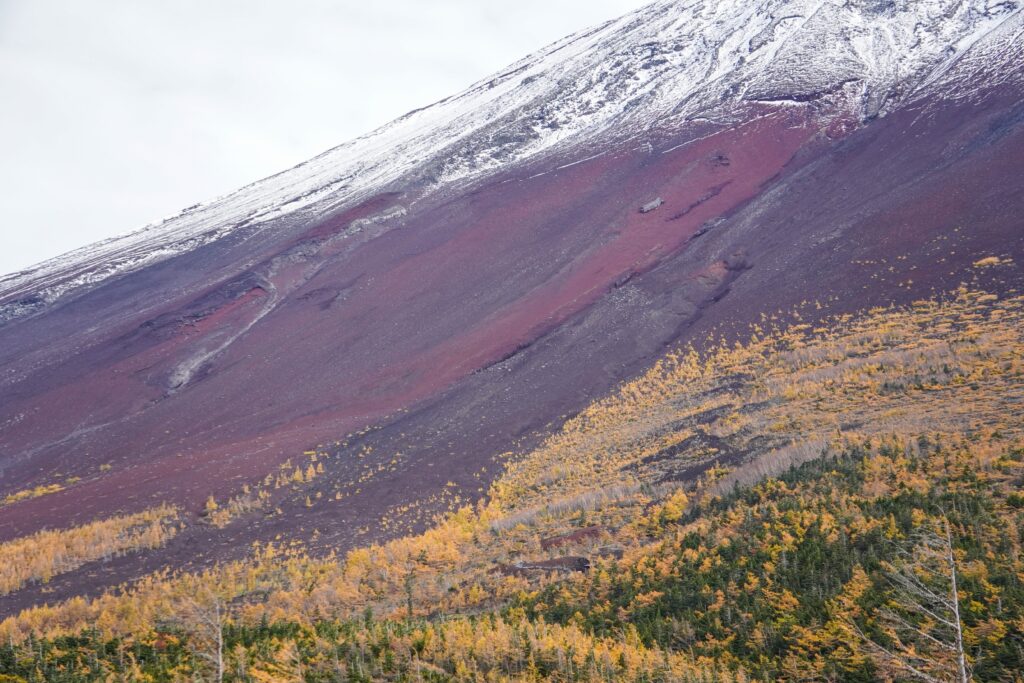
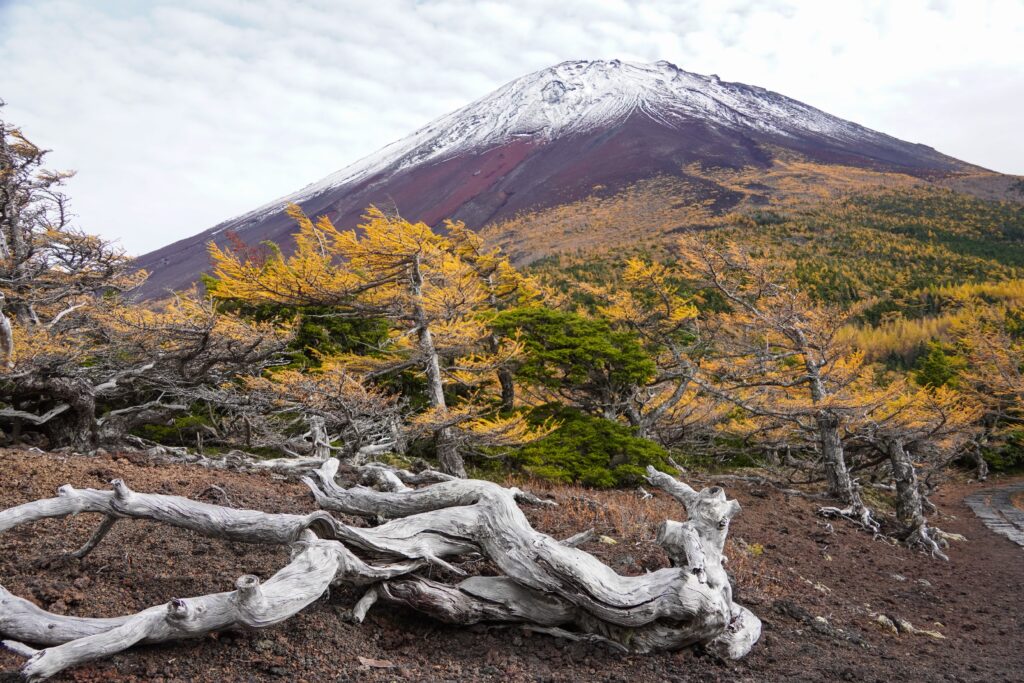
Along almost the entire Oniwa route, you are treated to a close-up view of Mt. Fuji on your left. To your right, the view plunges downward, revealing a panorama that includes Lake Kawaguchi, Lake Motosu, the mysterious Aokigahara Jukai (Sea of Trees), and numerous parasitic volcanoes. This elevated perspective is an excellent place to imagine the sheer power that shaped the .surrounding terrain.
The largest visible crater is Mt. Omuro, which is estimated to have erupted about 3,300 years ago. You can spot several other craters in the vicinity. The entire area tells a geological story: The lava flow from the Mt. Nagaoyama eruption (864–866 AD) divided the great ancient lake, “Senoumi,” into Lake Saiko and Lake Shojiko, and it was upon this solidified lava that the Aokigahara Jukai formed over many centuries. From this viewpoint, you can almost trace the path the ancient lava took from these side volcanoes.
Looking further afield, on a clear day, you can see the Yatsugatake Mountains, the Southern Alps, and even the distant Northern Alps.
The Best Time to Visit: Autumn’s Golden Glow
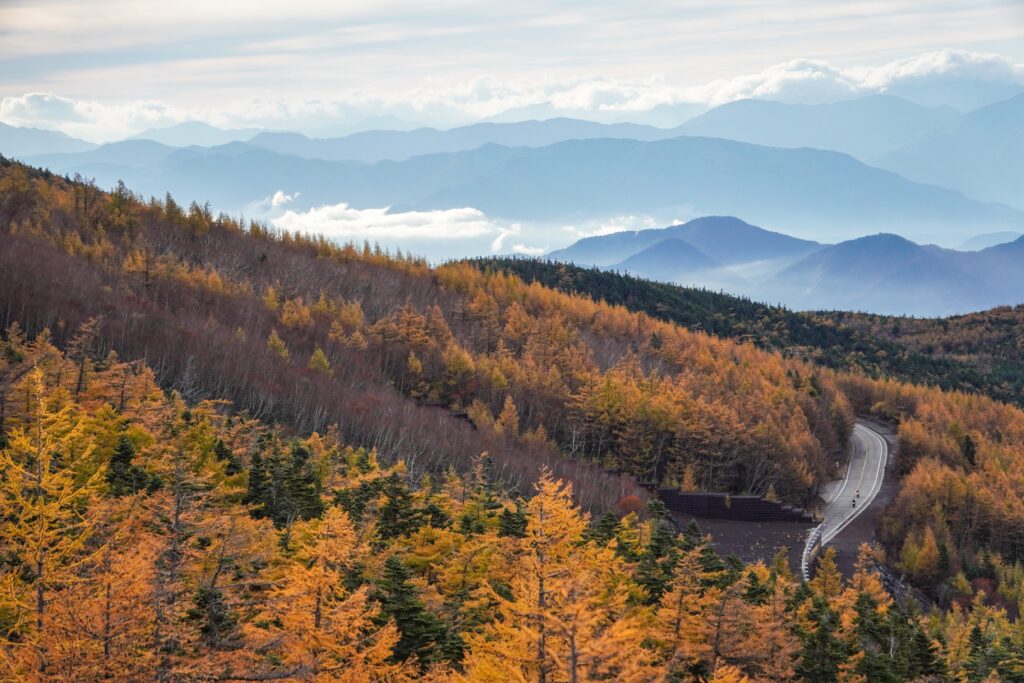
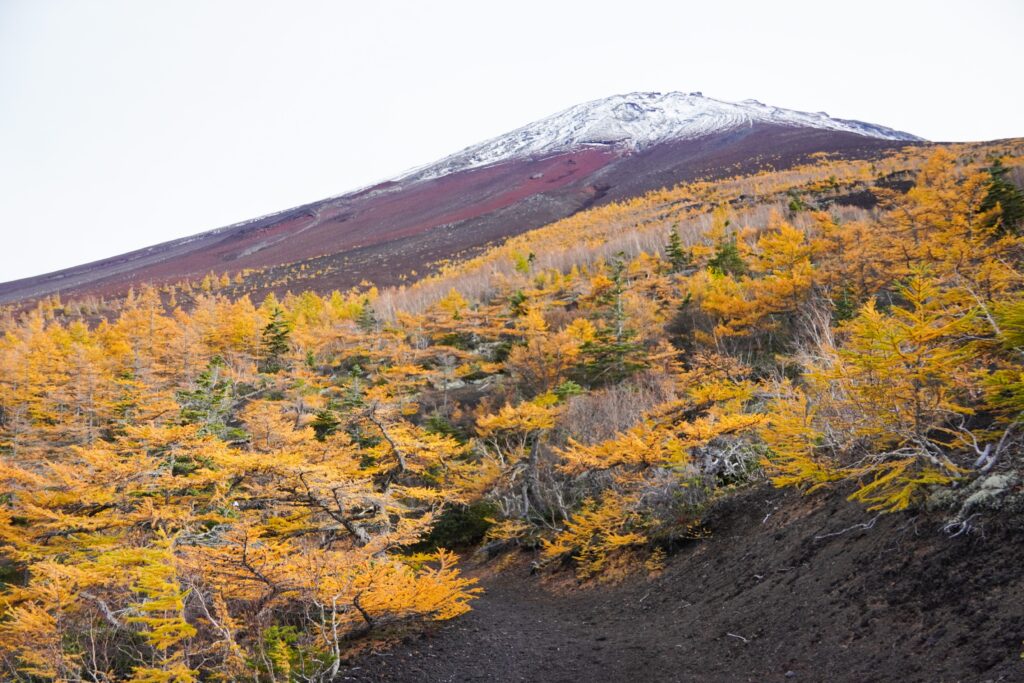
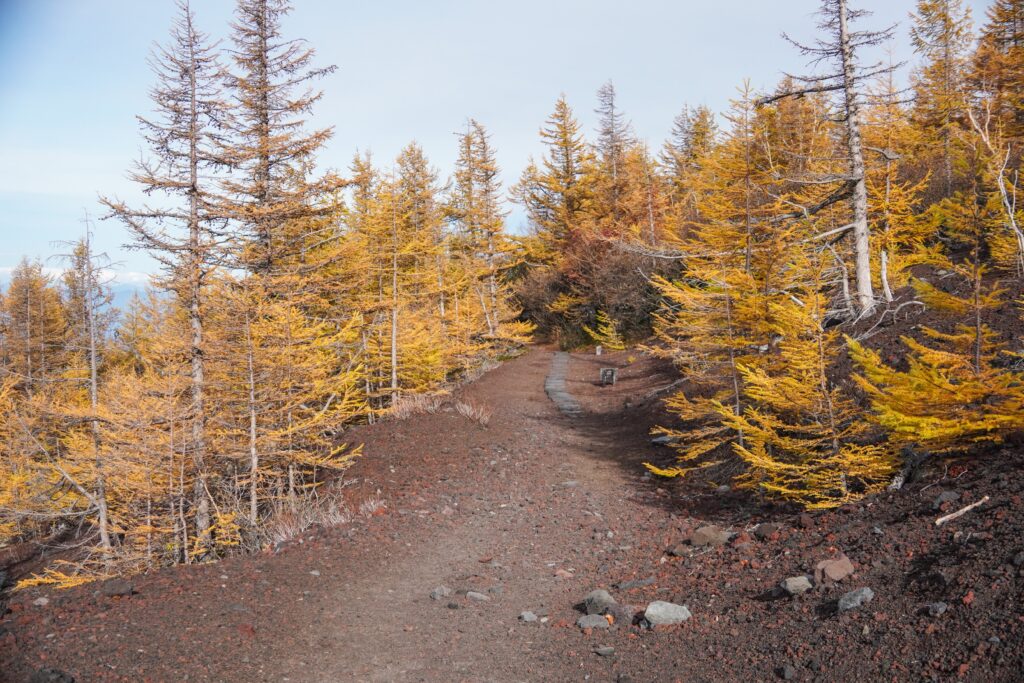
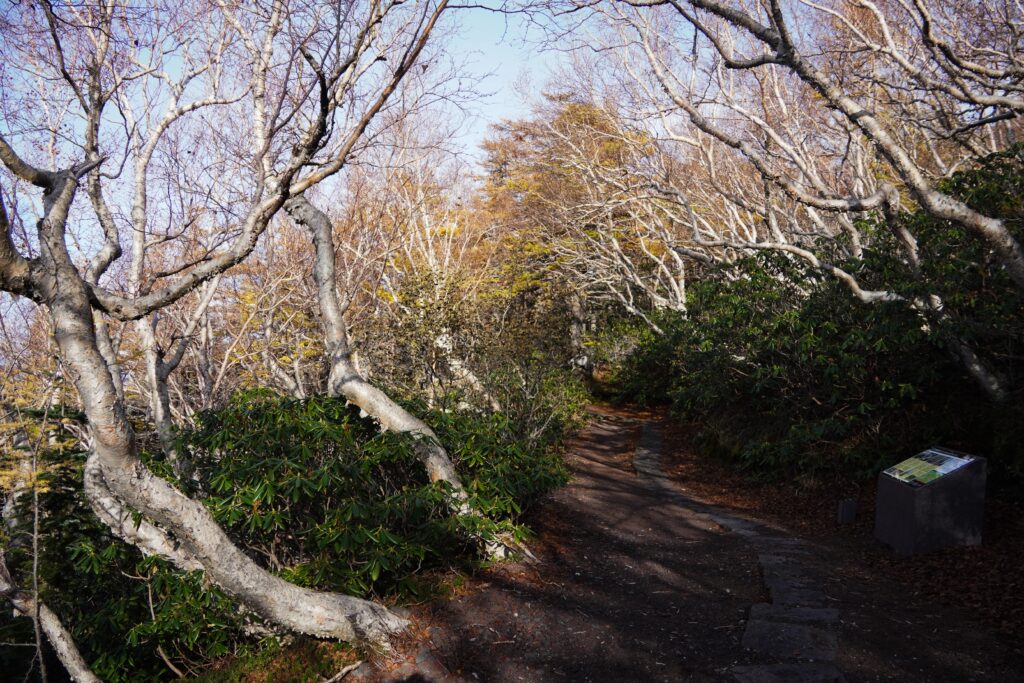
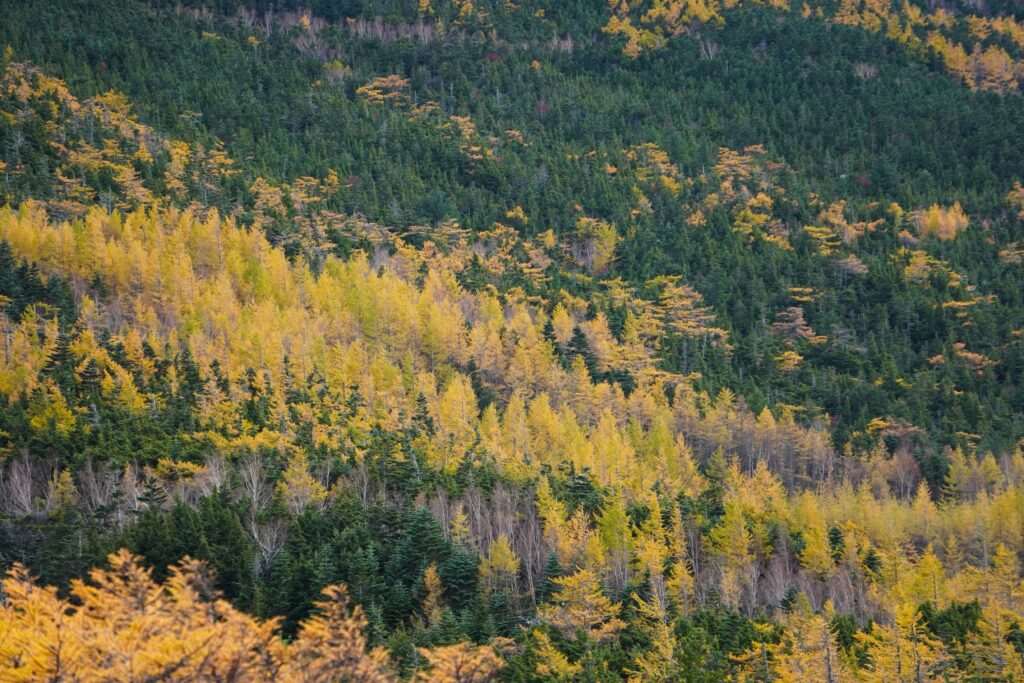
Without a doubt, the best season to visit is autumn. While the timing varies each year, typically from late October to early November, the forest is transformed. The larch (karamatsu) trees turn an incredible gold, making the entire experience feel magical.
The Okuniwa Garden: A Peaceful Circuit
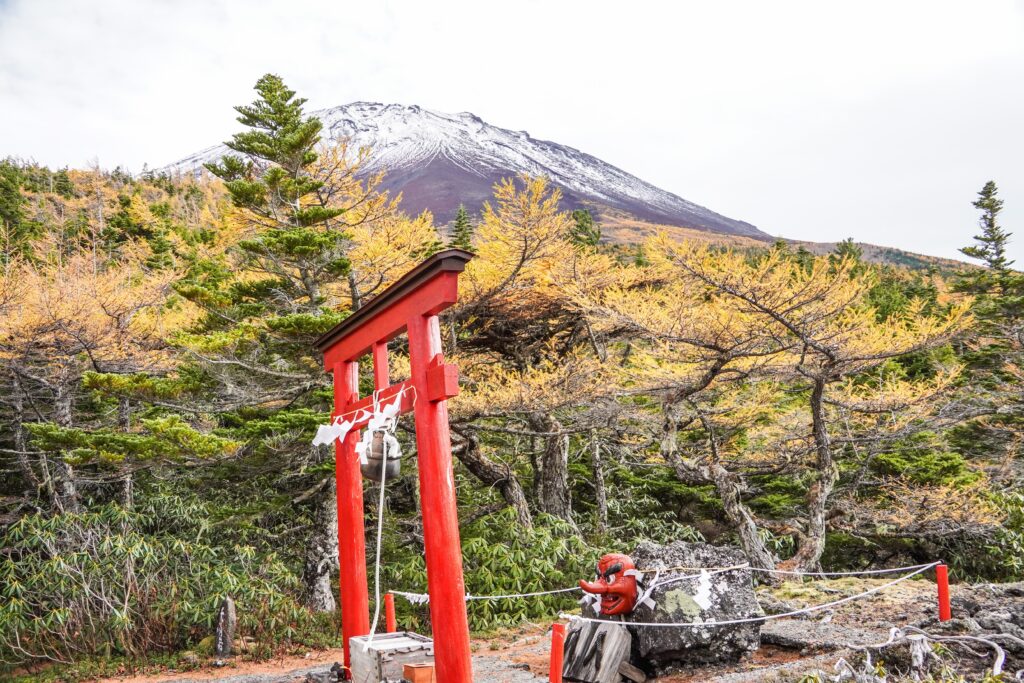
After completing the 3-4 km Oniwa path, you will descend to the entrance of Okuniwa Garden. This is a short, approximately 30-minute circuit course that takes you through the beautiful larch forest, offering quieter but still majestic views of Mt. Fuji.
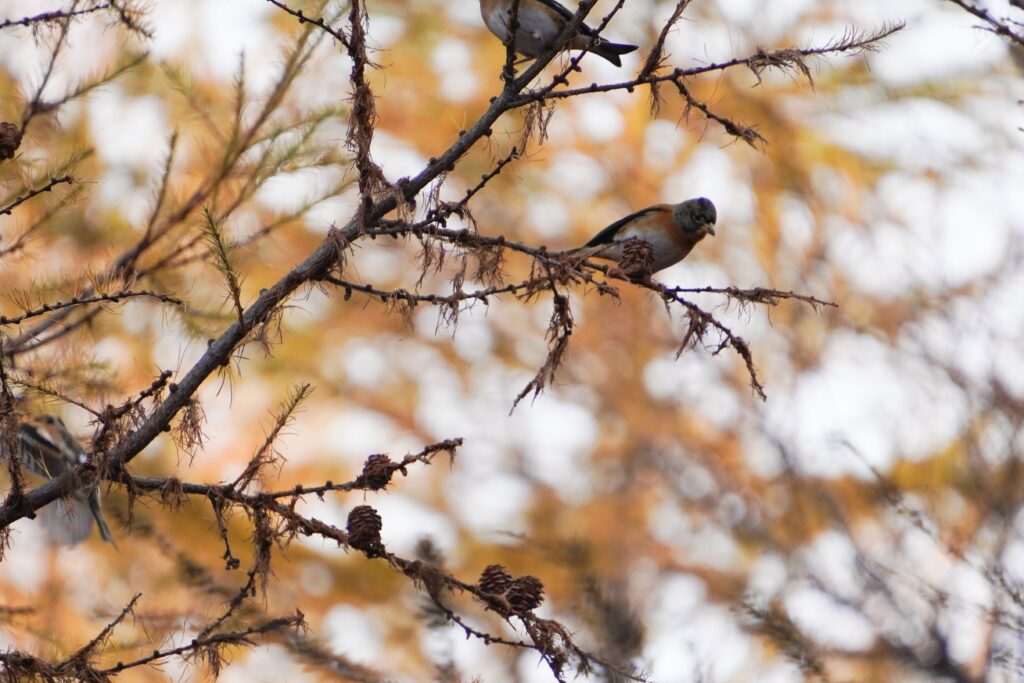
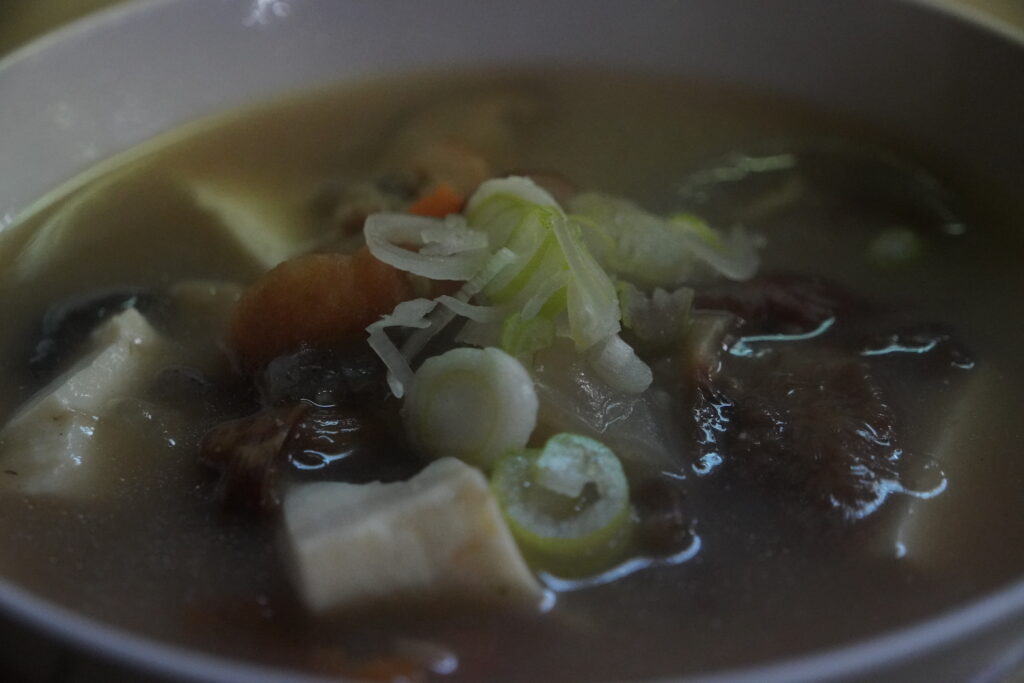
There is a small, welcoming restaurant mid-way, offering light meals and coffee. We highly recommend trying the local Kinoko-jiru (mushroom soup). The garden is also a designated bird-watching spot, so bird lovers should definitely set aside extra time to observe the local wildlife.
Connecting the Dots of the Fuji Region
Visiting the Oniwa and Okuniwa routes allows you to fully appreciate Mt. Fuji’s magnitude without having to endure the physical challenge of the climb. This viewpoint acts as a nexus, helping to connect all the surrounding sights—the Jukai, Lake Sai, Lake Shoji, Lake Motosu, and the related Mt. Fuji shrines—into a single, coherent picture.
We offer private tours of this area as requested.