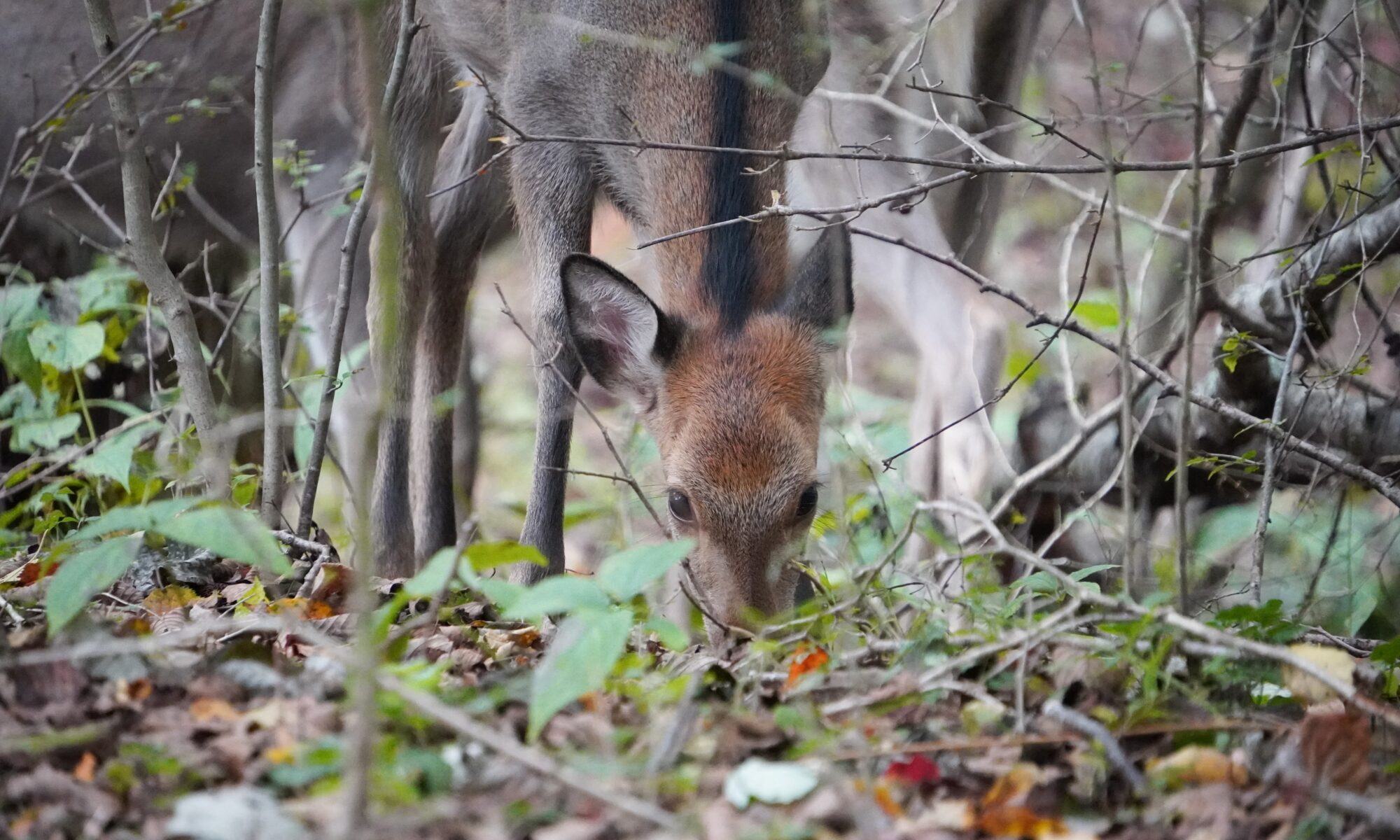
The fawn I always see is eating fallen leaves. Even though there is still green grass around, it seems to choose the leaves on the ground.
I wonder if they taste good, but the deer must have its own reasons.
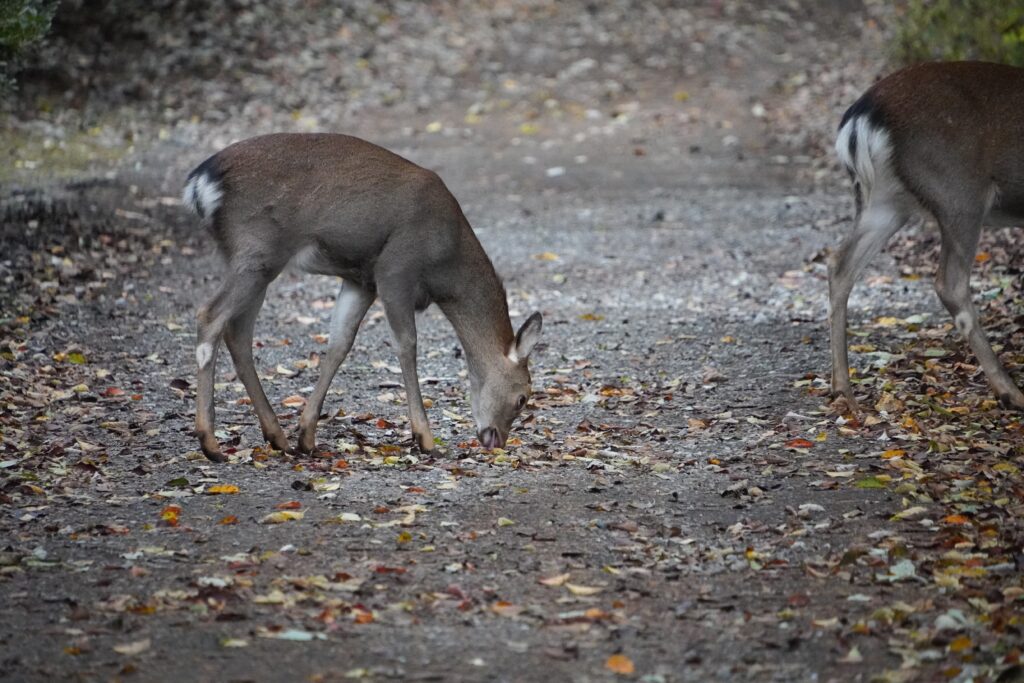

Plants do not want their leaves to be eaten, so they usually protect themselves with bitterness or natural chemicals. But when leaves fall, those defenses break down, making them softer and easier to digest. Plus, leaves from high branches, usually out of reach, become easy to eat once they land on the ground.
What It Means to Eat
We humans have many bacteria in our guts, but plant-eating animals like deer rely on gut microbes even more to stay alive.
When a deer eats grass or leaves, it feeds the microbes in its stomach. The microbes break down the food, and the deer absorbs the nutrients they release.
So in a way, it is not the deer eating the leaves, but the microbes inside it. Maybe it is the microbes that are asking for the food.
It makes me wonder if our own desires and feelings are also controlled by the tiny living things in our gut.
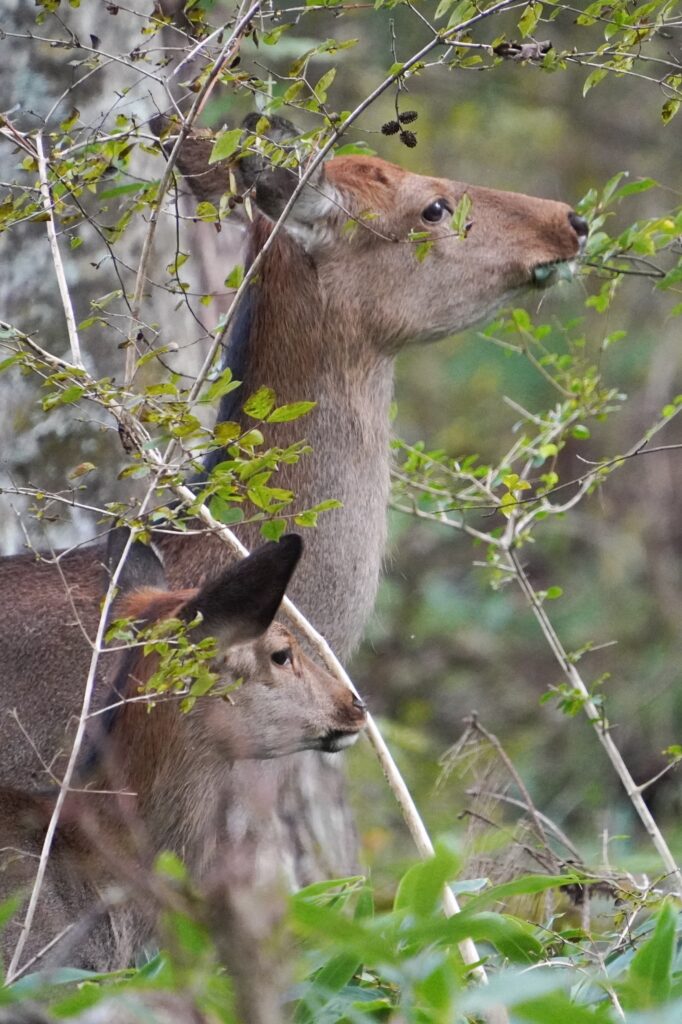
In the past, Japanese people seemed to feel this connection naturally.
Phrases like “hara no mushi” (the bug in the belly) were used to talk about hunger, bad moods, or sudden feelings, as if another creature were living inside us.
Many Japanese words for emotions also use the word for belly (hara). We use it to talk about getting angry, being honest, or truly understanding something.
Who we think “we” are might not be just ourselves.
That is why taking care of our body, especially our gut, helps bring peace to our mind and emotions.
Inside the fawn, the leaf-loving microbes might be whispering, “Give us some fallen leaves now,” or “Get your stomach ready for winter.”
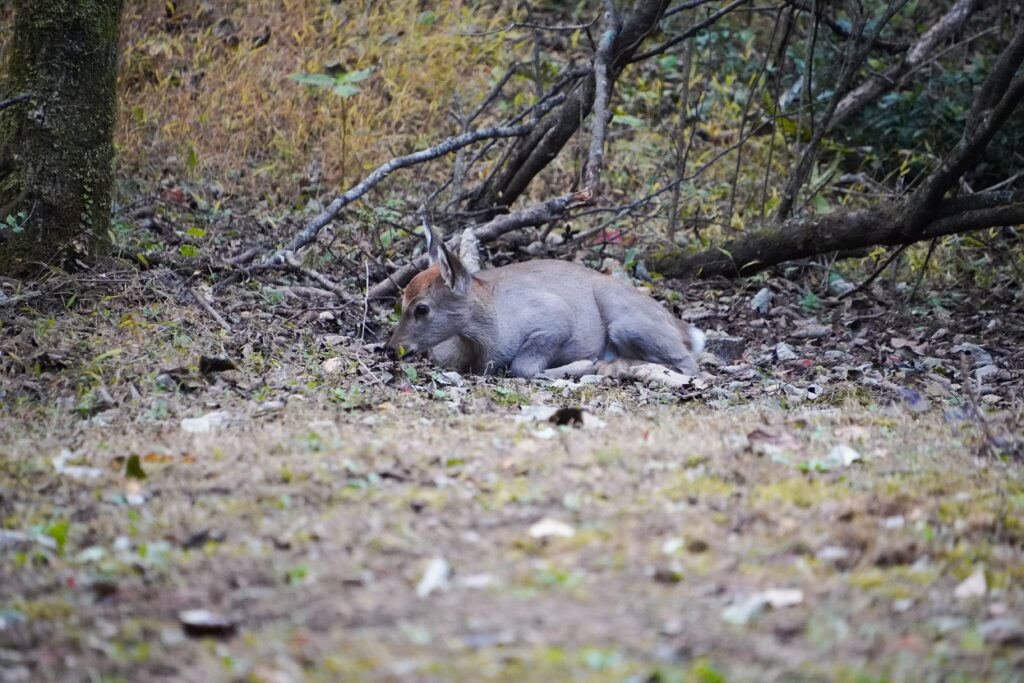
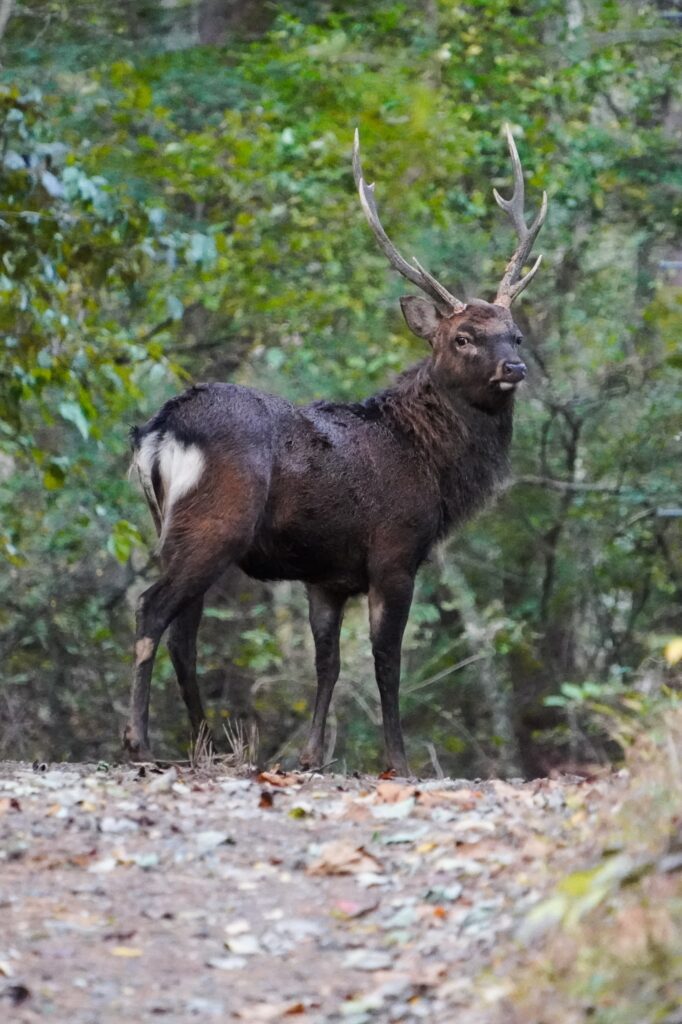
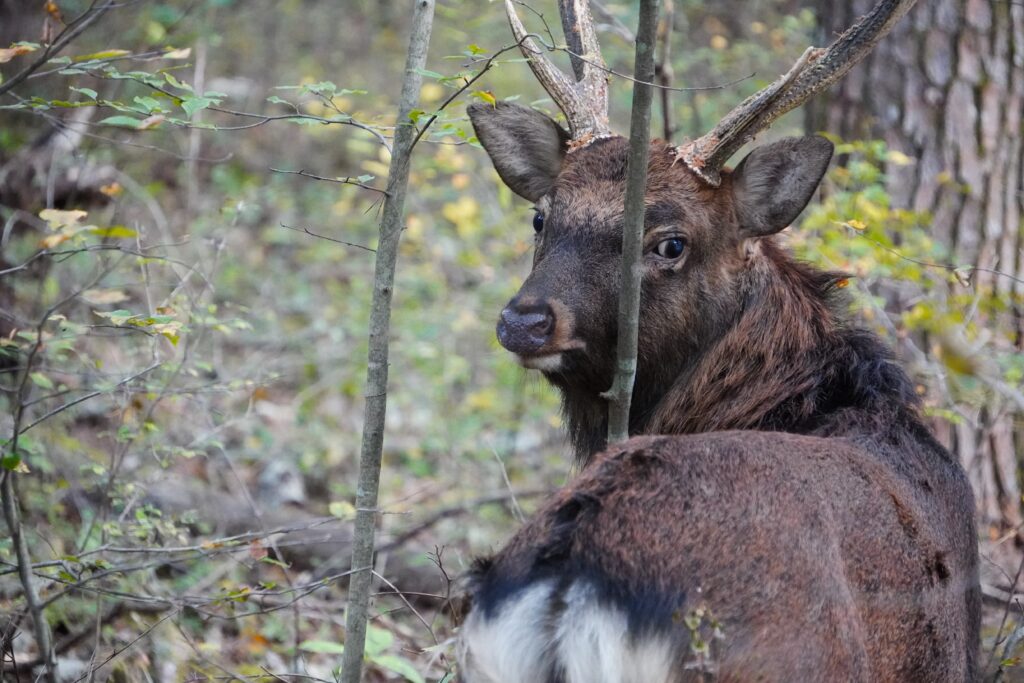
While I was thinking about this, that dominant stag suddenly appeared in front of me. He soon walked back into the forest, but I shivered thinking about what might happen if the “bug in his belly” was in a bad mood.